Victory for football? Spain beat Argentina to win World Cup

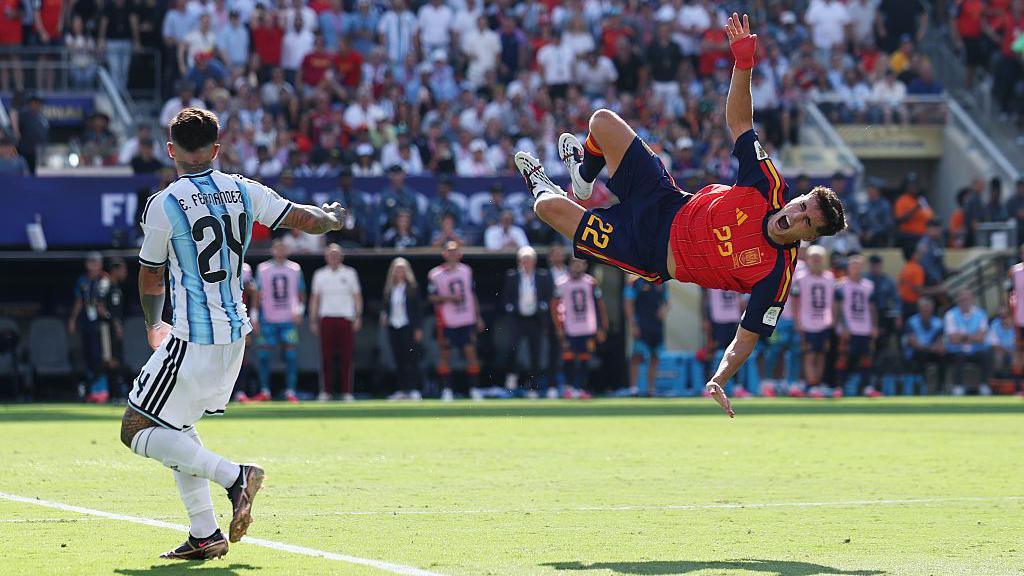
Victory for football? Spain beat Argentina to win World Cup
A Dramatic World Cup Final and Spain’s Dominance
Ninoda.com – Spain’s triumph over Argentina in the 2026 World Cup final has been hailed as a defining moment for the sport, with the focus keyword “Victory for football Spain beat” encapsulating the historic significance of the match. The decisive goal, scored by Ferran Torres in extra time, cemented Spain’s status as the dominant force in men’s football, while Rodri’s celebration of the trophy in New Jersey symbolized the culmination of a remarkable campaign. The contest, which saw Spain outmaneuver Argentina with a blend of tactical mastery and resilience, is being celebrated as a testament to football’s ability to deliver thrilling, unpredictable moments even in the face of overwhelming skill.
Spain’s Tactical Precision and Record-Breaking Performance
Spain’s victory was built on a foundation of exceptional control, with the team asserting dominance throughout the tournament. Their 65% possession rate, an expected goals tally of 1.94, and 20 shots on goal—11 of which found the target—highlighted their precision and efficiency. Argentina, despite their pedigree, struggled to counter Spain’s structured play, with goalkeeper Unai Simon earning the Golden Glove for his seven clean sheets in eight matches. Spain’s ability to maintain composure under pressure, even as Argentina’s defenders occasionally faltered, underscored the nation’s growing reputation as a footballing powerhouse.
“This victory is a clear statement of Spain’s superiority in international football,” noted BBC analyst Phil Foden. “They executed their game plan flawlessly, proving that tactical discipline can triumph over individual brilliance. It’s a victory for football as a whole, showcasing how the sport evolves and adapts.”
Argentina’s Challenges and Controversial Moments
Argentina’s journey to the final was marked by both brilliance and adversity. While they carried the hopes of a nation, their performance in the final revealed vulnerabilities. The team’s 464 passes in the match contrasted sharply with Spain’s 852, yet they failed to convert possession into consistent chances. Lionel Messi’s 117th-minute effort, the first of the final, was a fleeting spark in an otherwise subdued display. The controversies surrounding the match—such as Enzo Fernandez’s red card for a late challenge on Cubarsi and the post-game clashes between players—added layers of drama to an already iconic event.
“It’s hard to imagine Argentina going down so easily, but the reality is that Spain beat them in a way that felt inevitable,” said former Manchester City star David Silva. “Their ability to remain calm and clinical, even in the final moments, is what separated them from the rest.”
The Rise of Young Talent and Football’s Future
The 2026 World Cup final will be remembered for its youthful energy and the emergence of new stars. Lamine Yamal, the 19-year-old phenom, made history by becoming the third-youngest player to reach a World Cup final and the youngest to claim the title. His electrifying play and composure under pressure signaled a new era in Spanish football, where young players are increasingly shaping the nation’s legacy. Similarly, the performance of Cubarsi and others demonstrated how the next generation is poised to redefine the sport’s standards.
Spain’s victory not only secured their second World Cup title but also reinforced their position as a team of the future. The seamless integration of youth and experience, combined with a relentless focus on possession and counterplay, set a new benchmark for the game. This “Victory for football Spain beat” highlights a shift toward a more strategic and data-driven approach, ensuring that the team remains at the forefront of global football for years to come.
A Legacy of Success and Lessons for the Game
Spain’s 2026 campaign began with a 0-0 draw against Cape Verde, a far cry from their 2010 opener, which ended in a 1-0 loss to Switzerland. This year’s final, however, showcased a team that had refined their game to near perfection. Their unbeaten streak of 38 matches across all competitions—a European record—speaks to the consistency that has defined their recent dominance. The “Victory for football Spain beat” Argentina not only solidified their place in history but also provided a blueprint for future success, emphasizing the importance of unity, preparation, and adaptability in modern football.
As the dust settles on this historic final, the implications for the sport are clear. Spain’s victory has sparked conversations about the evolution of football, with analysts and fans alike recognizing the balance between attacking flair and defensive resilience. The “Victory for football Spain beat” Argentina is more than a title win; it’s a milestone that redefines what it means to be a global footballing force. With a new generation of stars emerging and a team that continues to innovate, Spain has set the stage for an era of sustained excellence.