‘Burnham era begins’ and ‘King Kev’

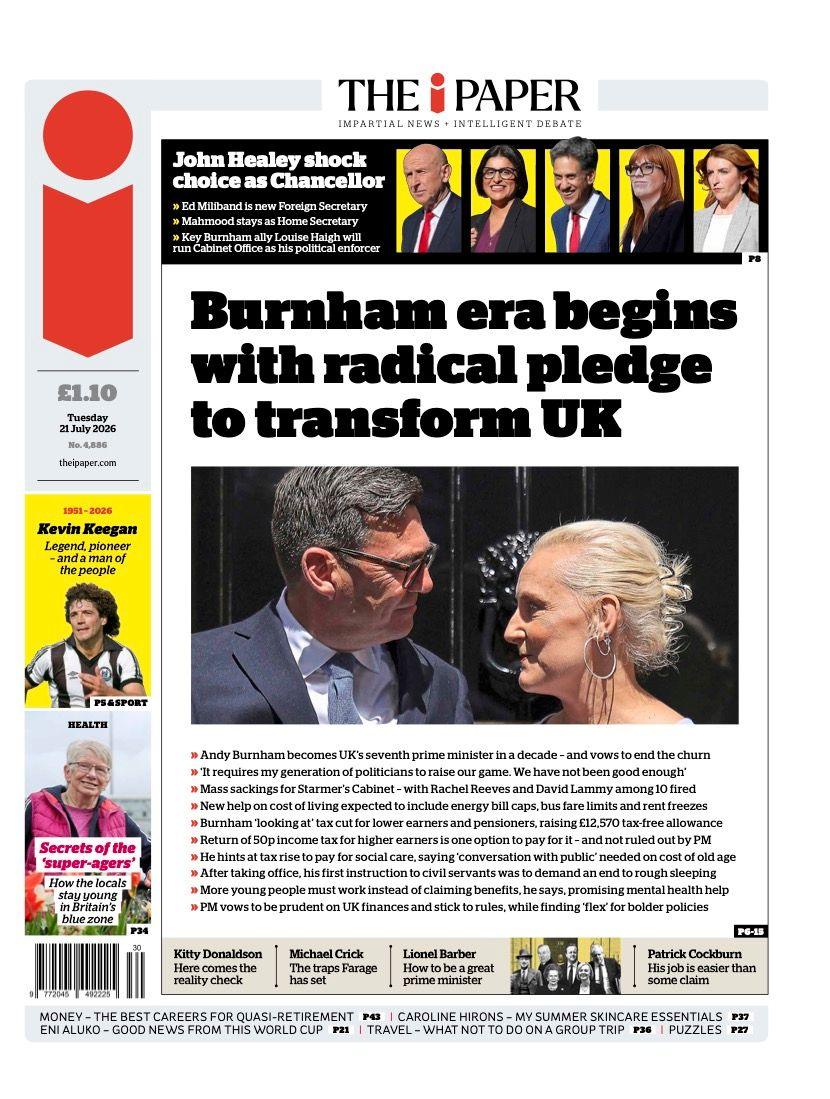
Burnham Era Unfolds with Promises of Change
Ninoda.com – The Burnham era begins as Andy Burnham steps into the role of prime minister, marking a new chapter for the UK’s political landscape. His first day in office has been met with widespread media attention, as outlets like the i Paper herald his leadership as the dawn of a transformative period. Burnham’s vision centers on revitalizing national morale and addressing the growing public discontent with the status quo, setting the stage for a series of bold reforms. This transition follows months of speculation and anticipation, with his inaugural address at No 10 being a pivotal moment in the narrative of the Burnham era begins.
A New Political Dawn
As the Burnham era begins, the political scene is abuzz with debates about the direction the UK will take. Burnham, a seasoned politician known for his pragmatic approach, has emphasized the need to restore public trust in government. His speech highlighted the importance of listening to citizens and implementing policies that reflect their priorities. Analysts suggest that his administration’s success will hinge on its ability to balance ambitious goals with practical execution. The Burnham era begins, therefore, not just as a shift in leadership but as a significant turning point for the country’s future.
Policy Shifts and Cabinet Reforms
One of the immediate steps taken during the Burnham era begins has been the restructuring of the cabinet to align with his vision. Reports indicate that Burnham has removed several members who were closely associated with the previous administration, signaling a clear break from past policies. Notably, his appointment of John Healey as chancellor has been seen as a strategic move to strengthen fiscal management. The Financial Times notes that Burnham’s plan to tackle the cost of living includes measures such as fare caps on public transport and targeted support for energy bills. These proposals are framed as part of a broader effort to stabilize the economy during the Burnham era begins.
Furthermore, the Burnham era begins has seen a focus on redefining the role of the state in everyday life. Ed Miliband’s return as foreign secretary and Yvette Cooper’s placement in the Health Department reflect Burnham’s desire to assemble a team with diverse expertise. Angela Rayner’s continued presence as housing minister underscores the emphasis on housing affordability, a key issue for many Britons. These appointments are expected to shape the agenda of the Burnham era begins, with stakeholders closely watching for immediate policy outcomes.
Media and Public Reception
The media has been instrumental in shaping the narrative of the Burnham era begins, with varied reactions highlighting both optimism and skepticism. The Guardian’s front-page image of Burnham and his wife, Marie-France van Heel, reinforces the human element of his leadership, contrasting with the more analytical tone of the Financial Times. Meanwhile, the Express has raised questions about the clarity of Burnham’s plans, suggesting that the Burnham era begins might face challenges in translating rhetoric into actionable policies. Despite these doubts, the Daily Star has humorously framed the situation, echoing the catchy phrase “King Kev” in its headline, which has become a popular way to reference Burnham’s leadership style.
Burnham’s administration is also being scrutinized for its approach to public communication. His pledge to mend the damage left by the Thatcher era, as mentioned in his speech, has resonated with many voters, particularly those in working-class communities. However, some critics argue that the Burnham era begins lacks a unified strategy, pointing to the frequent changes in leadership since the Brexit vote as a potential obstacle. As the Burnham era begins, the challenge will be to consolidate these efforts into a cohesive vision that addresses the nation’s pressing needs.
Legacy of “King Kev”
While the Burnham era begins is centered on his policy initiatives, the mention of “King Kev” in the media has sparked a conversation about the symbolic significance of the nickname. Kevin Keegan, the former footballer and manager, is remembered for his charismatic leadership on and off the pitch, and his death at 75 has been a poignant reminder of his impact on British culture. The Sun’s coverage of his passing has linked his legacy to the current political climate, suggesting that the Burnham era begins might draw inspiration from Keegan’s ability to unite people under a shared cause. This connection adds a layer of historical and cultural context to the new administration’s efforts.
Challenges Ahead
As the Burnham era begins, the path ahead is fraught with challenges. The recent cabinet reshuffles have drawn both praise and criticism, with some analysts arguing that the new team’s diversity could foster innovation. Others, however, worry about potential internal conflicts and the pressure to deliver results quickly. The Burnham era begins is also being watched closely for its response to economic instability, with measures like energy bill assistance and public transport fare caps seen as crucial for public support. Additionally, the role of “King Kev” as a cultural reference highlights the importance of public perception in shaping the success of any political movement.
Despite the initial enthusiasm, the Burnham era begins will need to prove itself through consistent policy delivery and effective governance. The media’s role in amplifying his message or highlighting any shortcomings will be critical. As the UK navigates this new political era, the interplay between Burnham’s vision and the legacy of figures like “King Kev” may provide valuable insights into the nation’s evolving priorities and identity.