Archbishop of Canterbury committed to £100m slavery fund

Archbishop of Canterbury Reaffirms Commitment to Historic Slavery Reparations Fund
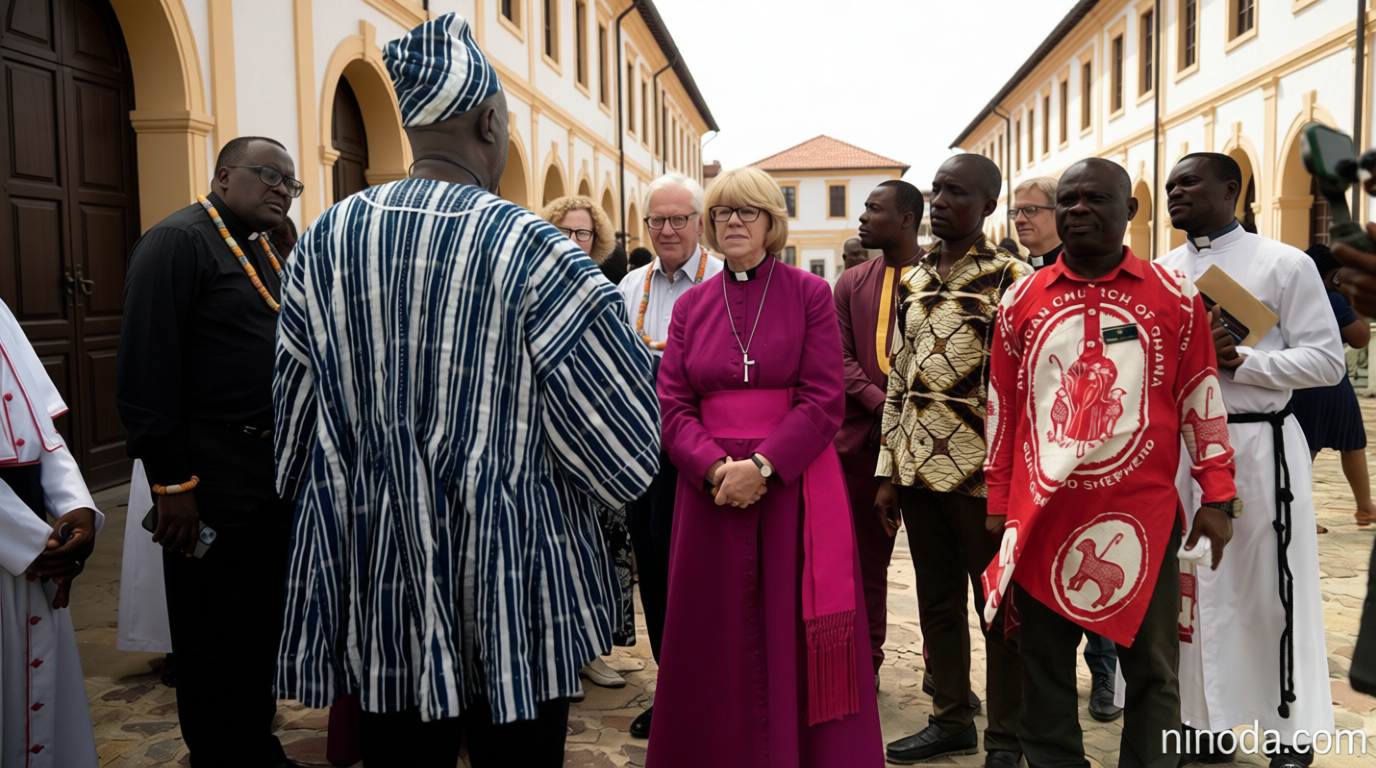
Ninoda.com – The Archbishop of Canterbury committed to 100m in a landmark pledge to establish a comprehensive reparations fund addressing the Church of England’s historical ties to the transatlantic slave trade. Dame Sarah Mullally, the current Archbishop, has publicly reinforced this significant financial commitment during her recent pastoral visit to Ghana, where she toured Cape Coast Castle—a powerful symbol of African enslavement and the brutal journey across the Atlantic Ocean.
Walking through the ancient corridors of Cape Coast Castle, the Archbishop reflected deeply on the institutional failures of centuries past. She acknowledged without reservation that the Church of England played a role in this troubling chapter of human history. Stressing that authentic repentance demands concrete action, she outlined how the Church is now implementing meaningful measures to support communities still grappling with slavery’s lasting legacy and intergenerational trauma.
A Meaningful Journey of Reflection and Renewal
This visit represents Dame Sarah’s first major pastoral tour of Africa since her formal installation as head of the Church of England at Canterbury Cathedral in March. Reparative justice became the central theme of her Ghanaian pilgrimage, as she sought to understand both the historical wounds and potential pathways toward healing and reconciliation.
Cape Coast Castle, under British colonial administration since the 1660s, houses dark dungeons where thousands of captives were held before being forced through the iconic “door of no return” onto ships bound for the Americas. The Archbishop spoke movingly about how the site affected her emotionally, noting that the physical space itself seemed to tell stories of suffering and resilience.
“You can’t help but be deeply moved by the horrific conditions that people were kept in and the way that they were treated. It completely throws you off balance and brings home the evil that was transatlantic slavery.”
Above the dungeons stands a chapel that Dame Sarah highlighted as compelling evidence of ecclesiastical involvement in the slave trade. The Church of England has previously issued formal apologies for its historical associations with slavery. Its missionary organization once operated plantations worked by enslaved people in the Caribbean to help finance the expansion of Anglicanism worldwide. Individual clergy members personally owned slaves, and the institution received substantial financial contributions from prominent slave traders throughout its history.
Building Support Despite Ongoing Opposition
Three years ago, church leaders made the pivotal decision to establish the reparations fund after conducting a thorough examination of its historical endowment, which revealed considerable investments in companies directly engaged in slave trafficking. The initiative aims to direct resources toward investment, research, and community engagement in areas most impacted by the enslavement of African populations during the transatlantic period.
Nevertheless, the fund has encountered significant resistance from various quarters. Critics have challenged the historical precision of assessments regarding the Church’s level of involvement, while others have presented legal arguments and ideological concerns against the proposal. Some question whether the Church should bear financial responsibility for actions taken centuries ago.
Ghana has been leading an international movement calling upon nations and organizations worldwide that profited from slavery to provide meaningful compensation. The country’s foreign minister, Samuel Okudzeto Ablakwa, commended the Archbishop’s efforts during her visit, noting that her commitment signals important progress.
“What the Archbishop of Canterbury is doing in Ghana on her current visit will begin to send the right signals. And those who are either revisionists or who are obstructionists within the Church of England are going to start thinking twice.”
He further noted that the Christian faith introduced to Ghana and Africa emphasizes that acknowledgment of wrongdoing is essential for spiritual redemption and salvation. The Archbishop of Canterbury committed to 100m represents not just financial restitution, but a broader commitment to truth, healing, and building bridges between communities separated by centuries of historical injustice.