Dogs, drones and sound detectors: How rescuers search for quake survivors

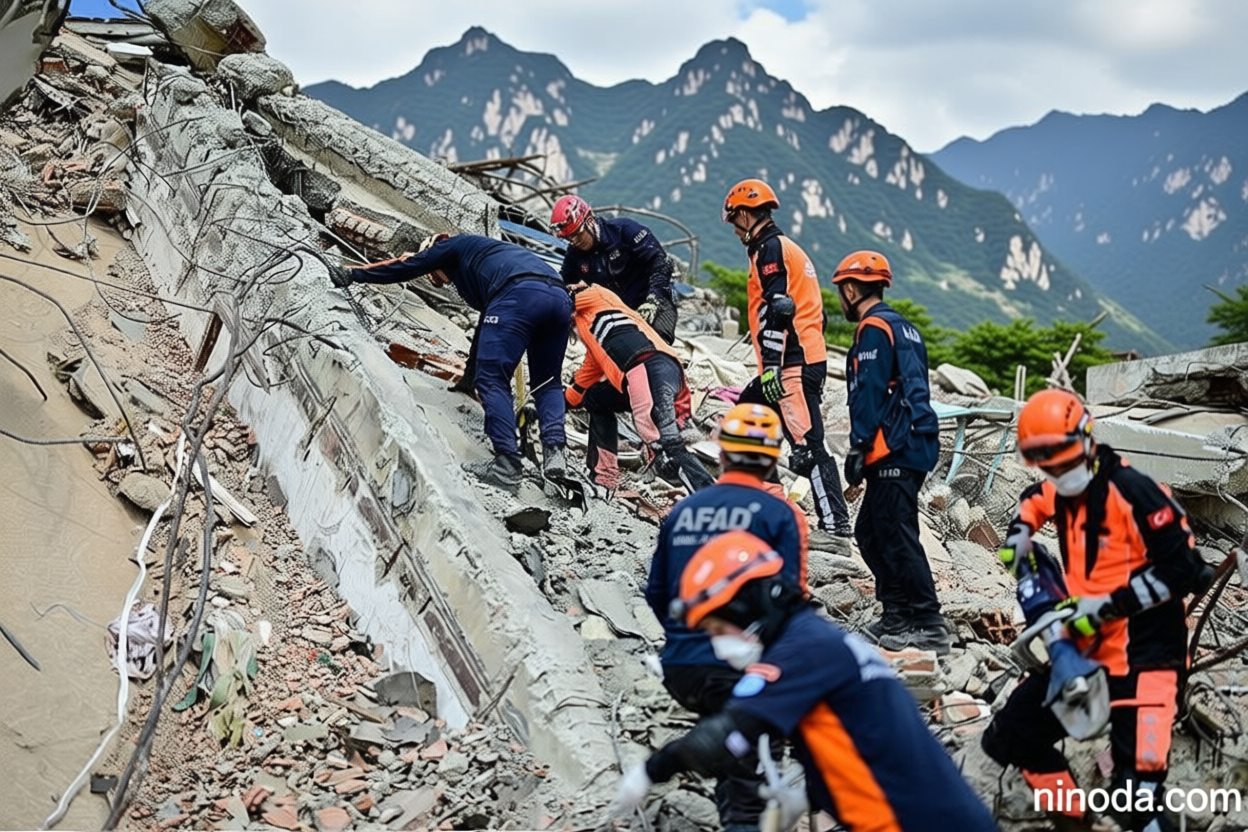
Dogs, Drones, and Sound Detectors: How Rescuers Search for Earthquake Survivors
Ninoda.com – In the wake of recent earthquakes that have shaken Venezuela, rescue teams are combining cutting-edge technology with age-old methods to locate survivors trapped beneath the rubble. Dogs, drones, and sound detectors have become essential tools in this high-stakes operation, working in tandem to maximize the chances of saving lives. While the critical 96-hour window for detecting survivors has largely passed, the determination of rescuers ensures that every possible lead is explored. These innovations, ranging from scent-sensitive canines to advanced acoustic sensors, highlight the evolving landscape of disaster response and the importance of adaptability in the face of natural calamities.
The Role of Search and Rescue Dogs
Search and rescue dogs remain a cornerstone of earthquake recovery efforts, their trained noses capable of detecting human scent even when buried deep within collapsed structures. Lee Ivory, deputy national coordinator of the UK International Search and Rescue (UK ISAR) team, explains that these animals are specifically trained to identify odors associated with human remains or living beings. Their ability to work in challenging conditions, such as confined spaces or areas with heavy debris, makes them indispensable. Once a survivor is located, the dogs signal their find with a persistent bark, guiding teams to the exact location. This method is particularly effective in urban settings where multiple layers of rubble can obscure traditional search methods.
“Dogs drones and sound detectors are a powerful trio in earthquake rescues. They can detect faint human scents, listen for trapped voices, and even ‘see through walls’ using thermal imaging,” said Lee Ivory, who has led operations in Japan, Haiti, and Nepal.
Training for these dogs involves exposing them to simulated disaster environments, where they learn to associate the smell of human odors with rewards. This ensures they remain focused during real missions, even in the presence of distractions like dust, smoke, or varying temperatures. Ivory emphasized that the reliability of these canines is unmatched, as their sensitivity to scent allows them to detect survivors who may be unconscious or unable to move.
Acoustic Tools and Sound Detectors: Hearing the Unheard
Sound detectors and acoustic devices play a critical role in identifying survivors who may be unable to vocalize or move. Rescuers often use these tools to amplify faint noises, such as scratching against concrete or breathing, which can be difficult to hear in the aftermath of a quake. By deploying microphones and specialized sensors, teams can pinpoint the location of trapped individuals with remarkable precision. This is especially useful in scenarios where victims are buried deep, and traditional auditory methods fall short.
“If someone is just making a small noise, we can detect it,” said Lee Ivory. “It’s like hearing a whisper through layers of rubble, and that can make all the difference in saving a life.”
Sound detection technology also allows rescuers to assess the condition of survivors. For example, some devices can measure the frequency and intensity of sounds, helping determine whether a person is conscious or in distress. When combined with dogs, these tools provide a dual-layered approach, increasing the likelihood of locating individuals who may be hidden from view but audible to equipment.
Miniature Drones and Thermal Imaging: Eyes and Ears in the Field
Miniature drones, often called “cockroach drones,” are revolutionizing earthquake search operations by accessing spaces that are too narrow or dangerous for humans. These compact machines are equipped with thermal imaging cameras, which detect heat signatures to identify living bodies beneath rubble. The ability to navigate tight crevices and transmit real-time video to rescuers enables teams to make informed decisions quickly. In Venezuela, drones are being used to scan collapsed buildings and locate survivors in areas that would otherwise take hours to investigate manually.
“Thermal cameras can reveal body heat trapped within rubble, effectively ‘seeing through walls,’ said Sakthy Selvakumaran of the UK-based charity Search and Rescue Assistance in Disasters (SARAID). “This is a game-changer for finding people in the dark.”
Thermal imaging technology is particularly valuable in the early stages of a rescue, where the temperature of a survivor’s body can be detected even if they are not making noise. Selvakumaran, who has worked in disaster zones like Turkey and Syria, added that drones are not just tools for detection but also for delivering supplies to trapped individuals in critical situations. This integration of technology with traditional methods underscores the importance of innovation in survival strategies.
Global Collaboration and the Human Element
Rescue operations in Venezuela are a testament to the power of global collaboration, with teams from around the world working alongside local volunteers to maximize efficiency. The use of heavy machinery, such as bulldozers and excavators, allows for rapid clearing of large debris fields, while dogs, drones, and sound detectors handle more delicate tasks. This synergy between human effort and technology is crucial, as it balances speed with precision in the chaotic aftermath of a disaster.
Despite the passage of the 96-hour window for survival, the continued use of these tools demonstrates the resilience of rescue teams. In many cases, survivors can remain trapped for days, and the ability to detect their presence even in such conditions is a lifeline. Ivory highlighted the importance of maintaining the search, noting that each day brings new possibilities and that the combination of dogs, drones, and sound detectors is key to navigating the complexities of earthquake recovery.
Challenges and Future Innovations
While dogs, drones, and sound detectors have significantly improved the chances of locating survivors, challenges remain. One of the biggest hurdles is the need for rapid deployment in areas with limited access, where traditional equipment may not reach. Additionally, the effectiveness of these tools can be impacted by environmental factors, such as moisture, dust, or the absence of human scent. However, ongoing advancements in technology are addressing these issues, with newer models of drones boasting longer battery life and improved thermal sensitivity.
“The future of earthquake rescue lies in refining these tools to work more efficiently in diverse conditions,” said Selvakumaran. “We’re constantly testing new methods, from AI-powered sound analysis to drone swarms that can cover vast areas simultaneously.”
As the world faces more frequent and severe natural disasters, the integration of dogs, drones, and sound detectors into rescue protocols is becoming standard practice. These technologies not only enhance the speed and accuracy of searches but also reduce the risk to human rescuers. The lessons learned from operations in Venezuela will likely inform future strategies, ensuring that every disaster is met with a robust, multi-faceted approach to saving lives.