Ex-Syrian intelligence chief found guilty of torture and sexual abuse by Austrian court

Ex-Syrian Intelligence Chief Convicted of Torture and Sexual Abuse in Austria
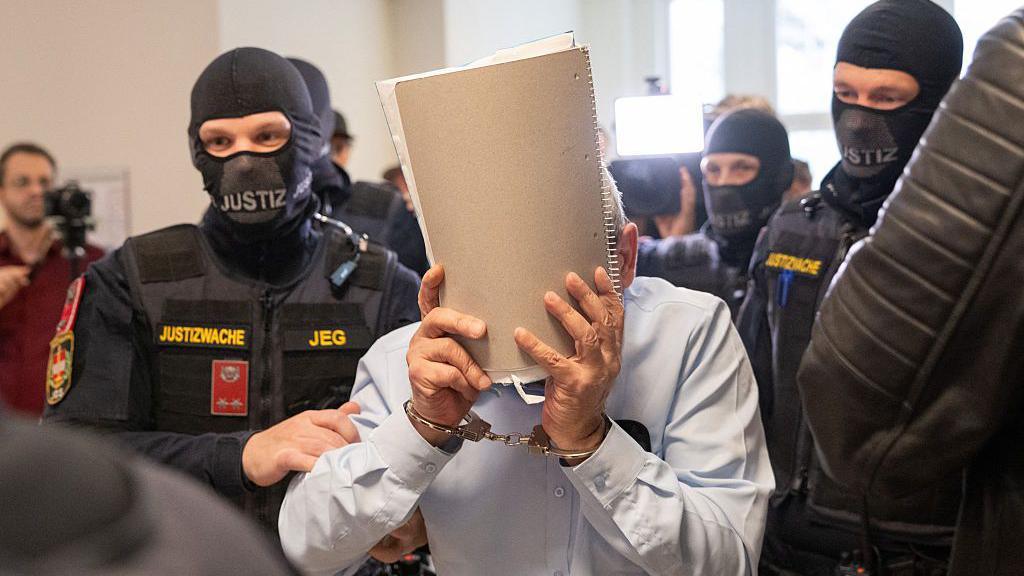
Ninoda.com – A former Syrian intelligence chief, identified as Khaled al-H., has been found guilty of inflicting torture and sexual abuse on political opponents by an Austrian court. This landmark ruling underscores the international reach of accountability for crimes committed under the Syrian regime. The verdict was delivered in Vienna, marking a significant step in holding agents of Bashar al-Assad’s government responsible for human rights violations. Another key figure, Moussab Abou R., the former police chief of Raqqa, was also convicted of similar offenses, including coercive acts against dissenters.
The Trial and Conviction Process
The trial, which took place in Austria, focused on atrocities committed during the early stages of Syria’s uprising, which erupted in 2011. Al-H., who served as head of the General Intelligence Directorate in Raqqa from 2011 to 2013, was accused of subjecting detainees to severe physical and psychological torment. After the Free Syrian Army captured Raqqa in 2013, he fled the region, later seeking asylum in Austria. Both al-H. and Abou R. were sentenced to eight years in prison for their roles in systemic abuse, with the court emphasizing the deliberate nature of their actions.
Prosecutors argued that the torture and sexual coercion were part of a calculated strategy to crush the opposition and instill fear among the civilian population. A
direct quote
from the prosecution highlighted: “These acts were used to suppress the protest movement against the regime and to intimidate the population.” The defense, however, claimed that al-H. was forced to comply with orders as a member of the Druze minority, illustrating the complex motivations behind the crimes.
Victims’ Accounts and Psychological Impact
Survivors of the torture and sexual abuse testified during the trial, recounting harrowing experiences of suffering. Many described being stripped of their clothing, subjected to relentless beatings, and exposed to electric shocks as part of the interrogation process. One victim shared how they were struck with cables on their feet, a method that left lasting physical and emotional scars. The court acknowledged the long-term psychological effects of these abuses, noting that survivors continue to grapple with trauma and anxiety years after their ordeal.
These testimonies provided crucial evidence linking the two defendants to specific incidents of brutality. The Austrian court’s decision to convict them reflects a commitment to justice for victims of the Syrian regime’s actions. It also highlights the growing recognition of Syria’s intelligence and police forces as key actors in the country’s human rights crisis. The ruling is expected to set a precedent for similar cases involving Syrian officials abroad.
Asylum and International Collaboration
The ex-intelligence chief and his associate sought asylum in Austria in 2015, which allowed them to escape prosecution in Syria. Their case was part of a broader effort by European nations to hold Syrian officials accountable for war crimes. Austrian authorities, in collaboration with Israeli intelligence, apprehended al-H. through “Operation White Milk,” a joint initiative that targeted regime-linked figures. The operation was led by Martin Weiss, the former head of Austria’s domestic intelligence agency, BVT, who is now based in Dubai.
Abou R., who was also arrested in the same operation, has been linked to fugitive spy Jan Marsalek, currently believed to be in Moscow. Despite their convictions, both men are appealing the decision, arguing that the Austrian court lacks jurisdiction over their actions. The case has sparked discussions about the legal frameworks governing the prosecution of foreign nationals for domestic crimes, particularly in the context of Syria’s ongoing conflict.
Meanwhile, the Syrian government continues to assert control over its political narrative. In a separate development, state media reported that a bomb attack in Damascus killed nine people, while the president finalized the selection of 70 lawmakers for the post-Assad parliamentary assembly. This move signals a shift in Syria’s political landscape, with new leaders navigating the challenges of rebuilding the nation after years of war.