‘Flamingo Revolution’ takes off as thousands demand Albanian PM’s resignation

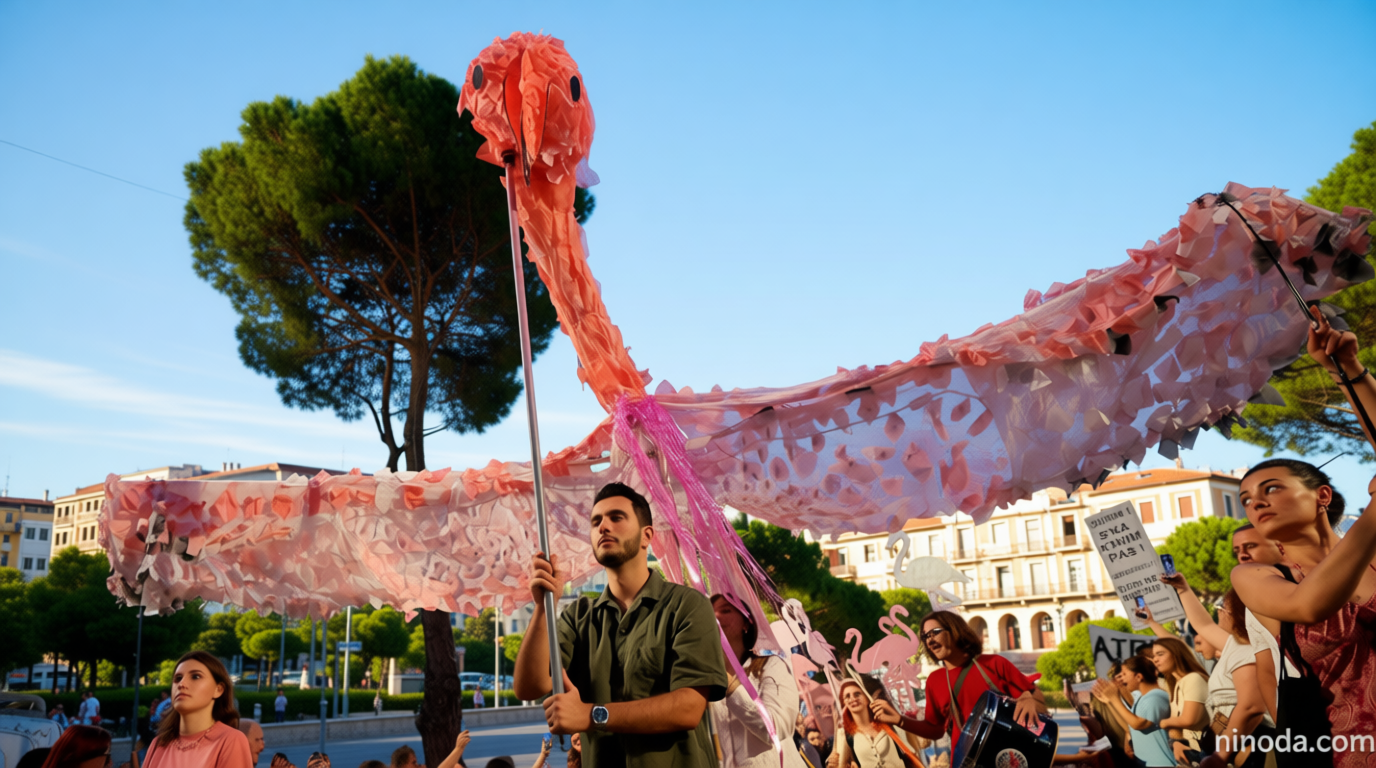
Flamingo Revolution: Thousands Demand Albanian PM’s Resignation
Ninoda.com – The Flamingo Revolution has gained significant momentum as thousands of citizens rally against Prime Minister Edi Rama’s leadership. Originally sparked by concerns over a luxury resort project near Narta Lagoon, the movement has evolved into a broader critique of government corruption and mismanagement. Protesters now use flamingos as a powerful symbol, linking their cause to environmental and social issues, while demanding accountability from Rama and his administration. The protests have become a defining moment in Albania’s political landscape, reflecting growing public dissatisfaction with economic policies and infrastructure development.
The Flamingo Revolution’s origins trace back to a dispute over the construction of a high-profile resort, which has drawn criticism from conservationists and local communities. The project, backed by international investors including Jared Kushner—Donald Trump’s son-in-law—has faced opposition due to its potential ecological impact. Despite the absence of formal planning permission and ongoing environmental assessments, construction has already commenced, leading to heightened tensions. This has turned a local issue into a national movement, with demonstrators arguing that the project represents a broader pattern of prioritizing foreign interests over domestic needs.
Protests Escalate: A Viral Moment of Defiance
The Flamingo Revolution reached a critical juncture when a viral video captured private security guards violently confronting a protester. The incident, which quickly spread across social media, intensified public outrage and drew international attention. Prime Minister Rama acknowledged the footage, calling it a “testament to the strength of the people’s will.” The video became a rallying point for activists, who used it to highlight systemic issues within the government. Helena, a young protester featured in the clip, emphasized her demands: “I’m here for our schools, for our hospitals, for our infrastructure, and for my family. I want to stay in my country and not be forced to leave.”
As the movement gained traction, more citizens joined the protests, citing concerns over corruption, stagnant wages, and poor public services. The Flamingo Revolution has also inspired other groups to voice similar grievances, creating a wave of solidarity. Demonstrators have organized nightly rallies in Tirana, with slogans echoing through the streets. The protests have not only targeted Rama but also his allies, including his former deputy and the mayor of Tirana, who are under investigation for alleged ties to organized crime and political scandals.
Political Legacy and Reform Challenges
Rama’s tenure as prime minister has seen Albania undergo rapid modernization, with Tirana’s skyline transformed by high-rise buildings and international architectural designs. The Flamingo Revolution, however, has cast a shadow over these developments. Critics argue that the government’s focus on foreign investment and luxury projects has come at the expense of public welfare. Fatos Lubonja, a prominent activist, has accused the administration of being “controlled by oligarchs, media, and corrupt international actors,” a claim that has resonated with many citizens. “These skyscrapers are a sign of a system that serves the few, not the many,” he stated in a
passionate statement, underscoring the movement’s core message.
While Rama defends the protests as evidence of a vibrant democracy, the Flamingo Revolution has exposed cracks in his leadership. The Prime Minister has faced mounting pressure to address the controversies surrounding his policies, particularly the controversial resort project and allegations of embezzlement. The movement’s success in uniting diverse groups—students, workers, environmentalists, and former allies—has made it difficult for the government to dismiss as a fringe issue. As the protests continue, the Flamingo Revolution stands as a testament to the power of collective action in a country striving for EU integration and democratic accountability.
With the Flamingo Revolution gaining global traction, the Albanian government faces an uphill battle to restore public trust. The protests have prompted debates about the balance between economic growth and social equity, forcing policymakers to reconsider their strategies. As the movement moves forward, its leaders hope to leverage international support to push for reforms. The Flamingo Revolution’s impact extends beyond local politics, signaling a shift in public sentiment and a demand for transparency in a nation increasingly scrutinized for its governance practices.
Public engagement in the Flamingo Revolution has also sparked discussions about the role of media and political communication in shaping public opinion. Social media platforms have amplified the movement’s message, allowing protesters to share their stories and organize demonstrations with unprecedented efficiency. The government’s response has been mixed, with some officials condemning the protests as “unproductive” while others acknowledge the need for dialogue. As the Flamingo Revolution continues to evolve, its ability to sustain momentum will determine its influence on Albania’s political future.