German politician faces calls to resign over surrogacy child

German Politician Faces Calls to Resign Over Surrogacy Child
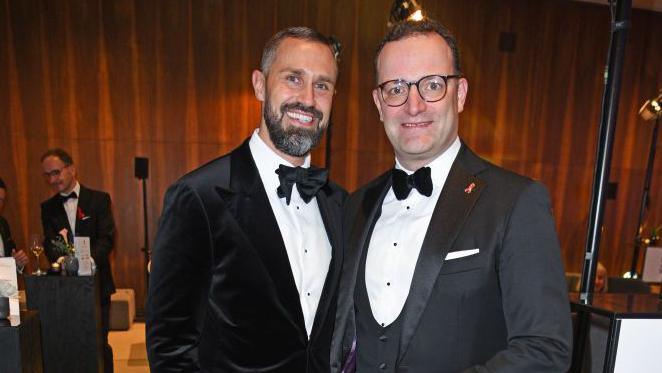
Ninoda.com – Jens Spahn, a prominent figure in Germany’s Christian Democrats, has drawn criticism for what some see as a contradiction between his personal choices and his political stance on surrogacy. The controversy emerged after he and his partner revealed they had used a surrogate mother in the United States to start a family. Surrogacy is currently prohibited in Germany, a position that Spahn’s party has long supported, and he had previously voiced opposition to its legalization.
Surrogacy and Legal Framework
Under the 1990 Embryo Protection Act, surrogacy in Germany is punishable by up to three years in prison or a fine. This legal barrier forced Spahn and his husband to seek a solution abroad. While the law allows parents to raise a child born through surrogacy outside the country, it has sparked debates about consistency among politicians. Critics argue that Spahn’s actions undermine the credibility of the policies he once championed.
“Politicians who set standards for others must be measured by them too,” stated Marion Rosin, a member of the Christian Democrat Women’s Union in Thuringia. “If that credibility is gone, resignation is a matter of consequence.”
Spahn’s announcement came during a public appearance, where he expressed pride in his new role as a parent. “Georg is our greatest joy. This feeling is almost impossible to put into words,” he shared with the tabloid *Bild*. His husband later posted an Instagram image of the couple pushing a pram, captioned “We Are Family,” further highlighting their personal triumph.
Reactions from Political Colleagues
The backlash extended beyond public opinion, with several party members urging Spahn to clarify his position. Felix Banaszak, leader of the Greens, acknowledged the couple’s efforts but emphasized the need for Spahn to address the ethical concerns. “The issues around surrogacy are not trivial,” he remarked. Meanwhile, Janosch Dahmen, a health spokesman, took a stronger stance, asserting that the debate centers on political integrity rather than the child’s birth.
“Anyone who advocates for rules politically should be able to explain clearly why those rules apparently do not apply to them personally,” Dahmen stated.
Conservative critics were particularly vocal. Daniel Peters, a CDU representative from Mecklenburg-Western Pomerania, called for Spahn’s resignation, arguing that his actions “no longer tenable.” Peters criticized the inconsistency between Spahn’s personal use of surrogacy and his legislative support for its ban. Similarly, Klaus Holetschek of the CSU reiterated the party’s stance: “What is banned in Germany remains banned,” he said, adding that the couple’s private decision did not alter the political position.
Broader Context and EU Policies
Spahn’s situation reflects a larger trend in Europe, where surrogacy remains restricted in several countries. France, Spain, and Italy all ban the practice, though their approaches vary. France’s Court of Cassation recently ruled that children born through surrogacy abroad should be legally recognized as the intended parents’ offspring. Italy, however, took a stricter path in 2024, making it illegal for citizens to use surrogacy services in other nations, a policy backed by Giorgia Meloni’s government.
Some German commentators highlighted Spahn’s perceived hypocrisy, noting that as health minister in 2020, he rejected calls to ease the surrogacy ban. He had also expressed personal reservations about the practice in 2015, writing that “as a gay man and a Christian, I find it personally very hard to warm to the idea of a rented womb.”
Spahn is not the only CDU member facing scrutiny. Earlier this year, it was revealed that colleague Hendrik Streeck also became a father via surrogacy in the US, adding to the growing pressure on the party to reconcile its policies with individual choices.