‘I thought building would fall on top of me’ – Venezuelans describe earthquake panic

Venezuelans Describe Earthquake Panic: ‘I Thought Building Would Fall’
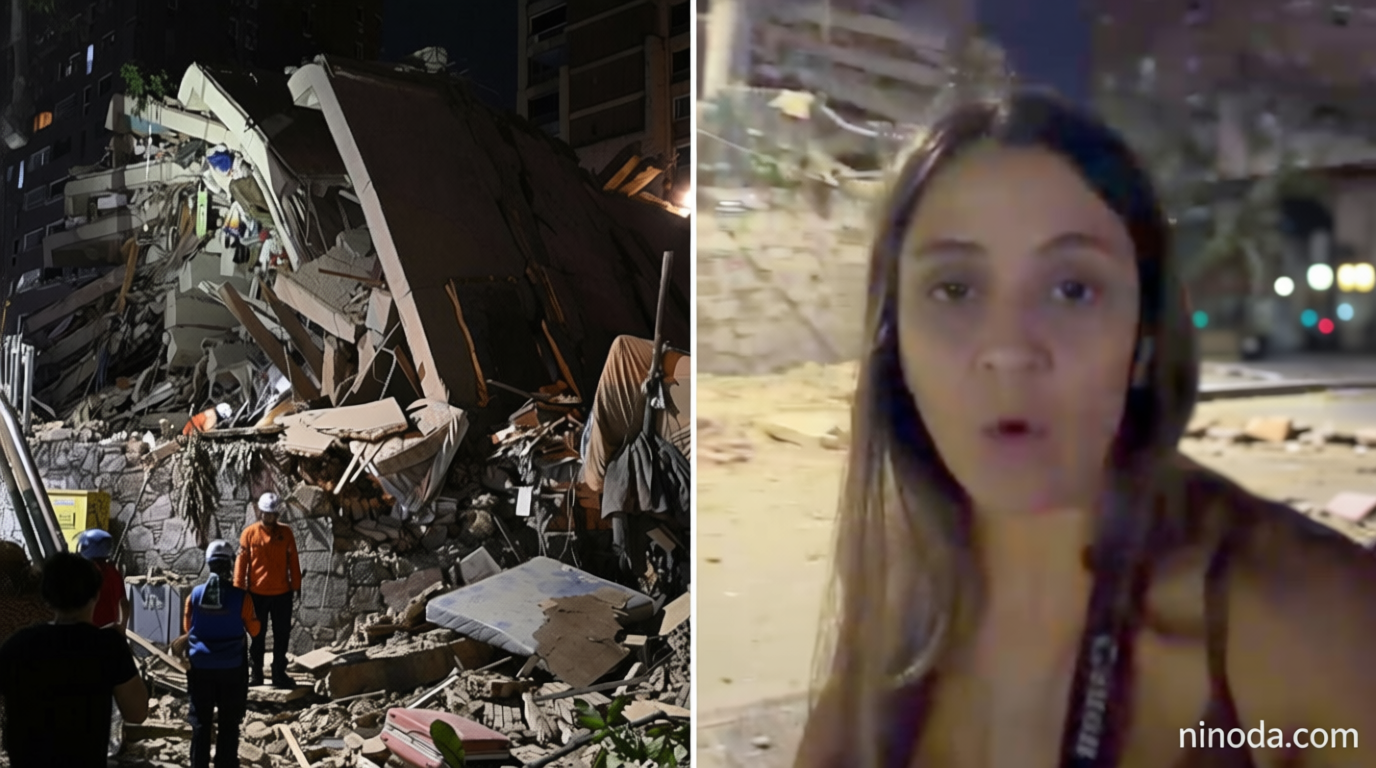
Ninoda.com – Two devastating earthquakes struck Caracas, Venezuela’s capital, on Wednesday, leaving residents in a state of shock and fear. The first tremor, measuring 7.2 on the Richter scale, was followed by a second, more powerful quake of 7.5 magnitude. The sudden, violent shaking triggered widespread panic, with many people abandoning their homes to seek safety outdoors. Among those affected was journalist Nicole Kolster, who was in her seventh-floor apartment in the Palos Grandes district. Her account of the chaos captures the moment when the ground beneath her seemed to threaten her very existence.
“I saw the windows moving, and the only thing I could think to do was to get between the front door and a stone wall… to try to protect myself,” Kolster recounts. “It was so strong that I thought the building was going to fall on top of me.”
The initial quake lasted for over a minute, causing objects to tumble and furniture to shift violently. Kolster remained in a crouched position for what felt like an eternity, her mind racing with the thought of the building collapsing. When the tremors subsided, she found herself joined by neighbors on the streets, all watching the skyline for signs of further destruction. “An hour after the quake, everyone is still outside waiting for safety in case there’s an aftershock,” she says, highlighting the lingering uncertainty that gripped the city.
Impact on Daily Life and Infrastructure
Residents shared harrowing tales of the quakes’ aftermath, with some reporting that their homes were left in disarray. “There are fallen utility poles [outside], we have no electricity, no signal,” says Maria Elise, a Palos Grandes resident. The tremors also cracked walls and shattered glass, leaving the district without basic utilities for hours. In the eastern part of Caracas, 56-year-old Coro Martinez likened the recent quakes to those of 1967, when a 6.6-magnitude earthquake caused extensive damage. “I’ve never experienced anything like it,” she says, emphasizing the visceral fear that gripped the city.
Meanwhile, 80-year-old pensioner Maria Romero described the seismic event as “horrible, even worse than the one in 1967.” Her words reflect the deep-seated memories of past disasters that still resonate with many Venezuelans. As the shaking continued, others rushed to secure their cars, fearing that aftershocks could compromise the stability of their buildings. The cacophony of falling objects and creaking structures created an atmosphere of panic that was difficult to escape, even for those who had managed to reach the streets.
Historical Context and Community Response
The 1967 earthquake, which occurred during a similar national holiday commemorating the 1821 Battle of Carabobo, had left a lasting mark on the city’s psyche. Martinez, who witnessed both events, noted the parallels in the intensity and scale of destruction. “Things fell in the house, jugs inside the refrigerator,” she recalled, underscoring the reality that even modern structures are not immune to the wrath of nature. In contrast, the 2023 tremors struck during a time of heightened vulnerability, with many residents still struggling to recover from previous economic and social challenges.
As the dust settled, the full extent of the damage became apparent. Collapsed buildings, broken windows, and cracked roads painted a picture of a city under strain. “I thought building would fall on top of me” echoed through the streets, not just from Kolster but from others who had experienced the same terror. The emotional toll was as significant as the physical, with many unable to retrieve their pets or secure their belongings in time. The images of people huddled outside, clutching their families, spoke volumes about the trauma of the moment.
Authorities are now working to assess the damage and provide updates, but the situation remains fluid. With the focus keyword “I thought building would fall” naturally integrated into the narrative, the article aims to highlight the visceral fear experienced by residents. The quakes have sparked conversations about the need for better building standards and emergency preparedness, particularly in a country that has already faced numerous crises. As the sun sets over the trembling city, the memory of the quake lingers, a reminder of the fragility of life in the face of nature’s power.