Israeli West Bank settler tells BBC attacks on Palestinians are justified as revenge

West Bank Settler Justifies Attacks on Palestinians
Ninoda.com – An Israeli West Bank settler tells BBC correspondents that recent violence against Palestinian communities represents justified revenge for the death of a local security guard. The confrontation occurred in Havat Gilad, a small settlement perched on hills above occupied territory, where residents have long maintained tense relations with neighboring Arab villages. Following Friday’s clash in Tal village that claimed one Israeli life, settlers organized coordinated attacks against nearby Palestinian populations.
The incident that ignited the weekend’s violence resulted in four Palestinian deaths alongside one Israeli soldier, though conflicting accounts persist regarding the exact circumstances. BBC journalists conducted rare weekend access to the outpost, interviewing both Palestinian residents and Yehuda Shimon, a lawyer who represents Israelis facing charges for actions against Palestinians. This type of media access to West Bank settlements remains relatively uncommon for Western news organizations.
Divine Retribution: A Life’s Worth
Shimon provided his reasoning for the attacks during the BBC interview, arguing that the response was proportional and necessary. He specifically identified several Palestinian communities in his defense of the violence:
I think now, after they killed one Israeli, we need to kill all the people in Tal and Sarra, even Jit and Farata.
When journalists questioned whether he was comparing one Jewish death to hundreds or thousands of Palestinian casualties, Shimon offered a different calculation entirely.
No, millions. One Jewish life, it’s 10 million [Palestinians].
The settler acknowledged the racial component of his worldview without expressing regret, grounding his perspective in religious conviction.
Yes, I know. But this is the truth, because God chose us [and] because of this you are jealous.
Settlement History and Legal Challenges
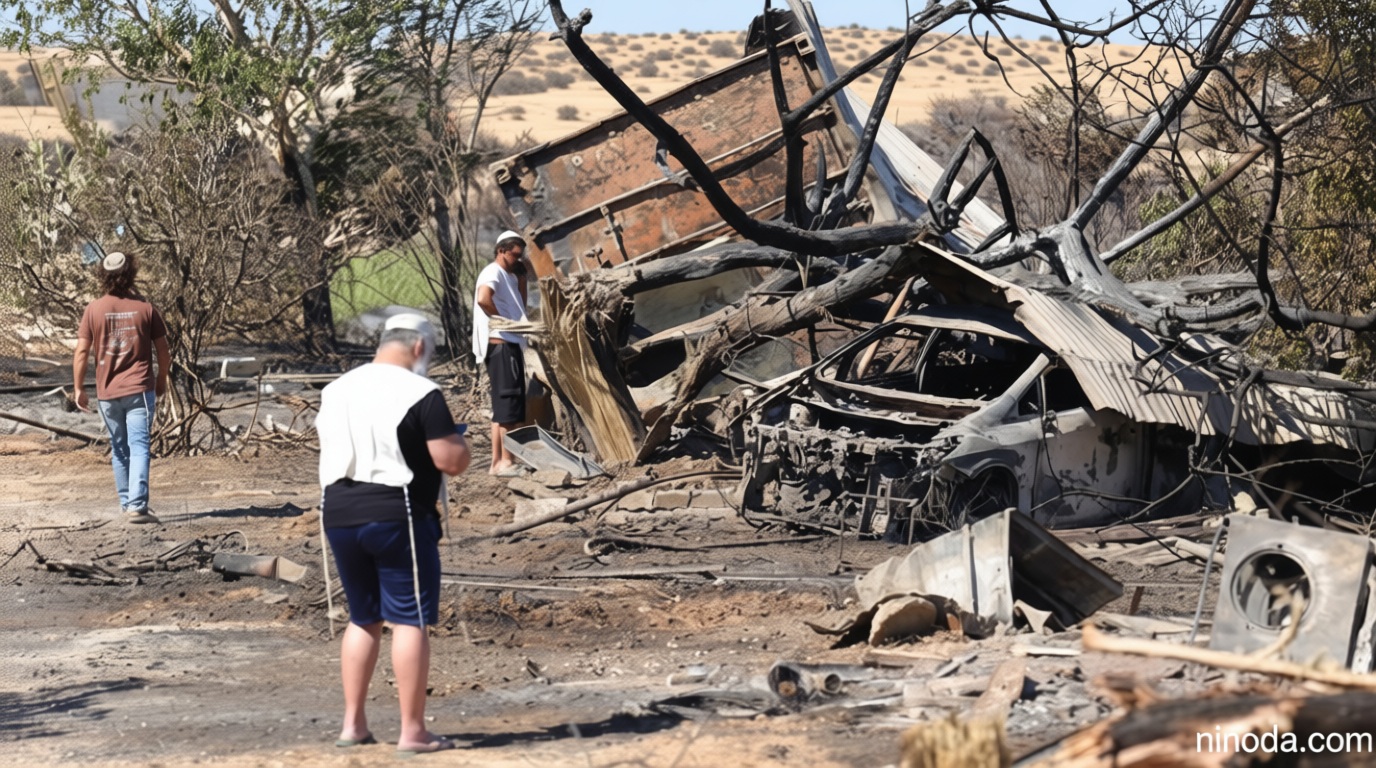
Havat Gilad was established more than twenty years ago to commemorate an Israeli security officer killed by Palestinians. The settlement features dispersed homes and a vineyard positioned on higher elevation ground. Recent fire damage to several structures near the settlement entrance has generated debate, with settlers blaming Palestinian arson while Israeli authorities suggested the blaze may have started accidentally from cigarette butts tossed by passing motorists.
Israeli officials have indicated plans to officially recognize Havat Gilad’s status. Nevertheless, Peace Now, a settlement monitoring organization, reports that complications arise because significant portions of the land belong to Palestinian private owners. As an alternative approach, authorities designated southern sections as state property to enable additional building.
Shimon rejected international legal standards completely, maintaining that biblical rights override foreign legislation. He criticized both the Israeli government and military for providing inadequate backing for Jewish territorial assertions despite substantial settlement expansion under the current administration. Additionally, he complained that the army failed to employ sufficient lethal force during encounters between settlers and Palestinians.
The Israeli government and the Israeli army, they like the United Nations – if Palestinians come and Jewish people come, [they] don’t kill the Palestinians, [they] just separate the people. Afterwards, because they don’t kill Palestinians, the Palestinians kill us.
UN Office for the Co-ordination of Humanitarian Affairs statistics present a different picture from Shimon’s claims. According to official OCHA figures, sixty-four Palestinians died in the West Bank during the timeframe in question.
The settler’s comments reflect broader tensions within occupied territories where religious conviction, territorial claims, and international law frequently collide. His perspective, while not representative of all settlers, illustrates how some residents view violence through a lens of divine justice and historical entitlement.