John Galliano exhibition at New York Met cancelled after backlash

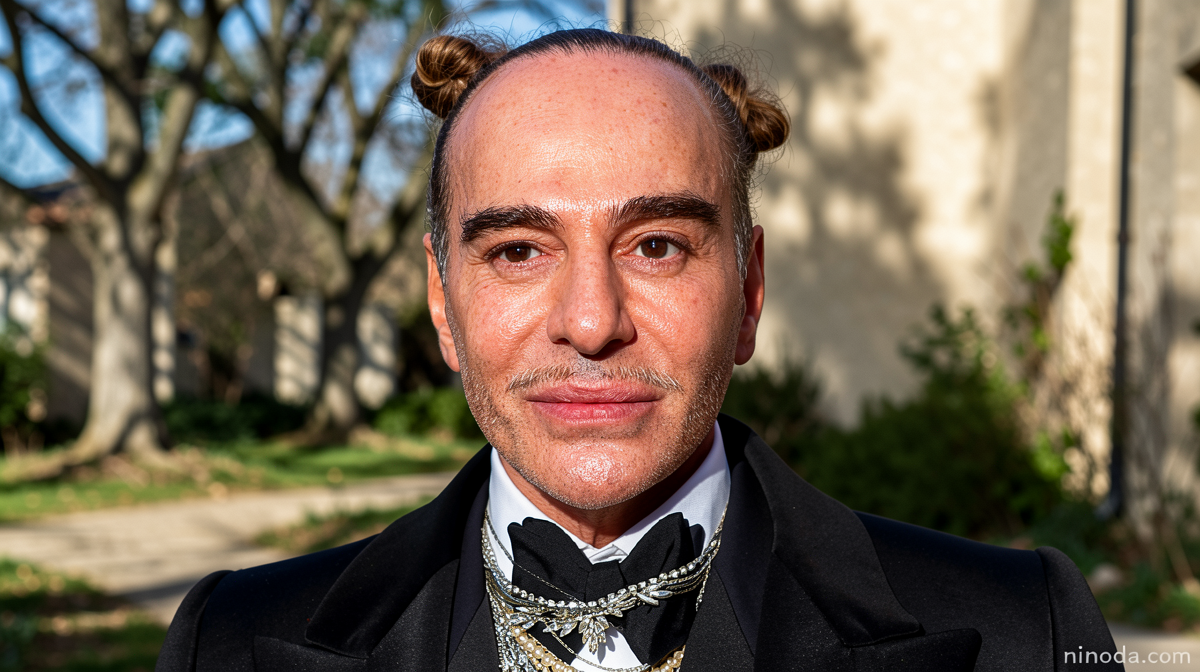
Table of Contents
John Galliano Pulls Out of Major New York Museum Show Amid Antisemitism Backlash
Ninoda.com – The Metropolitan Museum of Art in New York will not host a retrospective dedicated to John Galliano, the British fashion designer whose career was derailed in 2011 after he was convicted of hurling antisemitic and racist insults at a colleague. Galliano announced on Monday that the exhibition, originally scheduled to open in May 2027 under the title John Galliano: Horizons, will not proceed. The decision came after weeks of public outcry from Jewish community leaders, city officials, and civil-rights advocates who argued that spotlighting a designer with a documented history of antisemitic remarks was tone-deaf at a moment when such prejudice is surging globally.
The Original Incident and Its Aftermath
Galliano’s fall from grace began in a Paris restaurant in 2011, when he was caught on video abusing a Jewish curator and her South Asian friend. A French court heard testimony that he directed racist slurs at the woman’s companion and, in a separate episode, voiced admiration for Adolf Hitler. He was found guilty and sentenced to a suspended prison term. At the time, Galliano issued an apology, and his legal team attributed the outburst to “work-related stress and multiple addictions.” He was swiftly removed as creative director of Dior, the French luxury house where he had built a celebrated reputation in the late 1990s and early 2000s.
That conviction cast a long shadow over his subsequent career. Galliano eventually returned to the industry, spending roughly a decade as creative director of Maison Margiela before departing the label in 2024. Despite the controversy, many in fashion still regard him as one of the most gifted designers of his generation, and his runway work from the Dior era remains widely studied and referenced.
The Exhibition Announcement and Rising Opposition
The Met’s Costume Institute had confirmed the retrospective well before the backlash took hold. The show was intended to trace Galliano’s design legacy and would have set the thematic direction for the following year’s Met Gala, the star-studded fundraising gala that anchors the institute’s annual calendar. Compounding the sensitivity, the gala was slated for 3 May — the same date as Yom HaShoah, Israel’s national day of Holocaust remembrance. That coincidence sharpened criticism considerably.
Julie Menin, speaker of the New York City Council, had been pressing the museum for months. After what she described as “numerous and lengthy meetings and conversations with the Met,” she welcomed the cancellation.
“From the beginning, I have told them that I strongly disagreed with this decision, and at this rising time of antisemitism, it had served as a gut punch to the Jewish community. This is the correct decision, as the harm and pain this was causing was simply unacceptable.”
Jonathan Greenblatt, chief executive of the Anti-Defamation League, framed the episode in broader terms. With antisemitic incidents at what he called “crisis levels,” he argued that honoring Galliano would have been “misguided.”
“Even Galliano ultimately recognised what the Met should have done from the start. This was the wrong move at the wrong moment. Timing matters.”
Galliano’s Own Words
In a statement released Monday, Galliano acknowledged the weight of the past and framed his withdrawal as an act of accountability rather than mere concession.
“After much reflection and discussion with the Met and all those involved, I have decided, with great sadness, that it is best for the exhibition not to take place at this time.”
He went on to address the communities most directly affected by his earlier conduct.
“I remain fully accountable for the pain caused by my words in the past, particularly the hurt I caused to the Jewish and Asian communities, and I remain deeply sorry for it. I understand that meaningful atonement is not achieved through an exhibition, institutional recognition or a single public gesture. It is a continuing responsibility, demonstrated through listening, learning and one’s conduct over time.”
Galliano also noted that he did not wish to divert attention from what he called “the remarkable work” of the Costume Institute, and he acknowledged that “an exhibition honouring my work would be painful for some.” His statement referenced fifteen years of sobriety and ongoing recovery from alcoholism and addiction, underscoring the personal dimension of his public reckoning.
Institutional Response and the Met Gala Question
Anna Wintour, Vogue’s global editorial director, a Met trustee, and co-chair of the Met Gala, publicly backed Galliano’s choice. She had been photographed alongside him in January, and on Monday she characterised his decision as “very courageous and a measure of the man he is.”
“I believe this is the right decision, and both he and the Museum have my full support.”
The cancellation leaves the Costume Institute without a confirmed anchor exhibition for the 2027 season and raises practical questions about the Met Gala’s programming. Whether the institute will pivot to a different designer, a thematic survey, or a collaborative show remains to be seen. The museum has not yet issued a detailed statement outlining its revised plans.
Broader Implications
The episode highlights a growing tension in the art and fashion worlds between institutional recognition and community accountability. Museums and fashion houses increasingly face pressure to vet retrospective programming against the full record of an artist’s public conduct, particularly when that record includes remarks that wound specific communities. The Galliano case sits alongside a wider conversation about how institutions weigh artistic merit against the lived experience of audiences who feel excluded or disrespected by a show’s framing.
For the Jewish community in New York and beyond, the cancellation was received as a validation of sustained advocacy. For fashion insiders, it underscores that reputational capital, however substantial, does not immunise a figure from the consequences of past behaviour. Galliano’s career, which once seemed unassailable, now carries a permanent annotation: the designer who chose, in his own words, not to take the stage at this time.
Related Reading
Frequently Asked Questions
What is John Galliano exhibition at New York?
John Galliano exhibition at New York is the main topic of this guide. The article explains the context, practical details, and next steps readers should understand.
Why does John Galliano exhibition at New York matter?
John Galliano exhibition at New York matters because readers are looking for a useful answer, not just a short summary. Good content should match search intent and help them decide what to do next.