Prisoners freed early are returning to jail at rapid rate, governors tell BBC

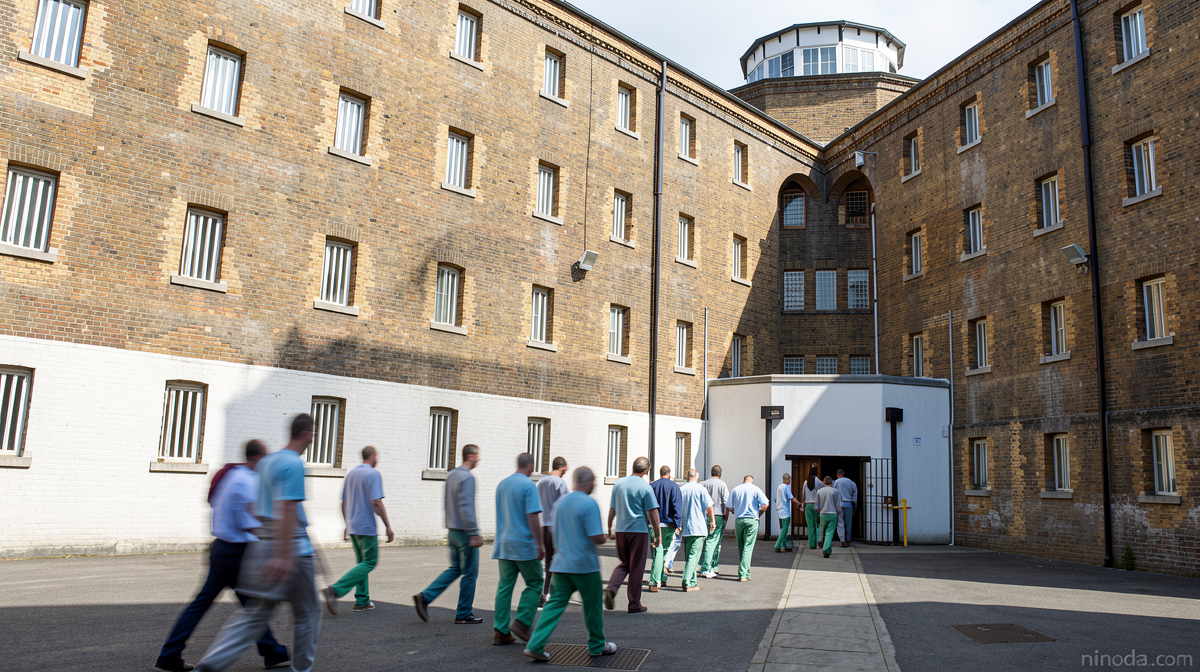
Table of Contents
Prisoners Freed Early Are Returning to Jail
Ninoda.com – Prisoners freed early are returning to jail at a pace that correctional leaders describe as unsustainable. Facilities across England and Wales now operate above 97% capacity, and the strain is not driven by a surge in new convictions. Instead, governors report that individuals discharged months ago under the government’s 2024 overcrowding-relief programme are walking back through the gates within weeks, having breached licence conditions or committed new offences. The pattern, which serving governors label a “churn,” is compounding with every successive cohort.
Recall Figures Show a Sharp Uptick
Official data for the year ending March 2026 record 51,419 licence recalls — instances in which a person under post-release supervision was sent back to custody for violating release terms or presenting a fresh public-safety risk. That figure marks a 28% increase over the 40,259 recalls logged in the preceding year. Although the January-to-March quarter registered a marginal dip relative to the prior three-month window, the annualised rate remains far above anything observed in recent decades.
The 2024 scheme was introduced as an emergency intervention. With prisons already near saturation and court backlogs stretching into the tens of thousands, ministers judged that temporarily moving lower-risk inmates out of custody would avert total system failure. By March of this year more than 70,000 people had been released under that programme, yet the overall prison population across England and Wales still stands at roughly 87,000, leaving just over 2,000 vacant spaces — a margin staff characterise as functionally meaningless against the volume of new sentences being handed down.
The consequence is a self-reinforcing cycle: an inmate is moved out to create breathing room, then recalled weeks later, consuming the very space the release was meant to free. A governor at a northern English prison, speaking anonymously because prison staff are generally barred from addressing the press, put it plainly:
“We see the same people coming back after being released early and reoffending again, or breaking their [release] rules.”
Two other serving governors, also based in northern England, gave similar accounts to journalists seeking an unfiltered picture of conditions inside correctional facilities.
Burnham’s October Overhaul and the Harper Factor
Prime Minister Andy Burnham acted swiftly after public fury erupted over the fact that the killers of Police Constable Andrew Harper had been made eligible for early release under existing rules. On Sunday, Burnham announced that the next iteration of the scheme, launching in October, will exclude anyone convicted of unlawful killing. He acknowledged the trade-off openly: the change means “hundreds” more people will remain behind bars at a time when facilities are already at breaking point.
The government has outlined supplementary measures — deportation of foreign-national inmates and the release of some prisoners serving indefinite determinate sentences — but officials concede these steps are unlikely to generate meaningful extra capacity before the first October cohort is processed. A northern governor summed up the frustration bluntly:
“It’s all short-term solutions and we need space now.”
They added that simply adding cells to existing buildings would require proportionally more supervisory staff, a resource that does not exist given chronic recruitment shortfalls. In their words, prisoners are currently “not living in a safe and decent environment.”
Gang Tensions, Shared Cells, and Health Risks
Overcrowding is producing secondary effects that governors warn could destabilise facilities. Because local prisons are full, inmates are being allocated to establishments far from their home regions. Men from Manchester and Liverpool, or from rival London boroughs, are now sharing the same wings, raising the probability of inter-gang friction and escalation.
“When you’ve got inmates from Manchester and Liverpool for example, there is a worry there could be gang tension. Or having people from different parts of London could mean an escalation in threat levels because of rival gangs.”
The spatial squeeze has also forced some facilities to place two inmates in cells designed for one. That arrangement, the governor noted, raises “serious health and safety concerns,” particularly given the limited workspace and ventilation in single-occupancy units.
Frequently Asked Questions
How many prisoners were released under the 2024 early-release programme? More than 70,000 people had been released under the scheme by March of this year, according to figures cited by prison governors.
What changed in October? The revised scheme excludes anyone convicted of unlawful killing, a move announced by Prime Minister Andy Burnham following public backlash over the Andrew Harper case. Officials estimate the change will keep “hundreds” of additional inmates in custody.
Why are licence recalls rising? Recalls jumped 28% year-on-year to 51,419 in the year ending March 2026. Governors attribute the spike largely to early-released individuals breaching licence conditions or committing new offences within weeks of discharge.
What is the current prison population in England and Wales? The population stands at approximately 87,000, with facilities operating above 97% capacity and just over 2,000 vacant spaces remaining.