What if Bluey spoke one of the world’s oldest living languages?

What if Bluey Spoke One of the World’s Oldest Living Languages?
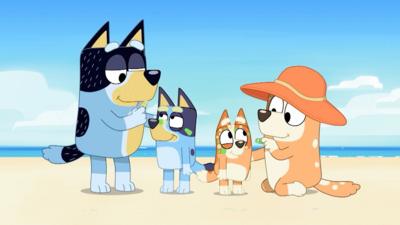
Ninoda.com – Imagine the beloved Australian children’s animated series Bluey not just speaking English, but one of the world’s oldest living languages. This imaginative scenario has become a reality as the show has been adapted into Yolngu Matha, a language group spoken by the Yolngu people of Arnhem Land in the Northern Territory. The initiative, which has brought five episodes of the series to life in this Indigenous language, represents a groundbreaking effort to bridge the gap between global media and the rich cultural heritage of Australia’s First Nations communities. By giving Bluey a voice in Yolngu Matha, the project not only introduces the language to a broader audience but also underscores the importance of preserving and reviving endangered linguistic traditions. This transformation of a popular show into a medium for cultural expression highlights the potential of storytelling to connect generations and celebrate the unique identities of communities often marginalized in mainstream narratives.
The Significance of Yolngu Matha
Yolngu Matha, a linguistic group with multiple dialects, has been spoken for thousands of years by the Yolngu people, whose ancestral lands span the northeastern region of Arnhem Land. With over 15,000 speakers, it remains one of the most vibrant and widely used Indigenous languages in Australia. However, many of the country’s 250+ First Nations languages are at risk of extinction due to factors like urbanization, colonization, and limited educational resources. The adaptation of Bluey into Yolngu Matha is a strategic response to these challenges, using a universally recognized children’s show to reinvigorate interest in the language among younger audiences. This project aligns with global movements to support linguistic diversity, where media and technology are increasingly leveraged to sustain endangered languages. By embedding Yolngu Matha into a beloved narrative, the creators aim to make language learning engaging, accessible, and culturally relevant for families across Australia.
“Our goal was to show that language is not just a means of communication but a living part of identity and culture,” said a producer involved in the initiative.
The team behind the adaptation worked closely with Yolngu elders, linguists, and community members to ensure the translation captured the nuances of the language and its deep connection to the Yolngu worldview. This collaboration extended beyond mere word-for-word translation, involving the reimagining of dialogue, sound design, and even the visual elements of the show to align with traditional storytelling practices. For instance, the use of specific tonal patterns and idiomatic expressions in the Yolngu Matha episodes reflects the language’s melodic structure, which is distinct from English. Such attention to detail not only honors the language’s complexity but also educates viewers on its cultural significance, transforming the show into a tool for both entertainment and education.
A New Era for Indigenous Language Representation
The inclusion of Yolngu Matha in Bluey’s repertoire marks a pivotal moment in the representation of Indigenous languages in children’s media. Historically, Australian Indigenous languages have been underrepresented in mainstream content, often overshadowed by English or other dominant languages. This project challenges that trend by positioning Yolngu Matha as a central component of a globally successful series, thereby amplifying its visibility and credibility. The decision to adapt the show into an Indigenous language also highlights the growing recognition of the role that media can play in cultural preservation. By integrating Yolngu Matha into familiar stories about family, play, and everyday life, the creators hope to foster a sense of pride and belonging among Indigenous children, encouraging them to see their heritage as a valuable part of the global narrative. Such efforts are critical in a world where linguistic diversity is increasingly threatened by homogenization.
“Children learn language through stories, and Bluey is a powerful vehicle for that,” noted a linguist collaborating on the project.
The Yolngu Matha episodes of Bluey are not just linguistic experiments—they are carefully crafted to reflect the values and traditions of the Yolngu community. For example, the show’s emphasis on kinship, respect for nature, and communal decision-making mirrors core aspects of Yolngu culture. This cultural alignment ensures that the adaptation resonates deeply with its intended audience, making it more than a mere language switch. It is a celebration of the Yolngu way of life, embedded in a format that is both familiar and engaging. The success of this initiative could pave the way for similar adaptations in other Indigenous languages, further diversifying the global children’s media landscape and providing a model for inclusive storytelling that honors linguistic and cultural diversity.
As the project gains momentum, its impact extends beyond the screen. Schools and community centers in Arnhem Land have begun incorporating the Yolngu Matha episodes into language education programs, using them as interactive tools to teach vocabulary, grammar, and cultural context. This has sparked renewed interest among parents and educators, who see the show as a way to make language learning more relatable and fun. Moreover, the initiative has generated conversations about the broader role of media in supporting linguistic revival. With the backing of the BBC and local Indigenous partners, Bluey’s Yolngu Matha adaptation is not just a testament to the resilience of the language but also a beacon of hope for its continued survival. As the creators continue to expand the project, the question of “what if Bluey spoke one of the world’s oldest living languages” may soon become a reality that inspires a new generation of language speakers and cultural stewards.
Looking ahead, the team plans to translate more episodes of Bluey into other Indigenous languages, such as Warlpiri and Nunggubinya, to create a wider-reaching impact. This multi-language approach not only celebrates Australia’s linguistic heritage but also demonstrates how global media can be tailored to reflect local cultures. The success of the Yolngu Matha episodes has already shown that children’s programming can serve as a powerful medium for language preservation, blending education with entertainment in a way that appeals to young learners. By making Bluey a part of the Yolngu story, the project redefines what it means for a language to thrive in the modern world. As more families engage with the show in their native tongue, the hope is that it will inspire a deeper connection to cultural roots and foster a renewed sense of identity among Indigenous communities. The question of “what if Bluey spoke one of the world’s oldest living languages” is no longer hypothetical—it is a stepping stone toward a more inclusive and linguistically diverse future.