Argentina face fine for Falklands banner in semi-final win

Argentina Face Fine for Falklands Banner in Semi-Final Victory
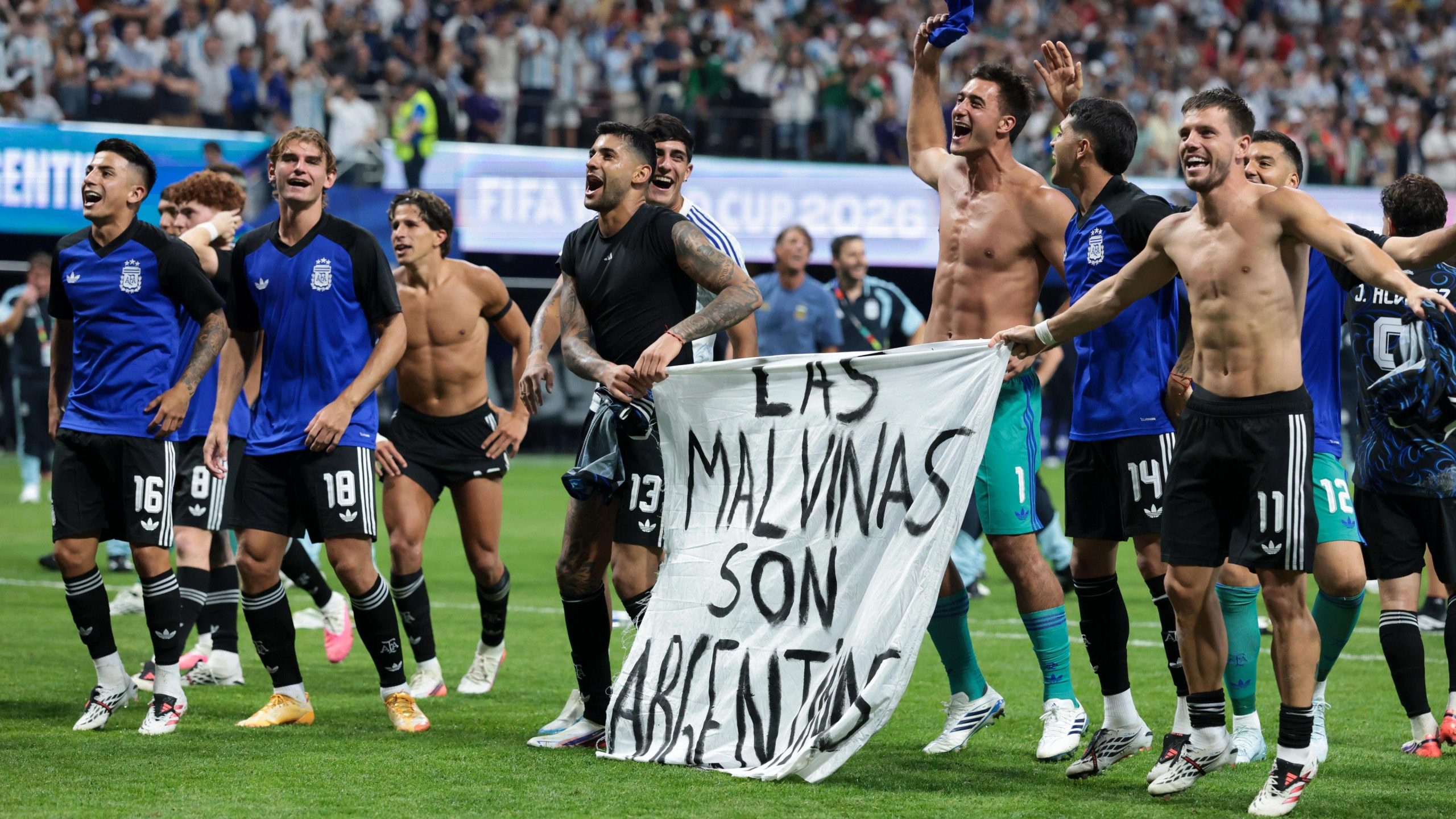
Ninoda.com – Argentina’s football team may face a fine from FIFA after displaying a Falklands banner during their World Cup semi-final win against England. The defending champions executed a dramatic late comeback in Atlanta, overcoming a 2-1 deficit to secure a hard-fought victory and advance to the final. Following the match, players held up a banner reading “Las Malvinas son Argentinas,” a phrase symbolizing Argentina’s claim over the Falkland Islands. This act of political expression sparked debate, as it highlighted the deep historical tensions between the two nations.
Historical Context and Political Significance
The Falkland Islands, a British overseas territory in the South Atlantic, have been a focal point of dispute between Argentina and the United Kingdom for decades. The conflict reached its peak in 1982 when Argentina invaded the islands, leading to the Falklands War—a 74-day military campaign that resulted in the loss of 655 Argentine and 255 British servicemen. Additionally, three local residents were killed during the conflict. The islands remain a symbol of national pride for Argentina, representing a contested chapter in its history.
“This wasn’t just another match. It was a moment to remind the world of our sovereignty and history,” stated Argentina’s vice-president, Victoria Villarruel, on X. She emphasized that the banner was a natural expression of patriotism, noting that the country’s footballers carry the legacy of the Falklands War in their hearts. Villarruel’s comments echoed the sentiment of many Argentinian fans, who viewed the display as a justified tribute to the nation’s claim.
The gesture has historical precedent. In 2014, FIFA had fined the Argentine Football Association £20,000 for using the same banner during a friendly match against Slovenia. The decision at the time was based on FIFA’s rules regarding political expression, which require teams to avoid displays that could incite controversy or prejudice. However, the current display has reignited discussions about the balance between national identity and international sports regulations.
Scaloni’s Strategy and FIFA’s Response
Despite the political symbolism, Argentina’s manager Lionel Scaloni defended the team’s actions, insisting they were a tribute to the country’s heritage rather than an act of defiance. “This is football, but it’s also a reflection of our national story,” he said. “We respect the rules, but we also believe it’s important to express our identity through these moments.” Scaloni’s approach has been to maintain a football-first ethos, ensuring the team remains focused on the game while subtly reinforcing its historical narrative.
FIFA’s stance on political expression in sports remains consistent, with its rules stipulating that teams must not use flags, slogans, or symbols that could be seen as advocating for a political cause. The organization has previously taken action against teams for similar displays, but this incident has prompted some to question whether the fine is necessary in a global context where such gestures are often viewed as expressions of national pride rather than political agitation.
As the World Cup progresses, the final showdown between Argentina and Spain looms. The semi-final victory, marked by late goals from Enzo Fernández and Lautaro Martínez, has set the stage for a thrilling climax. Meanwhile, the Falklands banner controversy continues to draw attention, with fans and analysts debating its role in shaping the tournament’s narrative. The potential fine underscores the delicate interplay between sport, politics, and international diplomacy in high-stakes events like the World Cup.