Can Mourinho restore Real Madrid to former glory?

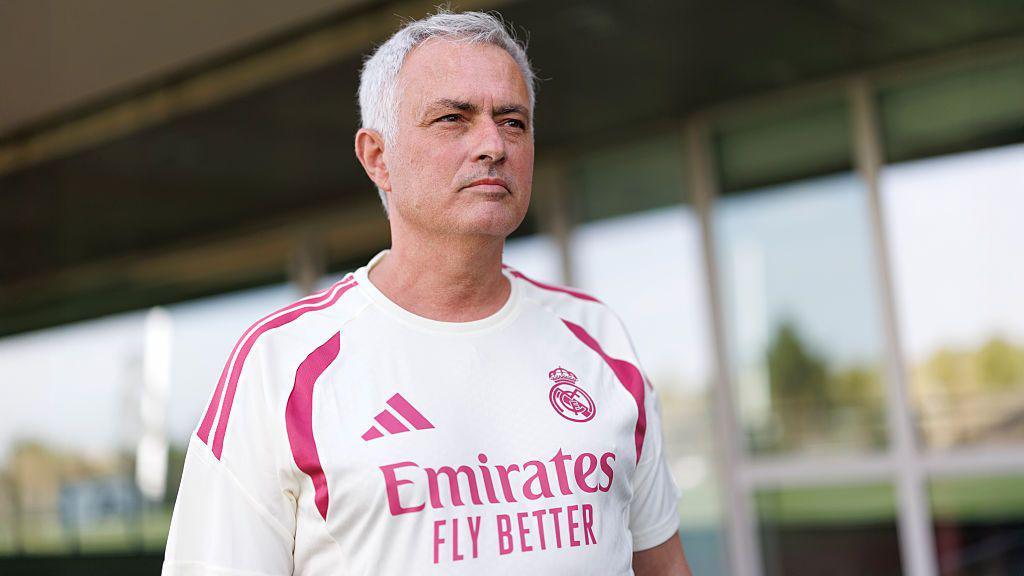
Table of Contents
Mourinho’s Madrid Mission: Can the Special One Reignite His Magic?
Ninoda.com – Jose Mourinho departed the Santiago Bernabeu in 2013 carrying the weight of three major honors: La Liga, the Copa del Rey, and the Spanish Super Cup. Now, thirteen years on, the manager who branded himself the “Special One” has returned to a club languishing through consecutive trophy-less campaigns. At sixty-three years old, Florentino Perez has placed his faith in a figure whose legacy is firmly established, yet the pressing inquiry remains: has the Portuguese tactician still got what it takes?
During a recent appearance on the More Than The Score podcast, BBC Sport consulted several observers intimately familiar with Mourinho’s methods to evaluate his prospects for this second chapter with Los Blancos.
A Bet on History Repeating
Mourinho’s trophy cabinet has seen limited additions since his Madrid departure, with the Premier League triumph at Chelsea in 2015 standing as his sole major silverware. His managerial journey through Manchester United, Tottenham, Roma, Fenerbahce, and Benfica has delivered cup successes alongside considerable upheaval.
Eduardo Alvarez, a Spanish football analyst, suggests Perez drew parallels between Mourinho’s situation and Carlo Ancelotti’s triumphant return to the Bernabeu.
“I think he’s betting on a second stint with Mourinho because Ancelotti was successful during his and it’s a very similar case,” Alvarez explained. “Ancelotti was coaching Everton, probably not at the top of his game anymore, 60 years old and suddenly, when he went to Real Madrid again, it worked out and he won the Champions League.”
Alvarez further noted that Mourinho’s style aligns with what Perez envisions for the squad.
“Mourinho falls into the category of Real Madrid not being a manager’s club but being a player’s club. Even though Mourinho is a very prominent manager, the way he manages is not tactically intense, but more player-intense, which is what I believe Florentino needs.”
Calderon Calls for Evolution
Not everyone is convinced Mourinho can replicate his earlier triumphs without adaptation. Ramon Calderon, who steered Real Madrid between 2006 and 2009, praised the appointment while cautioning against simply resurrecting the approach from over a decade ago.
“He’s going to need to change the behaviour and the attitude of the players,” Calderon stated. “He showed, when he was at Real 13 years ago, a lot of protagonism. He had many problems with clubs, rivals, referees and was always blaming others for the defeats and not taking the responsibility.”
Calderon emphasized that leadership through persuasion rather than authority will be crucial.
“I think he has to gain the respect and trust of the players by persuasion, not by imposition. He has to show them that his methods are the best ones for whole team and not have protagonists.”
Mourinho’s initial Madrid tenure followed his historic treble with Inter Milan in 2009. He secured domestic honors and guided the team to three consecutive Champions League semi-finals, though the period was characterized by intense media scrutiny, dressing-room friction, and contentious relationships.
“I hope he can change,” Calderon added. “If he insists on the same mistakes, it will be a problem.”
Has the World Moved On?
The question of personal evolution extends beyond Madrid’s borders. Duarte Monteiro, a Portuguese football correspondent, spent the previous season observing Mourinho at Benfica and remains skeptical about fundamental changes.
“Mourinho didn’t change. His character, his personality didn’t change. The problem, I think, for him is that the world changed,” Monteiro observed. “The young players today, the journalists and the environment is different and I think there’s not as much openness to embrace him now like maybe there was 20 or 25 years ago, when his character was fresh and new.”
Monteiro characterized Benfica’s campaign as pragmatic rather than entertaining, with Mourinho displaying varied priorities across competitions. A memorable 4-2 Champions League group stage win against Real Madrid provided highlights, though the team eventually fell in a play-off encounter.
According to Monteiro, familiar patterns emerged even at Benfica.
“He had two or three moments over the season where he was very publicly aggressive towards a group of players. Not every player at Benfica was with him last season.”
As Mourinho begins this new endeavor, the challenge lies not only in restoring silverware to the Bernabeu but in demonstrating that the Special One has evolved alongside the game he helped shape.
Related Reading
Frequently Asked Questions
What is Can Mourinho restore Real Madrid to former?
Can Mourinho restore Real Madrid to former is the main topic of this guide. The article explains the context, practical details, and next steps readers should understand.
Why does Can Mourinho restore Real Madrid to former matter?
Can Mourinho restore Real Madrid to former matters because readers are looking for a useful answer, not just a short summary. Good content should match search intent and help them decide what to do next.