Clark in control of US Open as wind hinders McIlroy and Scheffler

Wyndham Clark Holds Four-Stroke Lead at US Open Amid Wind Challenges
Ninoda.com – Wyndham Clark has firmly established himself as the dominant force in this year’s US Open, holding a four-stroke advantage after two rounds at Shinnecock Hills. The tournament’s unpredictable weather, particularly the relentless winds, has played a critical role in shaping the competition, with Clark leveraging favorable conditions to solidify his position. His performance of -7 over 36 holes has positioned him as the first player to reach seven under par, while top-ranked competitors like Rory McIlroy and Scottie Scheffler struggled to maintain consistency, finishing at even par and falling behind by seven strokes. Clark’s control of the US Open has been a topic of discussion among analysts and fans alike, as his strategic approach and composure under pressure have set him apart in a challenging field.
Course Conditions and Strategic Play
The Shinnecock Hills course has once again proven to be a formidable test for golfers, with its undulating fairways and tricky greens demanding precision and adaptability. The weather conditions fluctuated significantly during the tournament, with early rounds seeing players battle against a scoring average of 73.87 on Thursday, but Friday’s morning play brought a drop to 71.97. Clark’s ability to capitalize on these variations—playing his first round under calmer conditions late on Thursday and his second round early on Friday—has been a key factor in his strong performance. This strategic timing, combined with his steady putting and accurate driving, has allowed him to maintain his lead while others grapple with the course’s demands.
“The course is a beast here, and the wind makes it even more of a challenge,” said Wyndham Clark during a post-round interview. “You have to be very patient and read the greens carefully. It’s not just about power—it’s about control, and I’ve been able to maintain that throughout both rounds.”
While Clark’s grip on the US Open has been impressive, the wind’s impact has been felt across the leaderboard. Players on the opposite side of the course, such as McIlroy and Scheffler, faced harsher conditions, with Scheffler describing the gusts as “the biggest challenge” of his career. The United States Golf Association’s decision to position the tournament on Shinnecock Hills, known for its demanding layout, has created a unique set of circumstances where weather can drastically influence outcomes. Clark, however, has shown an uncanny ability to adapt, turning the elements into an advantage rather than a setback.
Competitors in Pursuit
Despite the wind’s hindrance, several players remain within striking distance of Clark’s lead. England’s Matt Fitzpatrick, the 2022 champion, and two-time major winner Xander Schauffele both sit at -3, showcasing their resilience. However, their scores have not matched Clark’s consistency, leaving him with a comfortable buffer. South Korea’s Tom Kim and American Sam Stevens, also at -3, add depth to the competition, though they are still four strokes behind the leader. The gap between Clark and his rivals highlights his ability to maintain composure, even as the field tightens around him.
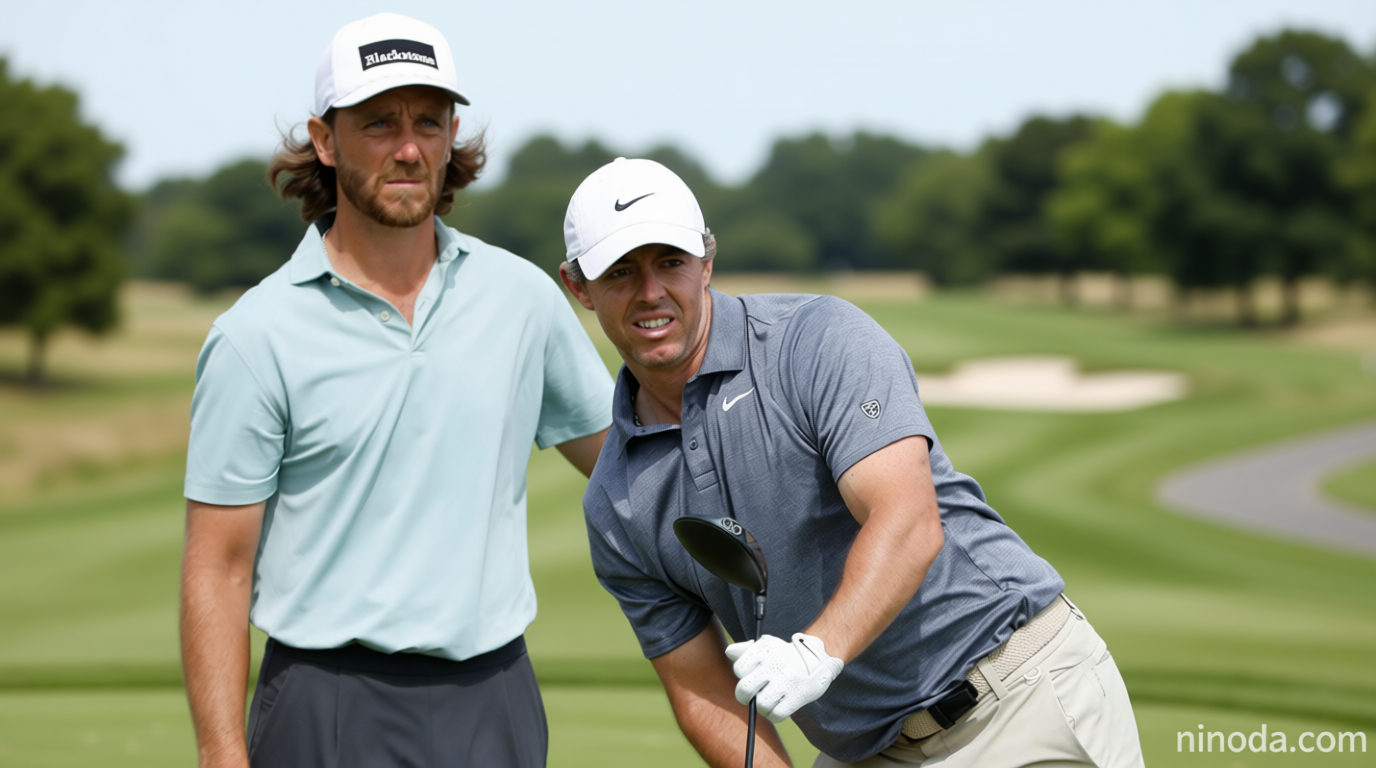
McIlroy, who has been a consistent contender in major championships, faced particularly tough conditions during his second round. The wind, which howled across the course, disrupted his rhythm and forced him to adjust his game on the fly. “Playing in the windiest conditions of the day was tough,” McIlroy admitted. “The ball doesn’t carry as it should, and the greens are so fast that any mistake is magnified. It’s hard to feel in control when the elements are working against you.” Scheffler echoed similar sentiments, noting that the wind’s effect on the greens made it difficult to judge the speed of putts, a crucial element in the final stages of the tournament.
Clark’s dominance has been further underscored by his experience and maturity. The 32-year-old, who once faced a dramatic slump at Oakmont in 2022, has shown significant growth in his approach to the game. That incident, where he smashed a locker after missing the cut, led to a period of reflection and personal development. Through anger management therapy and a renewed focus on his technique, Clark has transformed his mindset, ensuring that the challenges of the US Open are met with determination rather than frustration.
As the tournament progresses, the focus will shift to whether Clark can maintain his momentum. With the wind still a factor in the afternoon rounds, the course may present additional difficulties for those chasing him. However, Clark’s control of the US Open is not just a result of his current performance—it’s a testament to his ability to navigate the highs and lows of a major championship. His path to redemption and victory remains clear, and the leaderboard is watching closely to see if he can extend his lead into the weekend.