Is tennis’ relentless nature causing injury crisis?

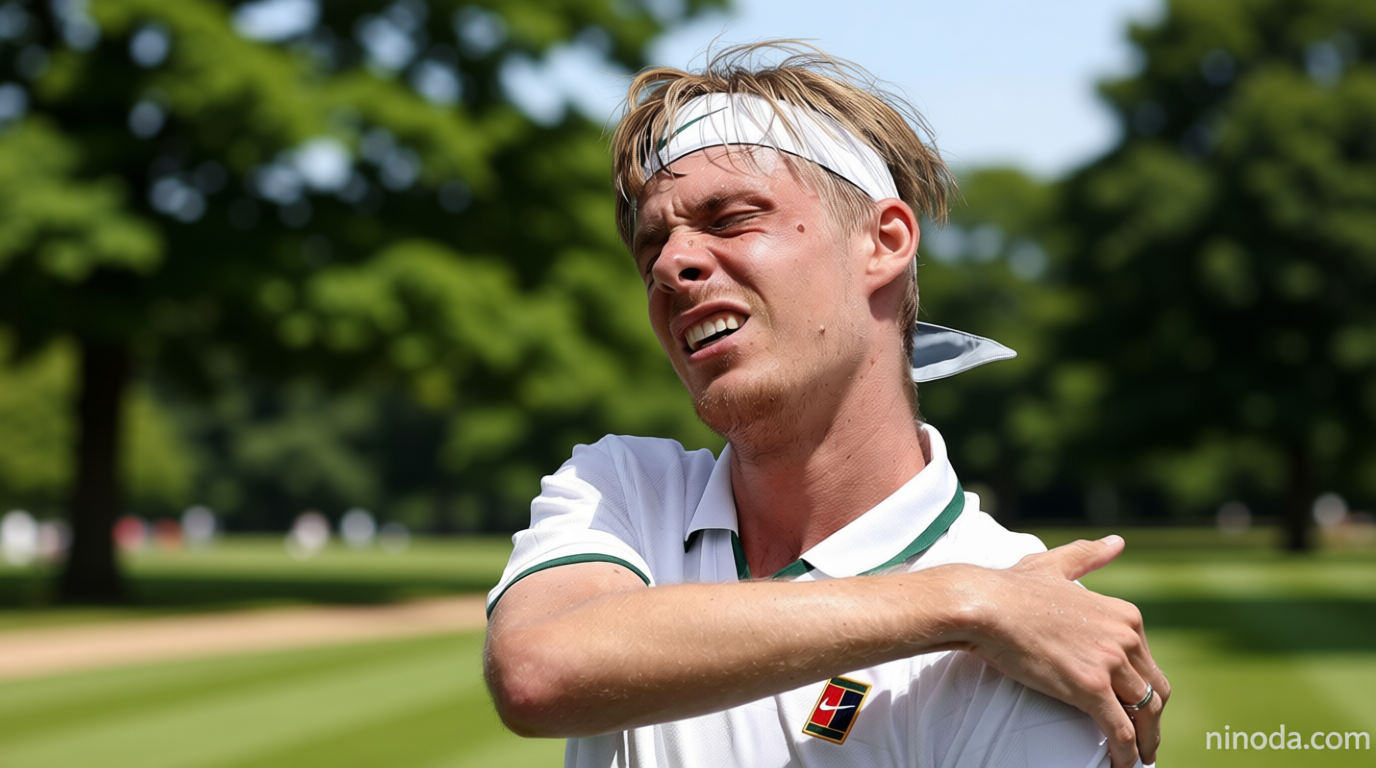
Is tennis’ relentless demands leading to a growing injury crisis?
Ninoda.com – Canadian tennis player Denis Shapovalov, who reached the Wimbledon quarter-finals in 2021, withdrew from his first-round match on Monday due to a shoulder injury. This follows Jack Draper’s recent comments about the high incidence of injuries in professional tennis. Less than a day after Draper expressed concern over the “pretty worrying” number of injuries, the British player exited Wimbledon with a recurring arm issue.
Former world number four Draper argues that the intense schedule—characterized by a grueling season, limited breaks, extended matches, and physical challenges—has contributed to players’ bodies wearing out. Seven-time Grand Slam champion Carlos Alcaraz is also absent from Wimbledon with a wrist injury, while multiple ATP players skipped grass-court events at Queen’s and Eastbourne to safeguard their health.
“Examining the tournament draws, it’s clear that most injuries target shoulders, arms, and wrists. The sport’s structure demands a closer inspection,” Draper remarked.
Draper’s withdrawal coincided with fellow Briton Emma Raducanu being sidelined by a stress fracture in her lower leg. The absence of these top-tier British stars highlights a significant challenge for Wimbledon, but it also signals a broader issue in the sport. “Players are pushing to achieve that extra 1%—spending more time on the court and in the gym,” noted former world number one Tracy Austin. “Some are participating in too many tournaments, which strains them mentally and physically.”
Medical professionals agree that tennis is becoming more taxing. Statistics reveal that matches and rallies have grown longer, players are faster, and they hit the ball harder than before. “If we could shorten the season and provide a longer off-season, injuries might be prevented,” said world number nine Daniil Medvedev. The sport’s mandatory tournaments, which stretch across two weeks to mimic ‘mini Slams,’ are seen as exacerbating the problem.
Stefanos Tsitsipas, a Greek two-time major finalist, added that the pressure to chase ranking points and prize money forces players to compete even when not fully recovered. “With constant training and back-to-back weeks on tour, it’s almost inevitable that overuse injuries occur,” he explained.
For those returning from injuries, the balance between court time and recovery is precarious. Naomi Broady, a former British player, noted the difficulty of this process: “It’s tough to give injuries time to heal and gradually rebuild fitness. When you come back too quickly, the damage is often reoccurred.”
“You can’t be substituted in tennis. You’re thrown back into action immediately,” Broady said.
Draper and Raducanu are among those who have experienced this strain firsthand. Draper, 24, had not competed in over two months before playing four matches at Eastbourne. His Wimbledon exit came after bone bruising in his serving arm resurfaced. Raducanu, 23, attributed her stress fracture to playing too many matches in a short span, including a quarter-final, semi-final, and final within less than 30 hours due to rain delays.
We need to protect players
Experts emphasize the need for structural changes to prevent player burnout. The current system, with its extended tournaments and back-to-back events, places immense pressure on athletes to maintain peak performance.
No substitutes in tennis
The lack of substitutions in tennis compounds the risk. Players must endure continuous play, leaving little room for recovery. As the season stretches nearly 11 months, the physical toll is evident in the rising number of injuries across all levels of the sport.