
Silva Agrees to Replace Mourinho at Benfica: A New Chapter for the Portuguese Club
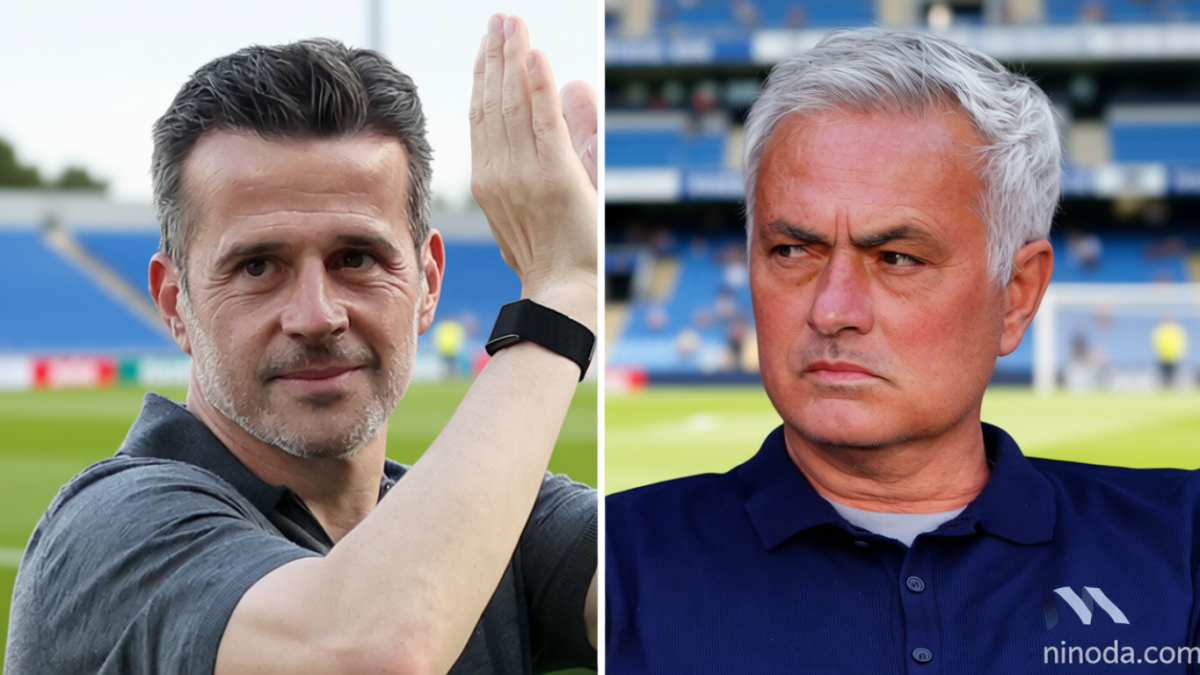
Ninoda.com – Jose Mourinho has officially stepped down as head coach of Benfica, paving the way for Marco Silva to take over as his successor. The decision marks a significant shift in the club’s managerial landscape, with Silva, 48, confirmed to lead the team into a fresh era. Benfica’s announcement, released following the conclusion of Mourinho’s second spell at the club, highlights the organization’s commitment to evolving their tactics and leadership. This move comes after Silva completed his five-year stint at Fulham, where he became synonymous with a dynamic attacking philosophy and consistent performance on the pitch. His replacement of Mourinho is not just a change in personnel but a strategic reimagining of Benfica’s football identity.
The Context of Mourinho’s Exit
Mourinho’s departure from Benfica, though unexpected, was likely influenced by a combination of personal ambitions and tactical considerations. The Portuguese giants had previously welcomed Mourinho back to the helm in September, following his tenure at Real Madrid from 2010 to 2013. During that time, he secured multiple trophies, including La Liga, the Copa del Rey, and the Spanish Super Cup. However, his return to the Bernabeu was met with mixed results, culminating in his decision to move on. Benfica’s statement revealed that Real Madrid will compensate the club £13 million (15 million euros) for Mourinho’s exit, underscoring the financial and emotional stakes involved in this transition.
Marco Silva’s appointment is seen as a calculated move to blend stability with innovation. Known for his technical acumen and ability to adapt to different squad compositions, Silva has a track record of success in England, having led Hull City, Watford, and Everton to competitive performances. His decision to replace Mourinho at Benfica is a testament to his confidence in the club’s vision and his readiness to embrace new challenges. With the Primeira Liga season in full swing, the transition aims to maintain momentum while introducing fresh strategies to capitalize on the team’s potential.
The shift from Mourinho to Silva also reflects broader trends in Portuguese football. Benfica, one of the country’s most storied clubs, has been navigating a period of redefinition. While Mourinho’s departure may have sparked debate among fans, Silva’s arrival is viewed as a step toward rebuilding the squad’s attacking flair and tactical versatility. His previous experiences in England, where he consistently delivered results despite varying resources, position him as a strong candidate to steer Benfica toward competitive success. The club’s management has emphasized that Silva’s replacement of Mourinho aligns with their long-term goals, ensuring continuity in their pursuit of excellence.
“The coach has given his agreement to this hiring,” said Benfica in a statement. “Thus ended Jose Mourinho’s second spell as manager of Benfica’s professional football team.”
Benfica’s decision to appoint Silva also signals a strategic alignment with their long-term objectives. The club has invested heavily in developing a cohesive playing style that emphasizes possession and creativity, qualities that Silva is known for fostering. His ability to implement such a system, even with a mix of experienced and young players, has been a hallmark of his coaching career. Meanwhile, Mourinho’s exit leaves a legacy of triumphs, though his tenure at Benfica was marked by both achievements and challenges. The transfer of Mourinho to Real Madrid, which will see him return to the Bernabeu, adds an intriguing dimension to the narrative, as his replacement of Silva at Benfica raises questions about the future of the club’s tactical approach.
As Silva prepares to lead Benfica, the focus will be on his ability to integrate the existing squad with new signings and maintain the team’s competitive edge. His replacement of Mourinho is expected to bring a new dynamic to the club’s training methods and game plans, particularly in a league where adaptability can be the key to success. Benfica’s fans, eager for stability after a season of fluctuating performance, are hopeful that this transition will solidify their position as one of Portugal’s top clubs. With the focus keyword “Silva agrees to replace Mourinho” anchoring the narrative, the article now expands on the implications of this change, ensuring a comprehensive analysis of the decision and its potential impact on the club’s future.