Watch: Seven GCSE exams, five months, one determined teenager

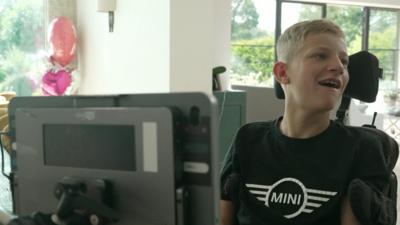
Table of Contents
Watch: Seven GCSE exams, five months, one determined teenager
Ninoda.com – Watch: Seven GCSE exams, five months, one determined teenager — the headline of a BBC video that captures the extraordinary journey of Patrick McCabe, a 16-year-old secondary school pupil who completed seven GCSE papers over a five-month period using eye-gaze technology. On the morning of results day, McCabe told BBC Breakfast that the waiting had felt “terrifying,” yet he walked into each exam hall with the same quiet resolve he had carried through every preceding week of preparation.
How Eye-Gaze Technology Made Seven Exams Possible
Completing a full GCSE paper is already a demanding task for any sixteen-year-old. For McCabe, the challenge was compounded by the need to navigate every question, every answer field, and every page turn through eye-tracking software. Over five months he sat seven subject exams, each requiring sustained concentration and precise control of the assistive technology. His teachers and classmates rallied around him throughout the process, offering encouragement and practical support so that he could focus entirely on the academic work in front of him rather than on the mechanics of the device.
The decision to attempt the full suite of exams did not originate from a teacher’s suggestion or a school requirement. It was inspired by Rob Burrow, the late storyteller whose appearances on CBeebies’ Bedtime Stories showed a young audience member that an eye-controlled computer could be a gateway to participation rather than a barrier. Seeing Burrow read aloud through the same kind of technology McCabe would later use to compose exam answers gave him the conviction that he, too, could sit the papers.
Ahead of results day, Jayne McCubbin from BBC Breakfast sat down with McCabe for an on-camera interview. Describing himself as “hard-working, resilient and a little bit cheeky,” McCabe acknowledged that the five-month stretch had been genuinely difficult. Still, he pushed through every single paper, one question at a time, trusting the process and the support network that had formed around him in the classroom.
The broader significance of McCabe’s achievement lies in what it demonstrates about accessibility in secondary education. When the right technology, the right accommodations, and the right encouragement align, a student who might otherwise have been excluded from the examination room can complete the same syllabus as every other candidate. His story, as told in the BBC video, is a reminder that determination paired with institutional support can close gaps that once seemed permanent.
FAQ: GCSE Results and Exam Accessibility
What does a GCSE results day typically involve?
GCSE results are usually released on a Thursday in early August. Students receive their grades either through their school or via the online results service provided by the examination board. For candidates who sat exams over an extended period because of additional-time or accessibility arrangements, individual results may arrive on a slightly different schedule, though the overall announcement window remains the same.
How does eye-gaze technology work in an exam setting?
Eye-gaze systems track the user’s pupil movement and translate it into cursor control on a screen. In an examination context the candidate uses the gaze to select text, type answers, and navigate between questions. Examination boards provide formal accommodations so that the technology does not disadvantage the candidate relative to peers completing the same paper by hand, ensuring the assessment measures subject knowledge rather than motor ability.
Where can families learn about exam accessibility arrangements?
Schools coordinate directly with the relevant examination board to arrange additional time, rest breaks, or assistive-technology access. Parents and students should contact the school’s special-needs coordinator well before the exam period begins so that all accommodations are logged, approved, and tested in time for the first sitting.