How soon will the drought be over?

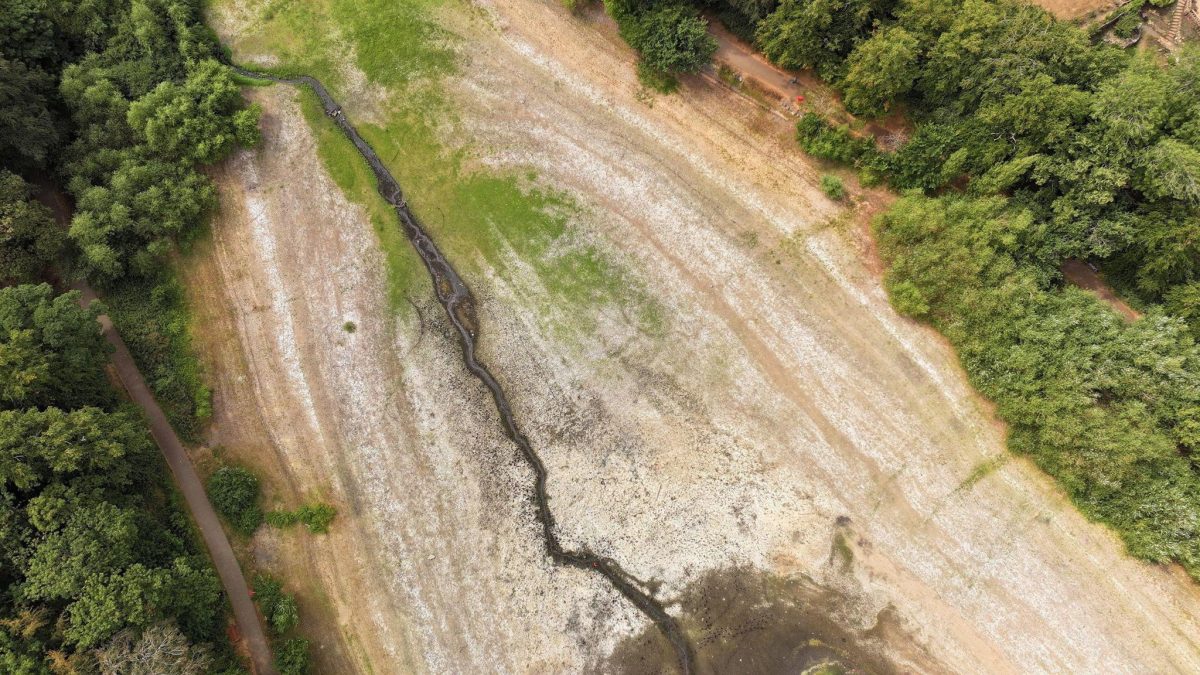
Table of Contents
Will the Recent Rain End the UK’s Drought?
Ninoda.com – After months of persistent dryness, some regions of Britain received rainfall earlier this week. Yet the question on most people’s minds remains unchanged: how long until conditions normalise, and how much precipitation is actually required to reverse the damage? The answer, as scientists explain, is far less simple than a single wet weekend.
A drought does not simply dissolve when clouds open. Water must percolate back into river systems, fill reservoirs, and recharge the vast underground stores held in the minute gaps between soil, sand, and bedrock. That process unfolds over months, not days. The critical metric, experts stress, is not whether rain fell but whether water resources have genuinely recovered.
The Cascade of Drought Types
Dr Katie Facer-Childs of the UK Centre for Ecology & Hydrology explains that this particular episode was driven not merely by below-average rainfall but also by temperatures running above normal. She describes the progression through distinct phases:
“This year we’ve gone through meteorological, soil moisture, and river flow drought.”
Meteorological drought marks the initial shortfall in precipitation. Soil moisture drought follows, draining the water that trees, crops, and evaporation pull from the ground. River flow drought then sets in as water levels drop. If aridity persists long enough, groundwater and reservoir stocks decline, producing the most severe consequences.
“However, we have not yet reached severe groundwater and reservoir drought, so that means there’s hope.”
The British Geological Survey reports that no groundwater monitoring sites across the country are currently at record lows, with roughly half sitting at normal levels.
When Will Recovery Become Visible?
The earliest reliable signal typically arrives in late autumn or winter, when seasonal rainfall increases and specialists can evaluate whether water is migrating through rock strata into aquifers. Dr Kevin Collins, a senior lecturer in environment and systems at The Open University, cautions that even when autumn storms arrive, the public tends to declare the crisis over prematurely. What is actually required is sustained precipitation spread across months, not a handful of intense downpours.
Hydrologists expect to have a definitive read on whether aquifers and engineered reservoirs have been adequately replenished by February or March. Environmental recovery, however, operates on a far longer timescale and may stretch into years.
A Worst-Case Warning
Should the winter prove dry, the present drought would deepen and government anxieties would intensify. Prof Tim Palmer of Oxford University characterises the prospect of another rainless summer as:
“catastrophic”
Some meteorological signals over Europe point toward a wetter-than-average autumn, potentially shaped by shifts in global ocean patterns including the developing El Niño phenomenon. Yet considerable uncertainty remains around those forecasts. Palmer urges authorities to begin contingency planning for a scenario in which adequate winter rain fails to materialise and the following summer mirrors the two preceding ones.
Flash Drought and Weather Whiplash
Sections of the UK have endured what scientists term a flash drought — an episode that builds with unusual speed, propelled by extreme heat, minimal rainfall, and exceptionally high water demand. The paradox is that once the land becomes severely parched, subsequent heavy showers can trigger flash flooding because the ground cannot absorb water effectively. The result is a rapid oscillation between extremes, the phenomenon colloquially called weather whiplash.
As global temperatures climb, researchers indicate these abrupt wet-to-dry swings are growing more frequent and are projected to worsen. A recent study concluded that Britain is likely to face faster transitions between drought and flood conditions, particularly in south-east England and portions of the north-west. Investigators warn this escalating volatility will complicate management of water supplies, agricultural operations, and critical infrastructure.
The pattern is not new in isolation: following the August 2022 heatwaves, London suffered flash floods as baked soils proved incapable of handling sudden downpours.
“Two Sides of the Same Coin”
Neil Entwistle, affiliated with Rebalance Earth and formerly a professor at the University of Salford, frames the situation bluntly:
“We’re in the new normal. And that new normal is we’ll get a lot of heavy rain and short amounts of rain.”
He contends that floods and droughts are inseparable — two sides of the same coin — and that centuries of relatively stable British weather patterns are giving way to a more turbulent regime.
Related Reading
Frequently Asked Questions
What is How soon will the drought be over?
How soon will the drought be over is the main topic of this guide. The article explains the context, practical details, and next steps readers should understand.
Why does How soon will the drought be over matter?
How soon will the drought be over matters because readers are looking for a useful answer, not just a short summary. Good content should match search intent and help them decide what to do next.