The Chinese graduate accused of being Mexico’s ‘fentanyl king’

The Chinese Graduate at the Heart of Mexico’s Fentanyl Trade
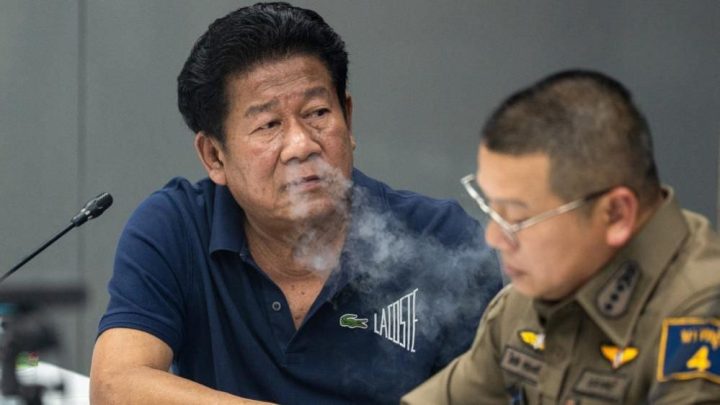
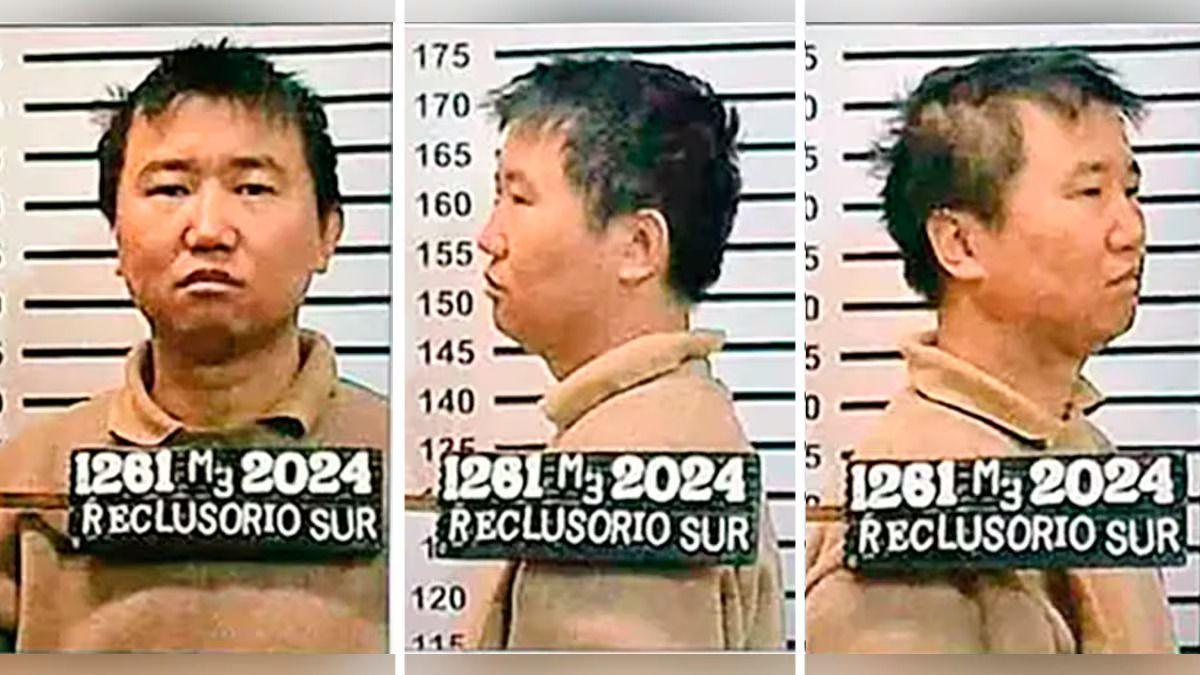
Ninoda.com – Zhang Zhidong, a 39-year-old Chinese national, is currently in the U.S. legal system, facing charges of drug trafficking and money laundering. According to Enrique, a high-ranking coordinator in Mexico’s Sinaloa cartel, Zhang’s involvement in the fentanyl supply chain was transformative. “Brother Wang held a pivotal position,” Enrique remarked, smiling knowingly. “He was top priority.” This nickname, “fentanyl king,” reflects the cartel’s acknowledgment of his role in establishing a complex network connecting Chinese chemical producers to Mexican laboratories.
A Hidden Connection Between Nations
Enrique, who uses a pseudonym, described his role in the Sinaloa cartel, one of the world’s most influential criminal groups. While parked near Culiacán, the state capital of Sinaloa, he shared how fentanyl ingredients are transported from Chinese factories across thousands of miles to Mexican labs. The cartel credits Zhang with creating this critical link, enabling the production of a drug 50 times more potent than heroin. A mere grain of salt’s worth can prove fatal, contributing to tens of thousands of deaths annually, predominantly in the U.S.
US President Donald Trump classified fentanyl dealers as “narco-terrorists” and designated the drug as a weapon of mass destruction. The fentanyl trade became a justification for imposing tariffs on China, Mexico, and Canada. US Customs and Border Protection agents have documented seizures of the drug and methamphetamine as they cross into Arizona from Mexico, highlighting the scale of the operation.
The Rise of a Global Trafficker
Zhang, a graduate of Peking University in Beijing, earned a Spanish degree in 2010 before relocating to Mexico. There, he joined a Chinese-owned iron ore mining company, quickly rising to a senior position. Colleagues recall him as a sharp, adaptable professional with a knack for communication. “He could negotiate with ease, was resourceful, and thrived in any setting,” said Alex, a former colleague who studied at the same university and worked in the same company. Alex noted Zhang’s fluency in Spanish, his streetwise language skills, and the distinct Beijing accent he maintained.
Initially, Zhang’s work in Mexico involved interactions with the underworld, including the cartels that dominate large regions of the country. Alex explained how Zhang built connections with both official and unofficial figures, a trait that drew him to the risks and thrill of the environment. “He loved the danger,” Alex said. “One night, he drove me out of town to fire pistols at road signs on an empty highway—a reckless act that showed his appetite for adventure.”
The collapse of the mining company in 2013 marked a turning point. While Alex returned to China, Zhang remained in Mexico. His transition from business to narcotics trafficking became apparent later, as he began posting on the Peking University Spanish alumni group on WeChat, offering currency exchange services at favorable rates. Alex speculated this was part of a money-laundering scheme. By 2016, U.S. court documents alleged Zhang had orchestrated a vast narcotics trafficking operation, linking Chinese manufacturers to Mexican labs.
A Case of Alleged Global Influence
Enrique, a cartel member, added that Zhang also ventured into drug distribution, forming ties with key figures. The U.S. Department of Justice claims Zhang operated a narcotics trafficking enterprise since June 2016, smuggling cocaine, fentanyl, and methamphetamine into the country. His legal proceedings in New York in 2025 were highlighted by Todd Blanche, the Deputy Attorney General at the time, who called Zhang “one of the most dangerous traffickers globally.” The case underscores how a graduate of China’s elite institutions might become a central figure in transnational drug networks.