Watch: Why is there a ‘black cloud’ over unity at the Nato summit?

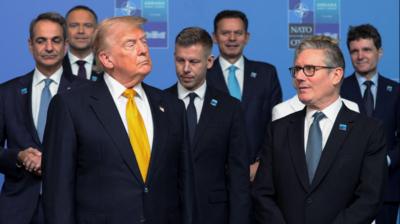
Watch: Why is there a ‘black cloud’ over unity at the Nato summit?
Nato leaders gather in Turkey amid rising US-Iran tensions
Ninoda.com – The NATO summit, held in Turkey, has drawn significant attention due to the presence of US President Donald Trump, who has been a pivotal figure in shaping the alliance’s recent trajectory. As the summit unfolded, the atmosphere was marked by a palpable sense of unease, with analysts describing a ‘black cloud’ over the unity that has historically defined the alliance. This tension stems from growing disagreements among member nations, particularly regarding the US’s strategic priorities and its impact on collective decision-making. The gathering, which took place against the backdrop of escalating hostilities between the United States and Iran, has reignited debates about the future of NATO’s cohesion and its ability to maintain a unified front in an increasingly fragmented global landscape.
Trump’s aggressive stance on international relations, notably his insistence on shifting focus from traditional alliances to bilateral partnerships, has been a central point of contention. His recent proposal to acquire Greenland, for instance, sparked discussions about whether the US is leveraging its global influence to prioritize individual gains over shared security goals. Meanwhile, the ongoing conflict in the Persian Gulf, where US military strikes have targeted Iranian assets, has raised concerns about the alliance’s capacity to mediate between its members and external adversaries. These issues have not only highlighted divergent perspectives within NATO but also underscored the challenges of balancing multilateral cooperation with unilateral actions.
The challenge of maintaining unity in a divided world
Historically, NATO has been a symbol of unity, with member states aligning on issues such as collective defense and global security. However, the current summit has revealed cracks in this foundation. European allies, in particular, have expressed frustration with Trump’s approach, arguing that it undermines the alliance’s democratic principles and strategic consistency. For example, Germany and France have emphasized the need for a coordinated response to crises in Europe, while also pushing for a more balanced distribution of defense spending among members. The ‘black cloud’ metaphor, often used in media and political discourse, aptly captures the sense of foreboding as leaders grapple with these internal and external pressures.
Defense budgets have emerged as another flashpoint, with some nations questioning the US’s commitment to shared financial responsibilities. The disparity in spending—where countries like the US and the UK allocate significantly more resources than others—has fueled discussions about fairness and sustainability. Additionally, the summit has seen debates over NATO’s role in the Middle East, with certain members advocating for expanded involvement in regional conflicts while others caution against overcommitment. These tensions are not new, but the urgency of the current geopolitical climate has amplified their significance, making the ‘black cloud’ over unity a recurring theme in analyses of the summit’s outcomes.
Global implications and the path forward
The challenges at the NATO summit have broader implications for international relations and the alliance’s ability to address global crises effectively. With the US and Iran engaged in a high-stakes confrontation, NATO’s role in mediating or supporting its members in the region has come under scrutiny. Some argue that the alliance must adapt to a multipolar world, where traditional hierarchies give way to more fluid partnerships. This shift could redefine NATO’s strategy, emphasizing flexibility over rigid consensus. However, the ‘black cloud’ over unity remains a critical obstacle, as the alliance’s strength lies in its collective decision-making process.
As the summit progresses, the emphasis on resolving these divisions will determine its long-term success. Leaders are expected to navigate delicate negotiations, balancing the interests of the US with those of its European allies. The summit’s outcome will likely influence future policies, from military interventions to economic collaborations. Meanwhile, public sentiment in member nations—many of which have been vocal about their concerns—will play a key role in shaping the alliance’s trajectory. The ‘black cloud’ over unity may linger, but the hope is that it will give way to renewed cooperation as the leaders work to address the complex challenges ahead.