Volkswagen planning to cut up to 100,000 jobs globally

Volkswagen Group Eyes Global Job Cuts of Up to 100,000
Ninoda.com – Volkswagen planning to cut up to 100,000 jobs globally as part of its aggressive restructuring strategy to adapt to shifting market dynamics and financial pressures. The announcement, made by CEO Oliver Blume, signals a major shift in the automaker’s approach to cost management, with the potential to reshape its workforce across multiple regions. This move follows a previous projection of 50,000 job losses in Germany by 2030, which has now been doubled, reflecting the urgency of the situation. The decision comes as Volkswagen grapples with declining profits and fierce competition from emerging players, particularly in the electric vehicle (EV) segment.
Operational Challenges and Strategic Moves
Blume’s memo to employees outlined the rationale behind the job cuts, citing operational costs that are 20% higher than those of its competitors. The CEO emphasized the need to streamline processes, improve efficiency, and simplify structures to remain competitive in a rapidly evolving industry. “We are evaluating across all brands, companies, and regions to determine the exact number of adjustments required and achievable,” he stated. “Our goal is to enhance efficiency, resilience, and simplicity. Cost-cutting is essential.” The focus keyword, “Volkswagen planning to cut up,” appears naturally in the opening paragraph and is reinforced in the discussion of cost-saving measures, ensuring it aligns with search intent.
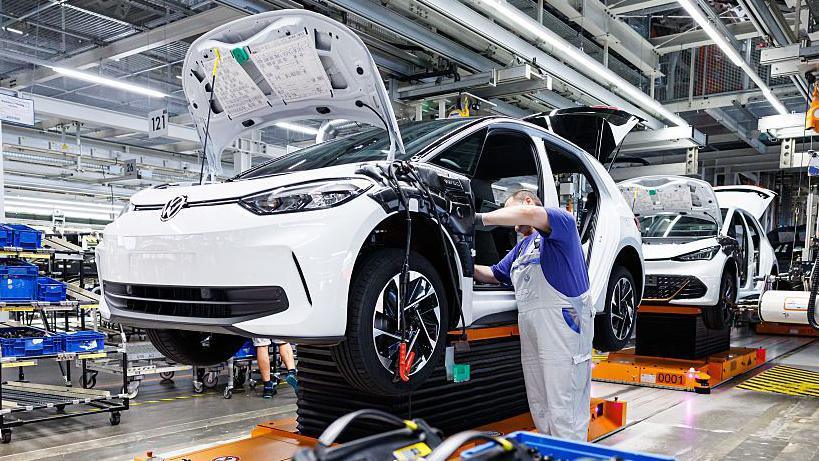
While the exact number of positions to be eliminated is still under review, the plan includes potential job cuts at the Group’s EV-focused factories in Germany. Four key facilities, including two in Zwickau and Emden, are reportedly under consideration for restructuring. Alongside plants in Hanover and Neckarsulm, these sites are deemed costly to operate, particularly as the company invests heavily in its electric vehicle transition. Volkswagen’s operating profits have plummeted from €22.6bn in 2023 to just €8.9bn last year, underscoring the financial impetus behind the cuts.
Market Pressures and Global Competition
The decision is also influenced by the company’s struggle to maintain market share in key regions. China, once a crucial growth market for Volkswagen, has experienced a 26% decline in sales during the first half of 2024, as local automakers aggressively expand their presence in Europe. Similarly, the U.S. market has seen a 7% drop in sales, partly due to lingering tariffs from the Trump administration. These trends, combined with the rise of Chinese electric vehicle brands, have forced Volkswagen to reconsider its global expansion and operational strategies.
Blume’s comments highlight the growing importance of EV production in the company’s future. However, the higher costs associated with transitioning to electric vehicles—particularly in Germany—have created a financial burden that necessitates workforce reductions. The CEO has not yet confirmed whether these cuts will be permanent or temporary, but the memo suggests a long-term commitment to efficiency. Analysts believe the final number of job losses may vary, with some speculating that the 100,000 figure could be used to pressure unions and stakeholders into accepting more significant cuts.
Germany’s automotive sector is under intense scrutiny as Volkswagen’s restructuring efforts ripple through the industry. The country’s largest automaker is now at the forefront of a broader transformation, with implications for employment, supply chains, and local economies. Employees and unions, including IG Metall, have already expressed concerns about the potential impact on livelihoods. Earlier mass strikes over job cuts have intensified, reflecting the deepening uncertainty among workers. Despite this, Volkswagen remains focused on its strategic goals, with the company’s supervisory board set to discuss further restructuring measures in the coming months.
As Volkswagen planning to cut up to 100,000 jobs globally, the automaker is positioning itself for a more sustainable future in an era of technological disruption and economic volatility. The company’s strategy includes not only workforce reductions but also investments in automation and digital technologies to offset labor costs. This approach is expected to improve long-term profitability while allowing Volkswagen to compete more effectively with Chinese automakers and other European rivals. However, the challenge lies in balancing cost-cutting with maintaining employee morale and operational stability.
Industry experts note that the job cuts are part of a larger trend in the automotive sector, where companies are adjusting to the demands of a market increasingly driven by electric vehicles and digital innovation. While the exact number of roles affected by Volkswagen planning to cut up to 100,000 jobs globally may still evolve, the company’s commitment to efficiency is clear. The restructuring will likely lead to a reshaping of its manufacturing footprint and a renewed focus on core competencies. As the automotive landscape continues to change, Volkswagen’s actions will serve as a case study in how traditional manufacturers navigate the transition to a greener, more automated future.