‘Burnham’s new era’ and ‘Viva España!’

Burnham’s New Chapter and Spain’s Triumph
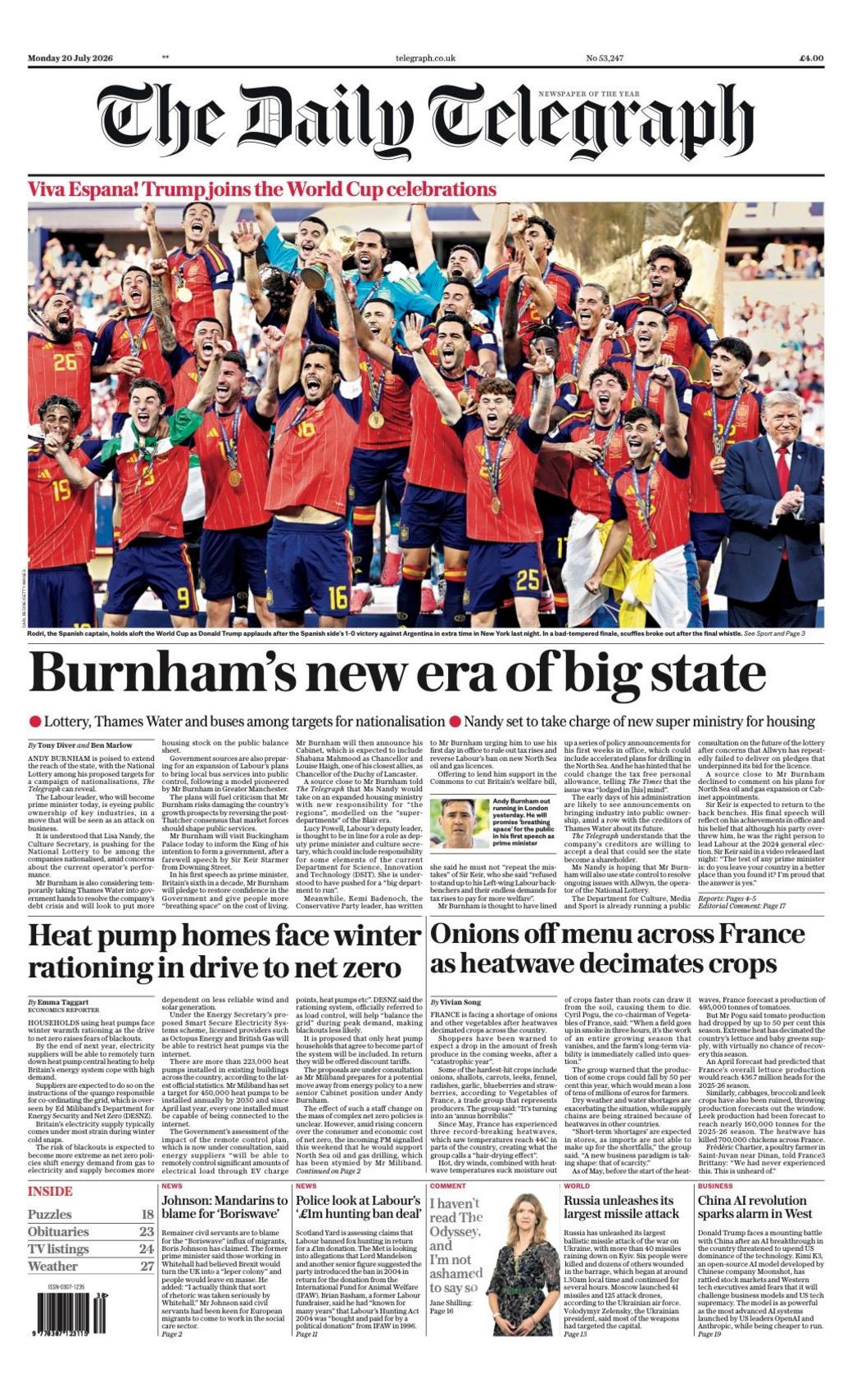
Ninoda.com – As the UK grapples with the dawn of a fresh political landscape, the headlines have been sharply divided between two pivotal stories: the inauguration of Andy Burnham as a new era for British leadership and the thrilling culmination of Spain’s World Cup campaign. The Daily Telegraph spotlighted the Spanish team’s celebration, with their victory over Argentina marked by a chorus of “Viva España!” echoing through the stadium. Meanwhile, Burnham’s vision for revitalizing the UK’s governance has sparked both anticipation and skepticism, as his early plans to nationalize key sectors such as the National Lottery, Thames Water, and local bus services signal a bold shift in economic strategy.
Spain’s Historic Win and National Pride
The i Paper’s coverage of Spain’s 1-0 extra-time victory highlighted not just the match itself but the broader significance of the triumph. Ferran Torres’ crucial goal in the 106th minute was more than a sporting achievement—it symbolized a nation’s resilience and a new chapter in its football legacy. The Times, in its special edition, noted the presence of US President Donald Trump at the final, who drew mixed reactions from the 80,663 spectators, with some criticizing his influence on the outcome. This win has reignited discussions about Spain’s role as a global football power and its economic growth, often framed alongside the phrase “Burnham’s new era” in media analyses.
“Burnham’s new era promises a fresh approach to governance, but the public remains divided on its potential impact,” remarked the Daily Mirror, which cited the prime minister’s ambitious plans to address cost-of-living crises. The paper’s editorial emphasized the need for clarity in Burnham’s message, noting that his aspirations align with the nation’s desire for change, much like the euphoria surrounding Spain’s “Viva España!” celebration.
Burnham’s Leadership and Policy Vision
With Burnham’s swearing-in at Buckingham Palace, the focus has shifted to his Cabinet formation, which is set to begin on Monday afternoon. Analysts speculate that Shabana Mahmood and Ed Miliband are likely to hold key roles, though uncertainty persists over the full structure of his government. The Financial Times has pointed out that Burnham’s administration is already considering a major restructure of public spending, aiming to streamline economic reforms and address the pressing challenges of inflation and public services.
Meanwhile, the Sun has framed the political climate as one of unprecedented disruption, highlighting the global attention on Burnham’s leadership and the parallels with Spain’s recent triumph. The Metro, in contrast, described England’s football team’s return from the tournament as a “rollercoaster political ride,” suggesting that their performance could influence public sentiment towards Burnham’s “new era” in governance. This dual focus on sports and politics underscores the interconnectedness of national pride and leadership aspirations.
Public Sentiment and Media Perspectives
Burnham’s first speech as prime minister, published in the Daily Telegraph, resonated with voters eager for tangible solutions to their economic struggles. He emphasized the urgency of addressing the frozen personal tax allowance, which has been a recurring point of frustration for many citizens. “This issue is lodged in my mind,” Burnham stated, pledging to implement a 10-year economic plan that prioritizes transparency and accountability in government spending.
The i Paper, however, noted that the media’s attention to Burnham’s “new era” has sometimes overshadowed the immediate impact of Spain’s World Cup victory. The Times also highlighted the role of “Viva España!” in shaping national identity, contrasting it with the political debates surrounding Burnham’s reforms. Despite the challenges, the nation’s focus on both Burnham’s leadership and Spain’s triumph reflects a broader cultural narrative of progress and unity.
Legacy and the Human Element
Burnham’s personal connection to his policies is evident in his heartfelt anecdotes, such as the interview with the Times where he shared his father’s struggle with Alzheimer’s. This human touch has helped to humanize his “new era,” contrasting with the more rigid critiques from Conservative leaders like Kemi Badenoch, who argue that Burnham lacks a coherent plan for tax reforms. The Daily Mail, however, suggests that Burnham’s approach is both timely and necessary, given the public’s demand for change in a time of economic uncertainty.
As the nation continues to process the implications of Burnham’s “new era” and the triumph of “Viva España!”, the interplay between political leadership and national pride becomes increasingly apparent. Whether through economic overhauls or sports successes, both narratives serve as reminders of the UK’s capacity for transformation and its collective aspirations for the future. With Burnham’s administration set to take shape, the coming months will be critical in determining how these dual threads of progress intertwine in the nation’s story.