Bowen: For all his bluster, Trump has no better option than talks with Iran

Bowen: For All His Fiery Rhetoric, Trump’s Strategy Against Iran Relies on Diplomatic Engagement
Ninoda.com – Bowen, a key strategist in the Trump administration, has long emphasized that despite the president’s outbursts and aggressive language toward Iran, the core of his approach remains rooted in negotiation. At the recent NATO summit in Turkey, Trump reiterated his tough stance, calling the Iran conflict “is over” and vowing to “probably hit them hard again tonight.” “They’re scoundrels,” he declared, adding, “they’re led by sick people. They’re vicious and violent. If they had a nuclear weapon, they’d use it. As far as I’m concerned, it’s over.” Yet, Bowen’s analysis suggests that this bluster is not a rejection of diplomacy but a calculated tactic to maintain pressure while keeping the door open for talks.
Trump’s Strategic Dilemma and the Role of Bowen
Bowen, who has been central to shaping U.S. policy toward Iran, acknowledges that Trump’s approach is a balancing act. While the president’s rhetoric often aims to rally domestic support and signal strength, the administration’s reliance on negotiations reflects a deeper understanding of the complexities involved. Trump’s team has long argued that military action alone cannot resolve the standoff, and that Iran’s nuclear ambitions must be addressed through dialogue. Bowen, a veteran negotiator, has been instrumental in outlining this strategy, emphasizing that even in moments of tension, diplomacy remains the preferred path.
“The idea is to keep the pressure on but also leave room for compromise,” Bowen remarked during a recent press briefing. “Iran knows that if we go fully military, they’ll have more time to build their nuclear arsenal. Talks are the only way to ensure they’re held accountable while avoiding a full-scale war.”
Bowen’s perspective aligns with the broader U.S. strategy, which seeks to deter Iran through a mix of threats and incentives. The administration’s latest plan includes a memorandum of understanding (MOU) that offers Iran economic relief in exchange for concessions on the Strait of Hormuz. Bowen has stressed that this framework is designed to address Iran’s strategic demands while securing American interests, a challenge that requires both resolve and flexibility.
The Impact of Khamenei’s Death on Negotiations
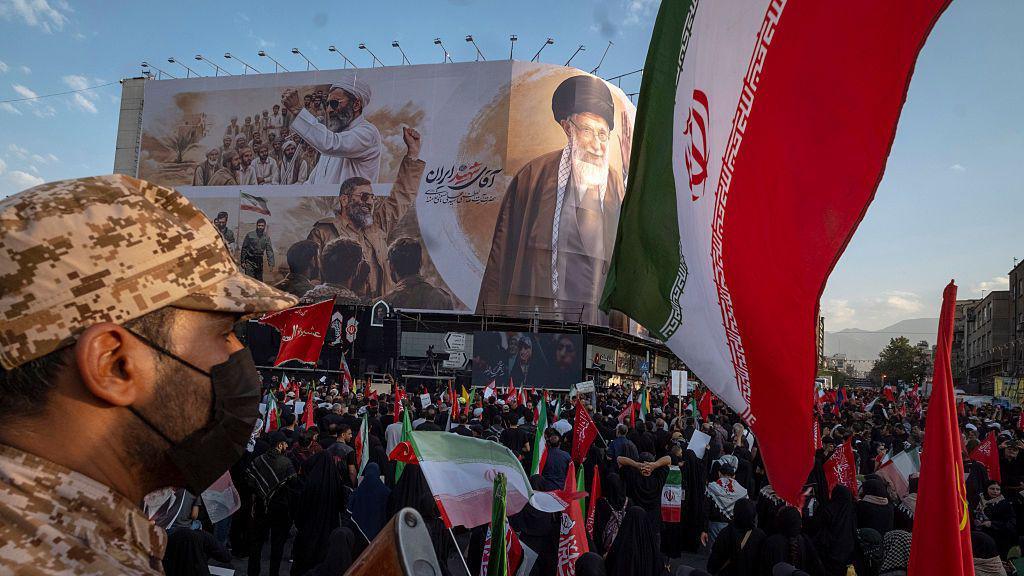
The funeral of Ayatollah Ali Khamenei, killed in an Israeli airstrike on February 28, has complicated the diplomatic landscape. While the Iranian regime has used the event to rally domestic support and reaffirm its position, Bowen has noted that it also serves as a reminder of the stakes involved. “This is a moment of unity for Iran, but it also highlights their vulnerability,” Bowen observed. “They need a deal to stabilize their economy and prevent further escalation.”
Despite Trump’s warnings, the U.S. has not yet escalated to full-scale military action, a decision that Bowen attributes to the administration’s commitment to finding a resolution. “The military has the capability to strike at any moment, but the political calculus favors talks,” he explained. “Iran’s leadership is willing to negotiate as long as they feel their strategic goals are not compromised.” The funeral, therefore, is more than a symbolic gesture—it’s a test of whether Iran’s resolve can be softened through diplomatic channels.
Broader Implications of the Talks
Bowen’s strategy underscores the importance of maintaining momentum in the negotiations, even amid high tensions. The MOU, which includes incentives for Iran, is part of a larger effort to address the country’s economic struggles while curbing its nuclear ambitions. “Iran’s priority is survival, not just the Strait of Hormuz,” Bowen stated. “If we can secure their cooperation on this issue, it could pave the way for broader agreements.”
The talks are not without challenges. Iran’s refusal to yield on the Strait of Hormuz has created friction, but Bowen believes that this is a strategic move rather than an insurmountable obstacle. “They’re trying to position themselves as the defenders of regional stability,” he noted. “By holding firm on Hormuz, they’re signaling that they won’t be pushed around.” Nevertheless, the administration’s patience is key, as Bowen has warned that any deal must be both fair and durable to avoid future conflicts.
Historical Context and the Path Forward
Bowen has frequently highlighted the historical context of U.S.-Iran relations, noting that previous agreements have often been fragile. The 2015 nuclear deal, for instance, was seen as a breakthrough but later weakened by sanctions and political shifts. “We’re in a similar position now,” Bowen said. “The challenge is to create a deal that’s resilient, with clear consequences for non-compliance.”
With the current negotiations, Bowen advocates for a multi-faceted approach that combines economic incentives with military readiness. “We can’t afford to be too soft, but we also can’t let our threats overshadow the opportunity for a deal,” he emphasized. The administration’s ability to navigate this balance will determine whether the talks succeed or fail, and Bowen’s role in steering this process has been critical. As the situation evolves, his insights will continue to shape the U.S. strategy in dealing with Iran.
Bowen’s analysis also points to the broader geopolitical implications of the talks. If successful, the agreement could reduce tensions in the Middle East, particularly around the Strait of Hormuz, which is vital for global oil trade. “A deal here would send a message to other nations that the U.S. is willing to work with Iran when it serves our interests,” he said. However, the president’s insistence on maintaining a strong posture has kept the situation in flux, with each side carefully weighing the risks and rewards of continued engagement.
The Future of U.S.-Iran Diplomacy
As the talks continue, Bowen remains a vocal advocate for patience and persistence. “This isn’t just about the Strait of Hormuz—it’s about the long-term stability of the region,” he said. “We need to make sure that whatever deal we reach is enforceable and beneficial for both sides.”
Bowen’s strategy has also been influenced by the evolving dynamics of international relations. With global oil prices fluctuating and regional allies weighing their options, the U.S. must present a compelling case for diplomacy. “The world is watching, and we need to show that talks are the best path forward,” he added. The coming weeks will be crucial in determining whether Trump’s approach, as outlined by Bowen, can bridge the gap between the two nations and avoid a more dangerous confrontation.