EU calls emergency meeting to discuss Ceuta migrant crossings

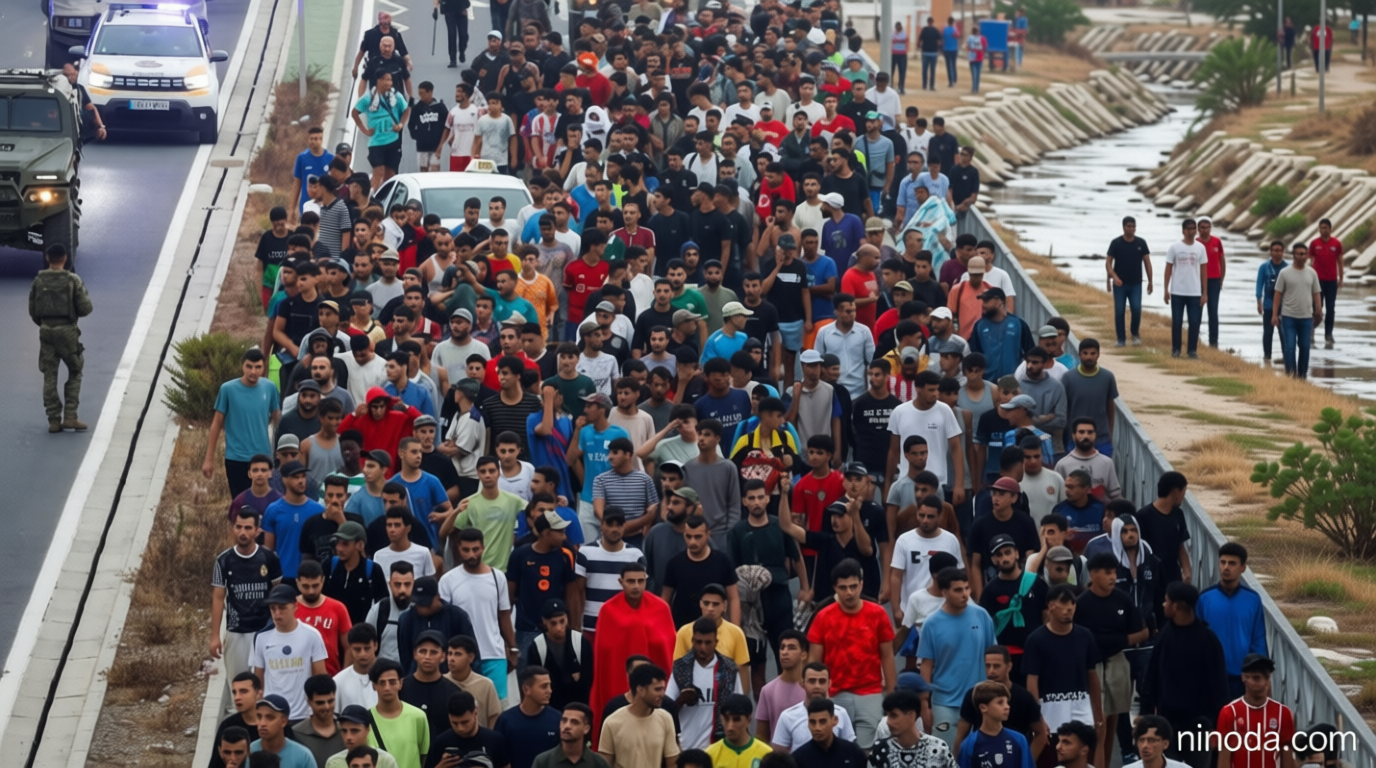
EU Convenes Urgent Session Over Ceuta Migration Surge
Ninoda.com – The European Union is preparing for emergency discussions this Tuesday regarding the ongoing migration situation in Ceuta, following strained communications between Spain and fellow member nations. Approximately 60,000 individuals crossed from Morocco into the Spanish territory on July 30, prompting calls for unified response measures.
A coalition of twenty-two member countries released a collective statement advocating for coordinated efforts and reinforced external boundary protections. The correspondence highlights worries about “hybrid threats to create the perception that illegal entry into the European Union is possible,” noting such perceptions “would encourage further attempts, undermine confidence in our common migration policy and have repercussions for all Member States.”
International Reactions and Diplomatic Tensions
Spain expressed disappointment with what it characterized as a “selfish, polarising and unlawful” response from certain European partners. Italy’s decision to temporarily halt the Schengen arrangement with Spain received support from both Finland and Denmark. The joint letter bears signatures from leaders of the Netherlands, Finland, and Belgium, and was directed toward EU President Antonio Costa, European Commission president Ursula von der Leyen, and Irish Taoiseach Michael Martin, given Ireland’s current Council presidency.
Prime Minister Pedro Sánchez communicated his “serious concerns” to von der Leyen in a separate correspondence. He emphasized that Spanish authorities had reestablished complete border control within forty-eight hours, successfully blocking any “unauthorised onward movement towards continental Europe.”
“While most had shown ‘support and solidarity’, Sánchez said other European governments had chosen to attack Spain, ‘driven by prejudice, fake news, ignorance, or political interest’, and pointed out that Ceuta was not part of the Schengen area.”
Current Situation and Recovery Efforts
Government sources indicate that nearly every migrant who arrived on July 30 has since gone back to Morocco. The death toll from the crossing surge has climbed to a minimum of 67 fatalities. Interior Minister Fernando Grande-Marlaska reported during a Saturday press briefing that conditions had “almost returned to normal,” with commercial establishments reopening their doors.
Grande-Marlaska also mentioned ongoing work to install inflatable barriers designed to stop unauthorized water crossings. On Friday, Sánchez blamed trafficking networks for capitalizing on a recent supreme court ruling that limited the government’s ability to swiftly deport sea arrivals.
Broader European Concerns
The Schengen Area, which covers twenty-nine nations and over 450 million residents without internal border checks, has faced renewed scrutiny. Beyond Italy’s one-month suspension with Spain, France, Portugal, and Finland have all indicated they are evaluating or implementing border controls. Danish Prime Minister Mette Frederiksen called on the EU to “consider all options, including a suspension of Schengen co-operation.”
Von der Leyen described the scenes from Ceuta as “unacceptable” in her social media statement, declaring: “We cannot allow anyone to come to our Union without abiding by our rules.” German Chancellor Friedrich Merz pressed Morocco to “take back illegal migrants immediately,” while UK Prime Minister Andy Burnham confirmed on Saturday that Britain was “providing what help we can.”
Historical Context
Alongside Melilla, Ceuta represents the European Union’s sole terrestrial connections with Africa. Travelers can swim several kilometers to reach the enclave. Though this year’s influx stands out as remarkable, Ceuta has consistently served as a migration gateway. Summer months typically see heightened movement, often coordinated through social media platforms. In 2021, roughly 8,000 individuals crossed into Ceuta within days, intensifying Spain’s diplomatic friction with Morocco.
Spain maintains a welcoming immigration stance. In April, officials approved measures granting legal standing to 500,000 undocumented migrants, enabling formal workforce integration. Morocco experienced Gen Z anti-government demonstrations last year, with youth calling for enhanced public services and improved economic opportunities.