Free school meal pupils falling further behind their peers, report warns

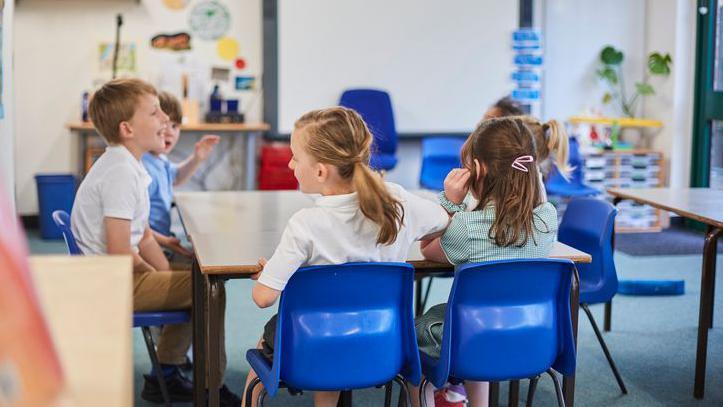
Report Highlights Growing Educational Disparity Among Free School Meal Pupils
Ninoda.com – Free school meal pupils falling further behind their peers, a critical issue highlighted by the latest report from the Education Policy Institute (EPI), underscores a widening achievement gap in England’s education system. Despite some progress made since the pandemic, the research reveals that disadvantaged students—those eligible for free school meals—continue to lag significantly in academic performance compared to their more affluent classmates. This divide has deepened at every stage of schooling, with early years education showing the most alarming disparities. The findings serve as a stark warning to policymakers, emphasizing the urgent need for targeted interventions to address the systemic challenges facing these students.
Government Initiatives and Persistent Gaps
The Department for Education has been working to narrow the educational gap by expanding access to government-funded childcare and broadening eligibility for free school meals. However, the EPI report suggests that these efforts are not yet sufficient to close the gap, which has grown by 17% in early years education since the pandemic. At Key Stage 4, the disparity has widened again, with disadvantaged pupils falling 19 months behind their wealthier counterparts in terms of academic attainment. This gap is not just a reflection of economic hardship but also of systemic inequities in resources, support, and opportunities.
“The size of the gap between the educational outcomes of children from more and less advantaged backgrounds is a scourge on our society,” stated Julie McCulloch, CEO of the EPI. “The government’s ambitious target to halve the gap is right and welcome, but it must be more exacting in how it is achieved.” The report highlights that free school meal pupils falling further behind are not only at risk of lower grades but also of reduced confidence and future career prospects. Without significant investment, the disparity is expected to persist for the current generation of students.
The National Education Union’s Daniel Kebede has criticized the current assessment system for disproportionately disadvantaging students from less privileged backgrounds. He argues that statutory testing in primary schools exacerbates the problem, as it places additional pressure on free school meal pupils falling further behind. To mitigate this, Kebede suggests introducing alternative evaluation methods that account for socio-economic factors and provide a more equitable measure of student progress. Meanwhile, the Local Government Association has called for a review of funded childcare eligibility to ensure lower-income families are not excluded from vital support programs.
Regional Disparities and Policy Recommendations
Regional trends reveal that the educational gap is most pronounced in the South-East and South-West regions of England, where disadvantaged pupils falling further behind are consistently outperformed by their peers. However, students in London from similar backgrounds have shown better performance, suggesting that urban areas may have more resources to address the issue. The EPI report recommends that the government increase school funding specifically for free school meal pupils falling further behind, as well as implement localized strategies that reflect regional differences in educational challenges.
“The government must adopt a more precise approach to tackling the educational gap,” McCulloch added. “This includes not only increasing funding but also ensuring that policies are tailored to the unique needs of free school meal pupils falling further behind.” She emphasized that the current measures are insufficient, with free school meal pupils falling further behind still facing significant barriers such as limited access to technology, fewer extracurricular opportunities, and less parental support at home. The report also calls for greater accountability in schools to monitor progress and adjust strategies accordingly.
Education Secretary Bridget Phillipson has acknowledged the need for a “bolder future” in universal early years education, aiming to prevent free school meal pupils falling further behind from being left behind. Her remarks align with the Department for Education’s commitment to providing “whatever it takes” to level opportunities across all social groups. Yet, the EPI warns that without concrete action, the current generation of students will remain the most disadvantaged in recent history, with free school meal pupils falling further behind in