Holy Cross school dispute was ‘hatred at its worst’

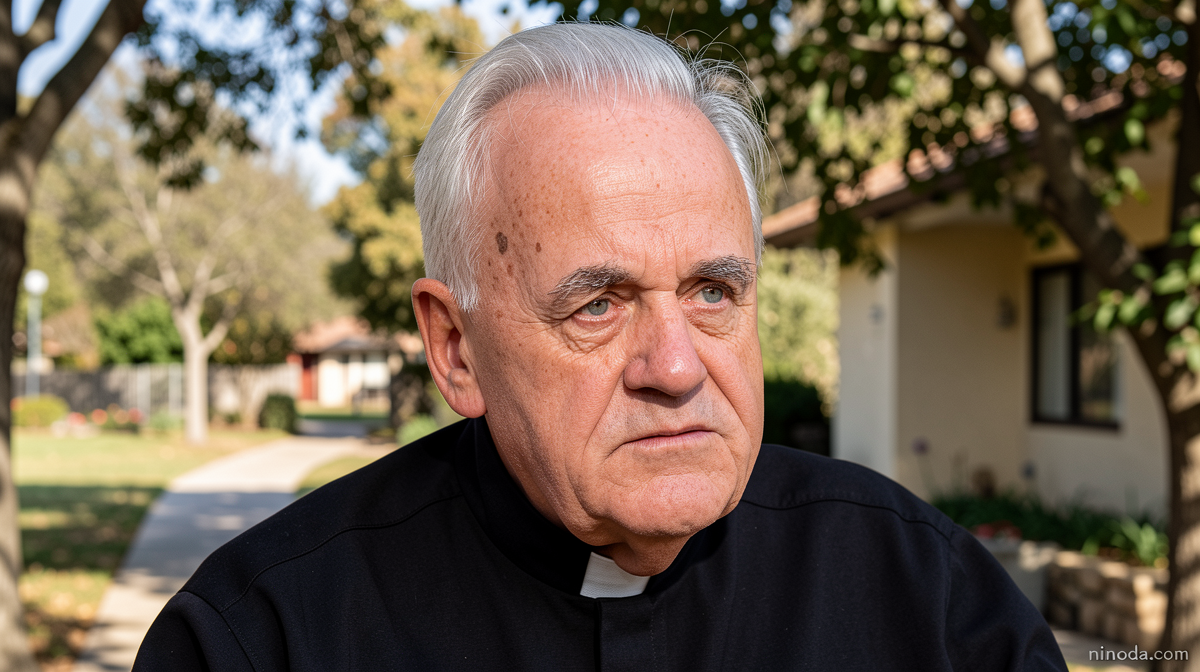
Table of Contents
Twenty-Five Years On, the Wound of Holy Cross Still Aches
Ninoda.com – The daily walk to primary school in north Belfast became, for several weeks in 2001, a gauntlet of fear for Catholic children and their parents. Two and a half decades later, the memory of that ordeal has not dulled. Instead, it has sharpened into a warning: that the same machinery of sectarian hostility could, in altered form, be set in motion again. The 25th anniversary of the Holy Cross dispute has brought renewed attention to what happened, and to the people who stood between frightened schoolchildren and a mob determined to shut them out of their own neighbourhood.
What unfolded in the Ardoyne streets
The dispute erupted when loyalist residents, many of them Protestant, moved to physically block the route that Holy Cross primary school pupils and their Catholic families had long used to reach the classroom. The protesters framed their action as a response to what they described as Catholic aggression against their homes in the surrounding streets. For weeks, the confrontation escalated. Stones, glass bottles, fireworks, and at one point a blast bomb were hurled at the children and at the security forces attempting to keep the corridor open.
The police and the British Army responded by erecting crash barriers along the route, creating a narrow protected lane through which the pupils could pass. The resulting images — small girls in school uniforms sprinting between rows of armoured officers while jeers and projectiles flew from either side — were broadcast across international news networks and became one of the defining visual symbols of post-Good Friday Agreement sectarian tension in Northern Ireland.
The priest who stood in the middle of the road
Fr Aidan Troy, who served as parish priest in Ardoyne during the crisis, has spent the years since trying to translate that experience into a sustained commitment to inter-community conversation. Speaking to mark the anniversary, he described the sectarian confrontation as
“hatred at its worst.”
He explained that the possibility of such hatred recurring is precisely what keeps him
“devoted to dialogue, to conversation, to searching for justice and to caring about people.”
Troy was emphatic that the story should not be told as an exercise in assigning blame. Rather, he framed it as a collective admission of capacity — an acknowledgment that communities living side by side are capable of inflicting this kind of degradation on one another’s children, and that the only responsible response is a firm, ongoing commitment never to allow it again.
“We tell this story, we are capable of doing this to each other but let’s make a commitment that we never will and we’ll not do anything that would ever demean the way those children were demeaned.”
He recalled the visceral quality of being surrounded by that animosity:
“Hatred is the rawest, smelliest, most awful thing that anyone stood in the middle of.”
People still approach him, he said, to express gratitude for what he did that day. His reaction is one of quiet discomfort.
“I am embarrassed because I didn’t do anything really worthwhile.”
Yet he acknowledged the weight of what those families told him: that their children had been given back a sense of dignity, that they were worth entering through the front door, and that someone had stood in the road and declared as much.
The principal’s private toll
Behind the barricades and the camera lenses was a school administration trying to keep a functioning institution alive under extraordinary pressure. Anne Tanney, who was principal of Holy Cross during the dispute, spoke publicly in 2004 about the psychological cost the protests exacted on her personally. Roughly 100 pupils required counselling as a result of their daily ordeal of being escorted through hostile streets.
Tanney described her own experience of sustained trauma:
“There were times when I couldn’t eat, couldn’t sleep.”
She added that she would bite her own lip in an effort to hold back tears while the children watched her.
“I used to bite my lip, trying not to cry in front of the children.”
Why the anniversary matters now
The Holy Cross episode sits in a particular place in Northern Ireland’s recent history: after the 1998 Good Friday Agreement had formally ended the Troubles, yet before the full institutional and social architecture of power-sharing had taken root. It demonstrated that the absence of a shooting war did not guarantee the absence of sectarian violence, and that the most vulnerable targets were not combatants but children simply trying to get to class.
Fr Troy, reflecting on whether the exact scenario could repeat itself, offered a measured answer. The shock of 2001, he suggested, probably means the identical form of the confrontation would not simply replay. But the underlying vulnerability — the capacity of one community to organise fear and exclusion against another’s children — remains.
“The shock of Holy Cross, even 25 years later, probably means that it probably would not happen [again] in the exact same form, but the hurt is always possible.”
That qualification carries practical weight. In a political landscape where housing segregation still shapes neighbourhood boundaries in Belfast, where school catchment areas can become flashpoints, and where social media can accelerate the kind of communal anger that once required weeks of street-level mobilisation, the anniversary functions less as a memorial than as a reminder. The crash barriers have long since been removed. The question the anniversary poses is whether the social barriers that made them necessary have been dismantled as thoroughly.
For the families who walked that corridor in 2001, and for the children who were inside it, the answer is not yet settled. The walk to school, in north Belfast, remains a route that carries the memory of what was done to those who used it — and the unresolved question of whether the next generation will inherit that memory as a closed chapter or as an open wound.
Related Reading
Frequently Asked Questions
What is Holy Cross school dispute was hatred?
Holy Cross school dispute was hatred is the main topic of this guide. The article explains the context, practical details, and next steps readers should understand.
Why does Holy Cross school dispute was hatred matter?
Holy Cross school dispute was hatred matters because readers are looking for a useful answer, not just a short summary. Good content should match search intent and help them decide what to do next.