How a major oil slick started washing up on Iran’s beaches

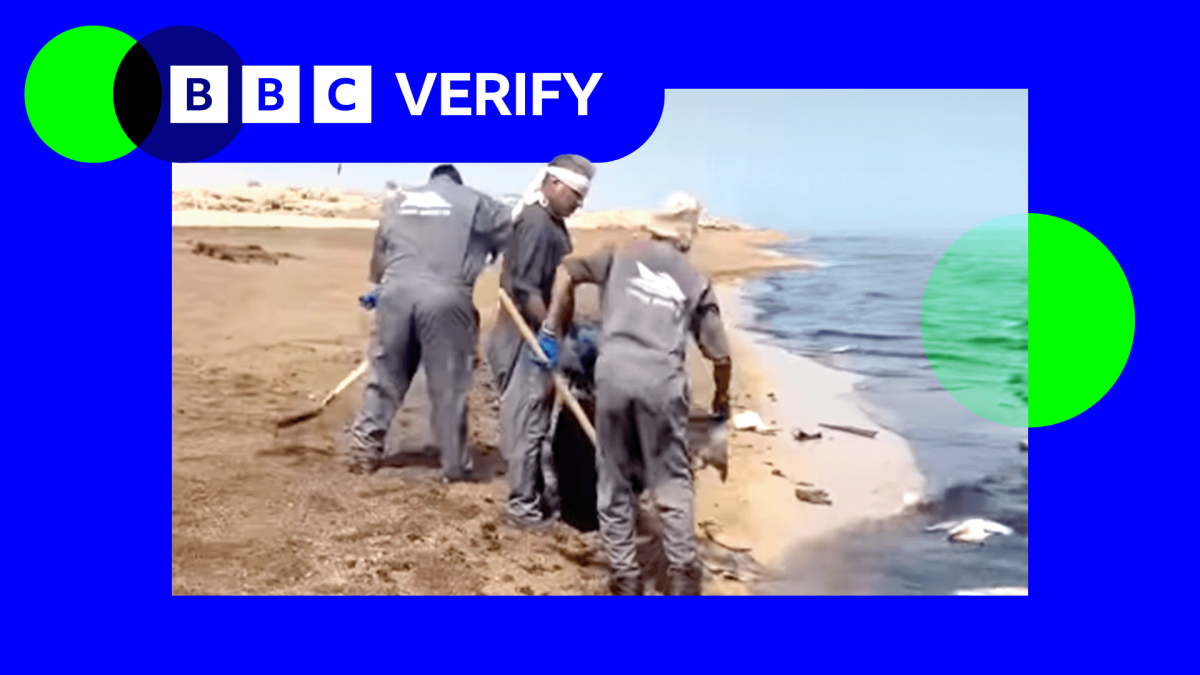
Table of Contents
Massive Oil Contamination Reaches Iranian Coast Following Maritime Incident
Ninoda.com – Verified footage confirms that a significant oil spill has begun depositing along the shores of Qeshm Island in Iran. Analysts attribute this contamination to a vessel that sustained damage during a strike in the Strait of Hormuz. BBC Verify’s examination of satellite photographs indicates the pollution likely originated from an assault on a ship within Omani territorial waters on August 3. Seven days after the incident, fuel from the Minoan Pioneer bulk carrier had dispersed across an extensive portion of the strait.
Environmental Concerns Mount
Specialists warn that the contamination poses serious risks to local wildlife, protected habitats, and fishing populations surrounding Qeshm. The island supports mangrove ecosystems, coral reef environments, and serves as nesting grounds for critically endangered Hawksbill turtles. Iranian state media initially stated that authorities were investigating the pollution’s source, while a foreign ministry representative identified it as coming from a “foreign bulk ship.” A regional environmental official later claimed the spill had been “almost completely cleaned up,” though BBC Verify has not independently validated this assertion.
While Iran has not formally accepted responsibility, shipping experts consider it probable that Tehran was involved in the Minoan Pioneer attack on August 3. According to maritime intelligence firm Kpler, there have been 67 vessel strikes in the strait’s vicinity since the United States and Israel commenced operations against Iran in late February. Tehran has effectively established a blockade of this critical waterway, which handles approximately one-fifth of global oil and natural gas commerce. Additionally, American port restrictions have prompted several ships to face attacks by US military forces.
Scale of the Spill
BBC Verify has authenticated multiple social media videos displaying dense, dark oil accumulating at Suza beach in southern Qeshm. The opposite side of the island contains the UNESCO-designated Hara Biosphere Reserve, which provides essential habitats for migratory birds and marine organisms. Qeshm, positioned on the strait’s northern edge, functions as a crucial Iranian military installation and has experienced substantial American bombardment, including a recent series of strikes that resulted in three fatalities according to Iranian state media.
Satellite photographs dated August 10 reveal the oil slick spanning more than 300 square kilometers (116 square miles)—an area equivalent to over 40,000 football pitches. “This is what I would call a major oil slick,” remarked John Amos, chief executive of Skytruth, a satellite environmental monitoring organization. Drawing on the spill’s dimensions and appearance, Amos estimates the volume exceeds 100,000 US gallons (380,000 liters).
“This means the spill could have especially serious consequences for wildlife, ecosystems and local communities.”
Dr. Keyvan Hosseini, an energy and environmental specialist at the University of Southampton, characterized the pollution’s location as “very concerning” while noting that the full extent of marine damage remains under evaluation. He explained to BBC Verify that Qeshm contains “sensitive coastal and marine habitats, including mangroves, turtle nesting areas and important fishing grounds.”
Origins and Ongoing Investigation
Shipping security company Vanguard reported on August 3 that the Liberia-registered Minoan Pioneer was hit by a projectile near Oman. Satellite images from August 5 captured the vessel still burning, with an oil slick extending across approximately 10 square kilometers. Two days later, imagery revealed the contamination had doubled in size and was moving northwest through the strait toward Qeshm. By August 10, verified videos documented substantial oil washing ashore on Qeshm Island alongside active cleanup efforts.
Samir Madani, co-founder of TankerTrackers.com, told BBC Verify that he considers the Minoan Pioneer the spill’s origin and described the incident as a “self-inflicted wound by Iran.” He noted that “Several vessels have been hit in that exact same spot by the Iranians when vessels use the Omani route.” Wim Zwijnenburg, an environmental conflict specialist at Dutch peace organization PAX, similarly believes visual evidence identifies the Minoan Pioneer as the contamination source.
The Minoan Pioneer is not the sole vessel damaged during attacks on maritime traffic within and around the Strait of Hormuz. Several of these incidents have caused marine pollution, including the sinking of container ship Safeen Pres.
Related Reading
Frequently Asked Questions
What is How a major oil slick started?
How a major oil slick started is the main topic of this guide. The article explains the context, practical details, and next steps readers should understand.
Why does How a major oil slick started matter?
How a major oil slick started matters because readers are looking for a useful answer, not just a short summary. Good content should match search intent and help them decide what to do next.