Iran supreme leader calls for revenge for father’s killing

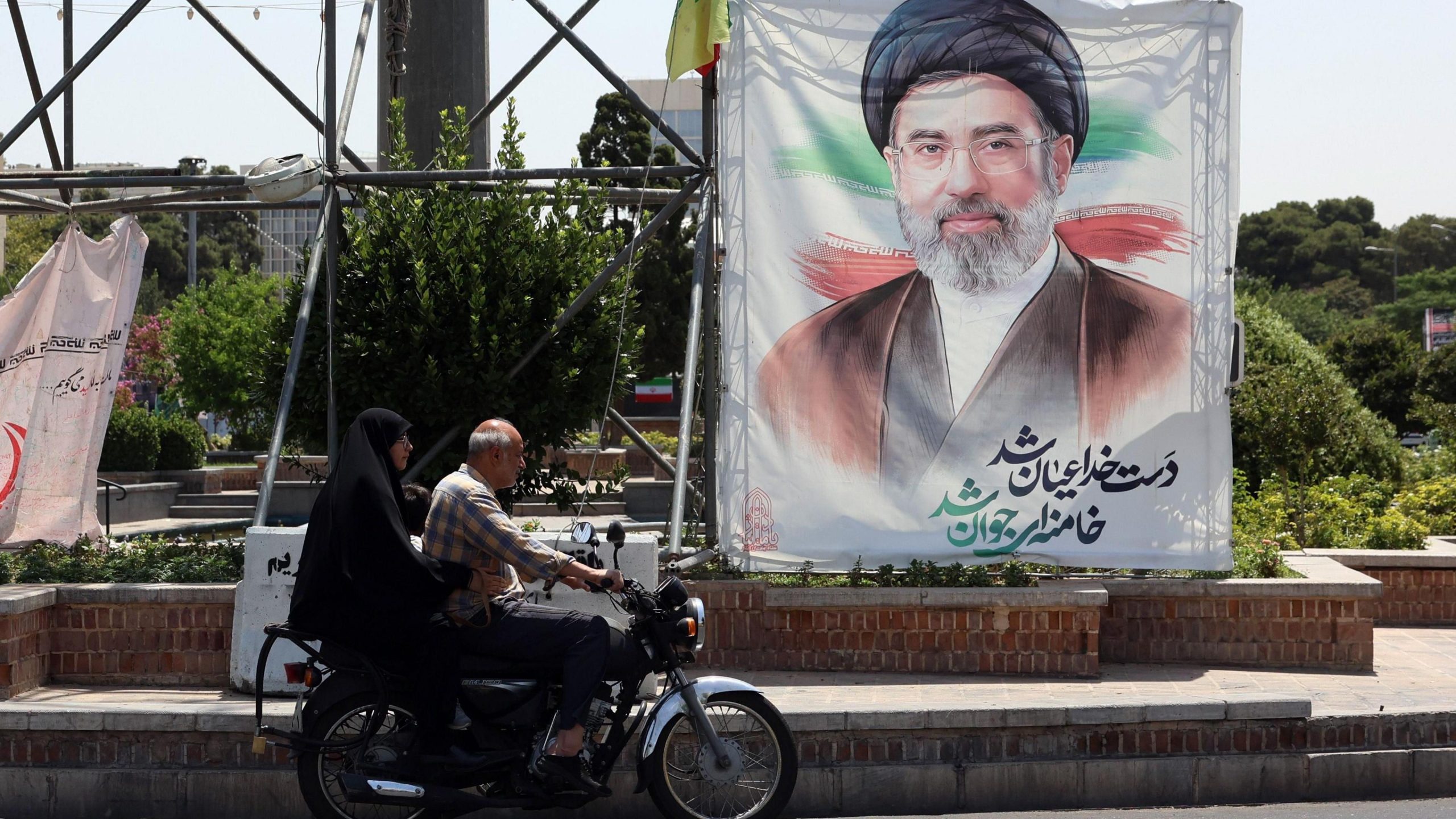
Iran’s Supreme Leader Vows Retribution for Father’s Death
Ninoda.com – The passing of Ayatollah Ali Khamenei, the father of Iran’s Supreme Leader Mojtaba Khamenei, has reignited a fierce call for retribution in the Islamic Republic. In a powerful address following the funeral rites held in Mashhad, the leader declared that the spirit of vengeance would guide Iran’s actions against those responsible for his father’s assassination during the escalating US-Israeli conflict. This moment marked a pivotal shift in the country’s stance, with Khamenei emphasizing that the demand for retribution was not only personal but a collective mandate for the Iranian people. His speech, delivered through state television, underscored the nation’s resolve to act decisively against perceived aggressors.
A Legacy of Resilience and Determination
Ayatollah Mojtaba Khamenei, who has led Iran since 1989, has long been a symbol of the nation’s resilience in the face of external threats. His father, Ali Khamenei, served as Iran’s president for over a decade and was a key figure in shaping the country’s religious and political identity. The assassination of Ali Khamenei during a US-Israeli strike in February 2021 was a significant blow, but his son has since transformed personal grief into a broader nationalist cause. The funeral processions, which drew thousands, featured messages directed at US leadership, highlighting the deep-seated anger over the attack. Khamenei’s call for revenge has since been echoed in public gatherings, reinforcing the idea that the conflict is a continuation of a larger struggle.
“We will not rest until the blood of our martyrs is avenged,” Khamenei declared, vowing that Iran’s Supreme Leader would lead the charge against the enemies of the Islamic Republic. His words resonated strongly with the Iranian public, who see the loss of Ali Khamenei as a catalyst for renewed determination. The leader emphasized that the outcome of the conflict would be inevitable, regardless of external pressures or internal divisions. This sentiment has been amplified by state media, which has framed the event as a pivotal moment in the nation’s history.
Escalating Tensions and Global Implications
The attack on Ali Khamenei’s life occurred amid heightened tensions between Iran and its Western adversaries, particularly the United States and Israel. The conflict, which began in February, saw US and Israeli forces strike Iranian targets in a coordinated operation, resulting in significant casualties. Iran responded with a series of retaliatory strikes, targeting US and Israeli interests in the region. The Supreme Leader’s call for revenge has been a central theme in these actions, framing them as a necessary response to the aggression. This cycle of violence has not only deepened the rift between the nations but has also drawn the attention of global powers, who are now monitoring the situation closely for potential escalation.
Recent events have further complicated the geopolitical landscape. In June, a temporary ceasefire was signed to allow diplomatic talks to resume, but the attacks on three oil tankers in Omani waters disrupted this fragile truce. Iranian officials claimed the strikes were a direct result of US aggression, highlighting the country’s strategic reliance on key shipping routes. The Supreme Leader’s insistence on retribution has thus become intertwined with Iran’s economic and military goals, as the nation seeks to assert its dominance in the region. Analysts suggest that this approach may be a calculated move to strengthen domestic unity and deter further attacks.
International Reactions and Strategic Posturing
Global reactions to the Supreme Leader’s call for revenge have been mixed. While some nations, including allies of the United States, have expressed concern over the potential for further conflict, others have supported Iran’s stance, viewing it as a justified response to the attack. The United Nations has called for calm, urging both sides to avoid actions that could lead to a wider war. However, the Iranian leadership has remained steadfast, with Khamenei’s son positioning himself as the embodiment of national will. His public appearances have been sparse since the incident, but his message has been disseminated widely, ensuring that the demand for retribution remains central to Iran’s narrative.
The strategic importance of the Strait of Hormuz, a critical chokepoint for global oil trade, has been underscored by the Supreme Leader’s emphasis on retribution. Iran has used this issue to pressure the United States into renegotiating terms or easing sanctions, which have been a long-standing source of economic strain. The ongoing conflict has also highlighted the role of regional allies, such as Syria and Hezbollah, in supporting Iran’s military actions. With the Supreme Leader’s call for revenge serving as a rallying cry, the nation continues to mobilize its resources and political will to challenge its adversaries.