Lightning causes fires and serious house damage

Lightning Causes Fires and Serious House Damage
Multiple Lightning-Triggered Fires in East Sussex and Kent
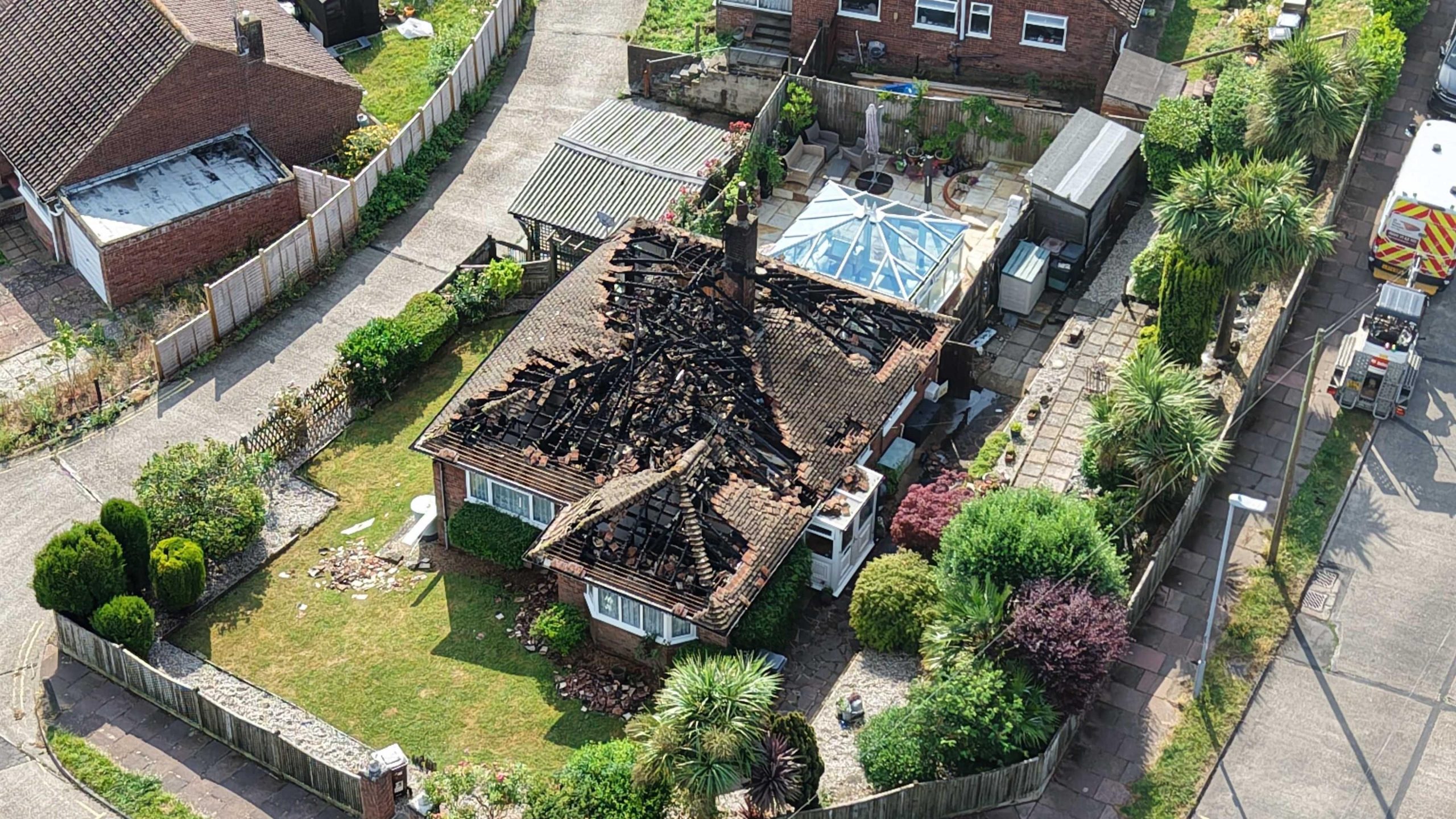
Ninoda.com – Lightning causes fires and serious house damage, as evidenced by a series of blazes that broke out across East Sussex and Kent during a sudden thunderstorm event. Emergency services were swiftly called to action as the storms, which followed a yellow weather warning, intensified in the early hours of the morning. In Crawley, fire crews are working to control a fire in Thatcher Close, a location where a lightning strike is believed to have sparked the incident. This event highlights the unpredictable and destructive potential of lightning strikes, particularly in regions with a history of weather-related hazards.
Across the region, residents in Eastbourne and Bexhill also experienced severe consequences from lightning strikes, with two separate fires occurring within minutes of each other. The Kent Fire and Rescue Service reported three incidents overnight, including one in Ulcombe near Maidstone that required an extensive response involving six fire engines. Firefighters in Faversham’s Newton Road managed the blaze just after 03:31 BST, demonstrating the rapid and coordinated efforts needed to address such events. Lightning causes fires and serious house damage, often leading to significant economic and emotional tolls on affected families.
Challenges in Containing the Spread of Fires
“The homes in Bexhill and Eastbourne had been ‘seriously damaged’ by the strikes, while further lightning activity throughout the night made the operation ‘more difficult,’” said an East Sussex Fire and Rescue Service spokesperson.
Firefighters in Crawley are continuing to manage the aftermath, suppressing hotspots and conducting a thorough re-inspection by 12:00. The East Sussex service noted that the incident in Eastbourne concluded after a “very busy night for staff,” underscoring the scale of the challenge. In Thatcher Close, four fire engines remain on-site, confirming that the blaze likely began at 04:15 BST following a lightning strike. The unpredictable nature of lightning causes fires and serious house damage, requiring both immediate action and long-term recovery strategies.
Officials from the Met Office highlighted that the thunderstorms were a result of atmospheric instability, often triggered by prolonged periods of hot and humid weather. These conditions, which preceded the event, created a perfect environment for lightning to strike with greater frequency. The red warnings for severe weather had been lifted, but amber alerts for lightning remained active in parts of Kent, Surrey, and West Sussex, prompting continued vigilance among residents and emergency teams. Lightning causes fires and serious house damage, a phenomenon that can escalate quickly under the right weather conditions.
Weather Patterns and Lightning Activity
Thunderstorms followed a yellow weather warning for lightning, issued for much of East Sussex and Kent from 02:00 to 08:00. The Met Office explained that thunderstorms occur when atmospheric instability rises, often under hot and humid conditions after prolonged sunny weather. These storms came after days of extreme heat, with red warnings for severe weather lifted but amber alerts still active in parts of Kent, Surrey, East Sussex, and West Sussex. The region’s geography, with its mix of open fields and dense residential areas, further increased the risk of lightning causing fires and serious house damage.
“During periods of hot, humid weather, especially after a few days of strong sunshine, the ingredients for this instability are often in place,” stated the Met Office.
Weather patterns in the area have shown a trend of increasing frequency and intensity in recent years, which experts attribute to climate change. Lightning causes fires and serious house damage not only during sudden storms but also in areas where dry vegetation and wooden structures are common. The combination of these factors, along with the heatwave, created a dangerous scenario for homeowners. Fire crews across the region worked tirelessly to contain the damage, highlighting the unpredictable impact of lightning during such extreme weather events.
Community Response and Recovery Efforts
Residents in the affected areas have expressed concern over the damage caused by the lightning strikes, with some reporting extensive losses to their properties. Local authorities are now assessing the extent of the destruction and coordinating efforts to aid those impacted. The focus on lightning causes fires and serious house damage has led to calls for improved early warning systems and better preparedness in high-risk zones. Community members are also sharing stories of their experiences, emphasizing the need for proactive measures to mitigate future risks.
“Lightning causes fires and serious house damage, and it’s crucial that we educate the public on how to respond during such events,” added a spokesperson from the Kent Fire and Rescue Service.
As the region continues to recover, the incident serves as a reminder of the power of nature and the importance of lightning safety. Firefighters are now focusing on inspecting the sites of the blazes to ensure that no hidden smoldering spots remain. The Met Office has advised residents to stay alert, as the potential for additional lightning strikes still exists. With ongoing efforts from emergency services and the community, the hope is to minimize the long-term effects of lightning causes fires and serious house damage in future occurrences.