Norway opens new memorial for victims of 2011 massacre

Norway Unveils New Memorial for Victims of 2011 Massacre
Ninoda.com – On the eve of the 15th anniversary of the 2011 Oslo and Utoeya attacks, Norway has officially opened a striking new memorial dedicated to the 77 individuals who lost their lives in the country’s most devastating peacetime tragedy. The memorial, named *Upholding*, is located in Oslo’s revitalized government district, near the site of the first bomb explosion. This poignant tribute not only honors the victims but also serves as a symbol of national unity, resilience, and the enduring commitment to democracy in the face of extremism.
The Tragedy and Its Legacy
The July 22, 2011 attacks, carried out by Anders Breivik, marked a turning point in Norway’s history. Breivik, a far-right extremist, detonated a car bomb in the heart of Oslo, killing eight people, before proceeding to shoot 69 others—primarily young members of the Labour Party’s youth organization—at a summer camp on Utoeya Island. The attack left over 100 people injured and triggered a national conversation about security, tolerance, and the role of ideology in violence. The new memorial stands as a testament to the profound impact of this event, ensuring its memory is preserved for future generations.
“The 2011 attacks were a direct assault on our democratic values and the trust we have in our institutions,” remarked Merete Stamneshagen, a representative of the victims’ support group, during the unveiling ceremony. “This memorial is a reminder of the strength and solidarity of the Norwegian people.”
Design and Symbolism
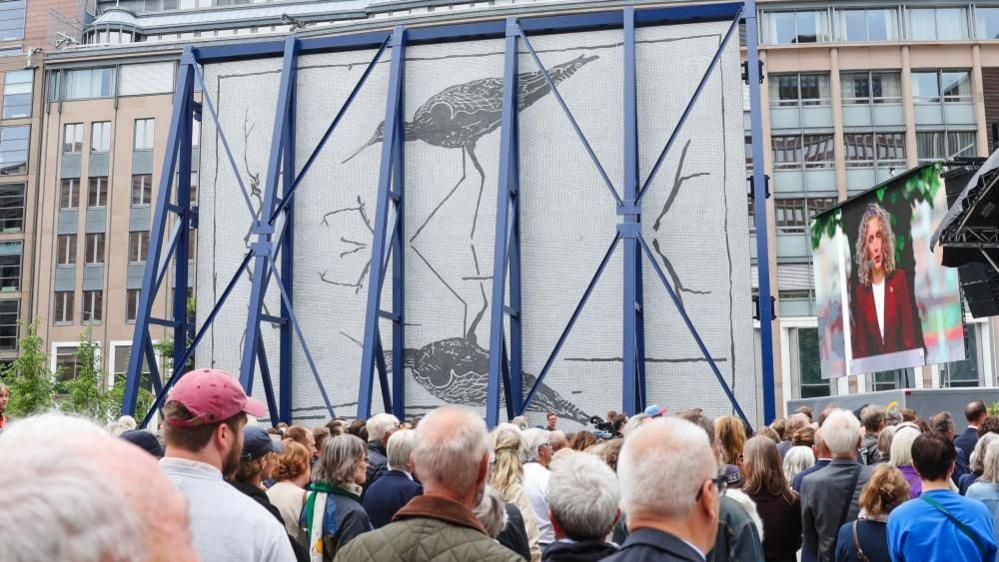
The memorial’s design, crafted by artist Matias Faldbakken, weaves together themes of remembrance and renewal. At its core is a towering steel frame that supports a 12-meter stone mosaic, inspired by a small wading bird native to Utoeya Island. This bird, a symbol of the island’s natural heritage, represents both the vulnerability of the victims and their enduring legacy. The mosaic’s reflection in water adds a layer of visual depth, mirroring the collective spirit of resilience that Norway has embraced since the attacks.
Survivors and family members of the victims gathered in Oslo for the memorial’s official opening, a poignant moment that underscored the nation’s commitment to healing and unity. The ceremony included speeches, musical performances, and a symbolic act of laying pebbles, which were collected from Utoeya, at the memorial’s base. This gesture reinforced the connection between the tragedy and the island’s landscape, while also highlighting the role of the community in shaping the memorial’s meaning.
Additionally, the memorial is complemented by the newly established 22 July Centre, a national hub designed to educate the public about the attacks and their broader implications. This center features interactive exhibits, historical archives, and spaces for reflection, further embedding the memory of the event into Norway’s cultural and political fabric. The combination of art, architecture, and education aims to foster dialogue and understanding, ensuring the lessons of 2011 remain central to national discourse.
Anders Breivik’s Sentence and Public Sentiment
Following the attacks, Anders Breivik was sentenced to 21 years in prison in 2012, the maximum possible under Norwegian law. His legal battle continued over the years, with Breivik challenging the severity of his punishment and arguing for his separation from other inmates as a form of protection. In 2022, he was denied parole, and a 2024 lawsuit against the government, which sought to reconsider his isolation, was dismissed. Despite his long imprisonment, the memorial’s creation reflects the public’s desire to honor the victims and reaffirm their collective resolve against extremism.
The memorial’s location and design have been carefully chosen to reflect the dual nature of the tragedy: the bombing in Oslo and the shooting on Utoeya. This geographical duality is a deliberate nod to the interconnectedness of the attacks, as well as the unity required to overcome them. The structure also incorporates elements that symbolize the victims’ sacrifice, such as the mosaic and the pile of pebbles, which evoke the sense of loss and continuity that defines Norway’s post-2011 era.
Reflecting on Norway’s 2011 Massacre Video, 00:03:28