Prisons minister Lord Timpson quits government

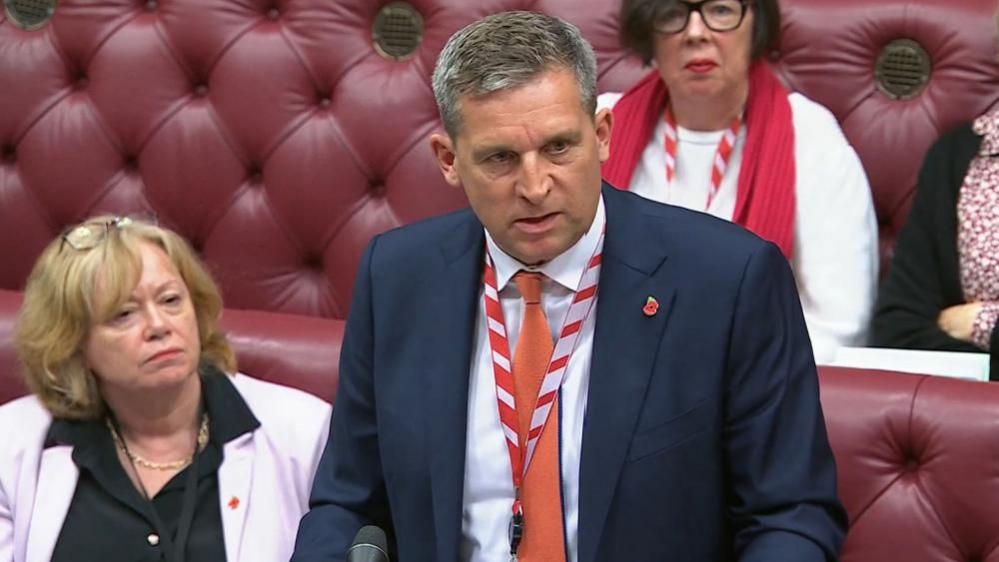
Prisons Minister Lord Timpson Quits Government
Ninoda.com – Lord James Timpson, the former prisons minister, has resigned from the government, marking the end of his brief but impactful tenure in the role. His decision to step down, confirmed by the BBC, was made after nearly a year in office, during which he spearheaded several initiatives aimed at transforming the UK’s prison system. Timpson, known for his background as the CEO of the Timpson group—a company renowned for its services in key cutting and shoe repair—brought a distinctive business-driven approach to his ministerial responsibilities. His resignation comes at a pivotal time for the criminal justice sector, as the government prepares to implement the Sentencing Act 2026, which will further expand early release programs.
A Visionary Approach to Prison Reform
Timpson’s appointment as prisons minister in July 2024 was hailed as a bold move to modernize the sector. Prior to his government role, he had long advocated for employment-focused models within the justice system, drawing from his experience in managing businesses that employed ex-offenders. His strategy centered on reducing overcrowding and improving prison conditions by integrating practical skills training and job placements for inmates, a concept that resonated with both supporters and critics. “He brought a fresh perspective, blending business acumen with a deep understanding of rehabilitation,” said a former colleague, who spoke to the BBC about his innovative mindset.
During his time in office, Timpson emphasized the importance of dignity and purpose in prison life. His resignation statement, shared exclusively with the BBC, underscored his belief that the sector had made significant strides. “The prison and probation services are now in a much healthier and happier state than two years ago,” he stated, reflecting on the progress achieved. While he did not publicly disclose the exact reason for his exit, insiders suggest that his decision was driven by a sense of fulfillment and the confidence that his reforms had laid a solid foundation for future improvements.
Controversies and Achievements
One of Timpson’s most notable initiatives was the early release program, which aimed to reduce jail overcrowding by freeing approximately 20,000 inmates ahead of schedule. This policy sparked debate, with supporters praising its potential to lower recidivism rates and critics raising concerns about the risk of offenders reoffending. Despite the controversy, data from the Ministry of Justice showed a decline in self-harm incidents and staff assaults in participating prisons, which Timpson highlighted as a key success. “Fewer people are leaving prison without a home to go to, which is a measure of dignity I care about deeply,” he added in a BBC interview.
Another major focus of Timpson’s ministerial work was the Women’s Justice Board, a body he established to address the unique challenges faced by female offenders. The board promoted the idea that many women should not be incarcerated at all, instead advocating for community-based support programs. “Prisons are not the only solution for women,” he argued, emphasizing the need for tailored approaches that consider factors like mental health and family responsibilities. However, some stakeholders have questioned whether his departure before the Sentencing Act 2026 comes into effect in September could leave critical reforms in limbo.
Legacy and Transition
Timpson’s legacy in the prison system is a mix of innovation and controversy. His reforms have been credited with improving inmate morale and reducing prison-related deaths, but they have also faced criticism for prioritizing cost-efficiency over long-term rehabilitation. A Ministry of Justice source told the BBC that the transition to new leadership will be challenging, as the incoming minister will need to navigate the complex landscape of criminal justice reform. “We’re gutted he’s going, but the new person is going to have their work cut out to get their head around what’s round the corner,” the source said, referring to the upcoming changes in sentencing and prison management.
As the government moves forward, questions remain about the future direction of prison policy. Will the new minister continue Timpson’s business-oriented approach, or will they shift focus to other priorities? Meanwhile, Timpson’s resignation has sparked discussions about the role of private sector expertise in public policy. “His background in business gave him a unique ability to think creatively about solutions,” noted a political analyst. “But the real test will be whether these ideas can sustain momentum without his leadership.” The UK’s prison system now faces the challenge of building on Timpson’s achievements while addressing ongoing issues such as staff shortages and reoffending rates.
In addition to his key reforms, Timpson also introduced measures to enhance prison staff training and improve communication between inmates and the outside world. These initiatives were part of a broader effort to create a more humane and effective justice system. His tenure, though short, has left a lasting mark on the sector, with many acknowledging his determination to rethink traditional approaches. As the Ministry of Justice begins the search for his replacement, the focus keyword “prisons minister Lord Timpson quits” will likely remain central to discussions about the future of prison reform.