South Korea proposes talks to officially end war with North

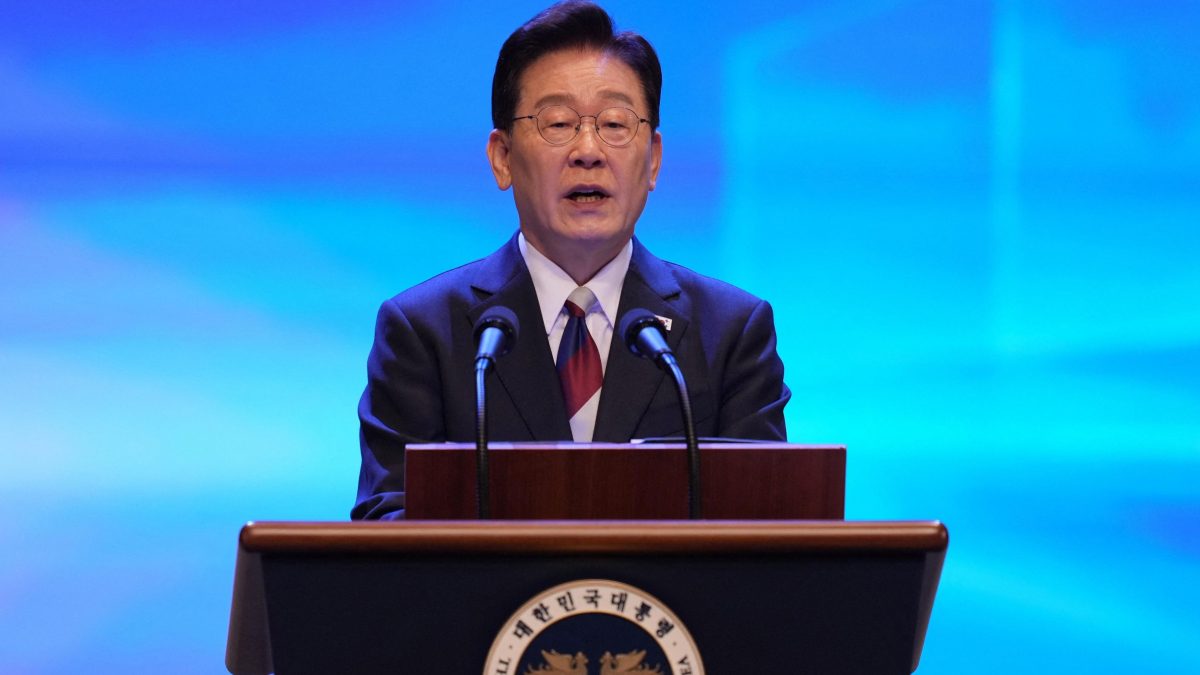
Table of Contents
South Korea Proposes Talks to Officially End Decades-Long Conflict
Ninoda.com – South Korea proposes talks to officially end the Korean War, marking a significant diplomatic shift under President Lee Jae Myung. The South Korean president has proposed comprehensive discussions with its northern neighbour on formally concluding the conflict that remains technically active since 1953. Lee Jae Myung suggested implementing a "multi-layered security system" to prevent border flare-ups along the countries' de-facto boundary, known as the demilitarised zone (DMZ), while offering to explore practical mechanisms for halting Pyongyang's nuclear ambitions.
The ongoing tensions between the two Korean states have been effectively frozen since an armistice was signed in 1953, though sporadic clashes continue along the DMZ. Both nations have exchanged accusations of provocations over the decades, including balloon campaigns carrying rubbish and propaganda materials. Lee, who assumed the presidency last year following the impeachment of his predecessor Yoon Suk Yeol for attempting to declare martial law, has prioritized warming relations with North Korea and its ally China, relationships that had deteriorated under Yoon's administration.
A New Approach to Peaceful Coexistence
"Let us put down our intentions to threaten each other and begin discussions to end the long-running war as the directly involved parties," Lee declared during a ceremony commemorating Liberation Day, which marks the peninsula's liberation from Japanese colonial rule. The president expressed optimism that both nations "will sit face-to-face for peaceful coexistence and mutual growth", emphasizing that such dialogue could establish a framework for addressing "effective ways to halt the advancement of the North's nuclear capabilities". North Korea formally declared itself a nuclear power in 2022 and pledged never to surrender its arsenal, which external estimates suggest numbers in the dozens.
Lee has previously indicated that Pyongyang produces approximately 15 to 20 additional nuclear warheads each year. Speaking to the BBC last year, he expressed willingness to support an agreement between US President Donald Trump and North Korean leader Kim Jong Un to freeze production levels. While describing this as a "realistic" objective, Seoul continues advocating for complete denuclearisation. Trump remains the only Western leader to have personally met Kim, a historic encounter that occurred during the US president's first term in office.
Although Trump has focused on other global regions since returning to the White House, he stated last August that he hopes to convene with Kim again when "appropriate". North Korea has not yet responded to Lee's diplomatic overture. The authoritarian regime's state news agency reported that Kim participated in the country's Liberation Day commemorations, which included a wreath-laying ceremony and ceremonial guard of honour.
Pyongyang has historically rejected Lee's engagement proposals, criticizing an agreement for the United States to construct nuclear-powered submarines for South Korea and condemning joint military exercises between the two allies. Demonstrating continued military posturing, North Korea launched a ballistic missile into the sea on Tuesday—marking the 11th suspected test of the year—shortly before planned US-South Korean joint military drills.
Looking Ahead: What These Talks Could Mean
For citizens and international observers alike, the question remains whether these proposed discussions will lead to tangible progress. The South Korean government has indicated that any formal agreement would require multilateral involvement, potentially including China, the United States, and Japan. Regional security experts note that successful negotiations could reshape East Asian geopolitics for decades to come.
Meanwhile, economic considerations loom large. South Korean businesses have long anticipated the possibility of renewed trade relations with the North, particularly in sectors such as tourism, mining, and infrastructure development. Any breakthrough in diplomatic relations could unlock billions of dollars in potential investment across the Korean peninsula.
"The path to peace requires patience, but the opportunity for meaningful dialogue has never been greater," said a senior South Korean diplomatic source familiar with the negotiations.
Frequently Asked Questions
What is the current status of the Korean War?
The Korean War technically never ended. An armistice agreement was signed in 1953 to halt fighting, but no formal peace treaty was ever concluded. This means the two Koreas remain in a state of war, albeit with reduced hostilities in recent decades.
Who is President Lee Jae Myung?
Lee Jae Myung became South Korea's president in 2024 after his predecessor Yoon Suk Yeol was impeached. He represents a more conciliatory approach to North Korea compared to previous administrations and has emphasized diplomatic engagement as a cornerstone of his foreign policy.
What are the main obstacles to peace talks?
Key challenges include North Korea's nuclear program, mutual distrust built over decades, disagreements over verification mechanisms, and differing priorities regarding sanctions relief and military exercises. Additionally, domestic political pressures in both countries can complicate negotiations.
How might these talks affect regional security?
Successful dialogue could reduce tensions along the DMZ, decrease the likelihood of accidental military confrontations, and potentially lead to broader agreements involving the United States, China, and Japan. A formal peace treaty would also have significant implications for global non-proliferation efforts.