Spain threatens retaliation if Italy fails to lift border controls after Ceuta crossings

Spain Threatens Retaliation if Italy Doesn’t Lift Border Controls
Ninoda.com – Spain threatens retaliation if Italy fails to reverse its decision on border restrictions following the historic migration surge into Ceuta. Madrid has warned Rome that counter-measures will follow if Italy does not withdraw its partial suspension of the Schengen agreement by Sunday, 9 August. The diplomatic tension escalated after approximately 78,000 Moroccans crossed into the Spanish enclave by sea within just two days last week.
What Triggered the Crisis?
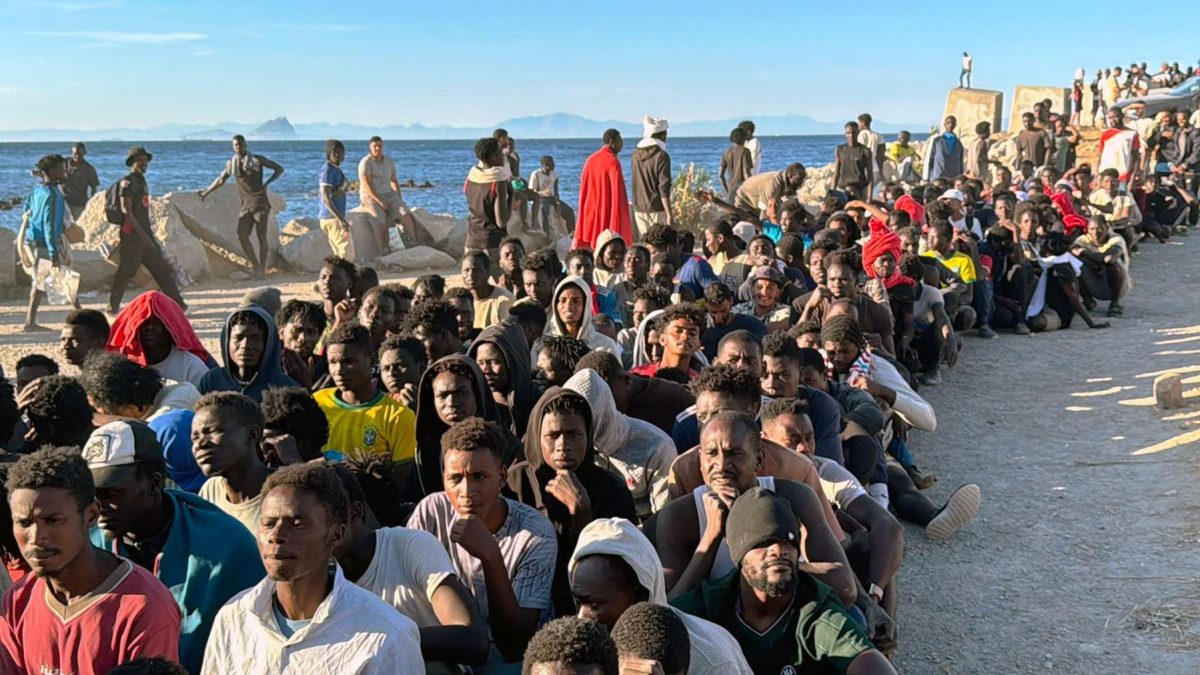
The unprecedented arrivals occurred on Thursday and Friday, with images showing hundreds of migrants gathering along Ceuta’s shoreline. The crossings resulted in roughly 100 deaths, prompting Italy to partially suspend its Schengen agreement with Spain. This suspension included closing maritime and air entry points while strengthening land border controls.
On Friday, Spanish officials labeled Italy’s response as “unjustified” and “discriminatory against the Spanish population.” Madrid demanded that Rome reverse its decision no later than Sunday, 9 August. The Spanish government further stated it would introduce “proportionate measures to protect the interests and dignity of its citizens” should Italy fail to comply.
Italy’s Position and Spain’s Response
Italy quickly rejected Spain’s ultimatum, declaring it would not accept “ultimatums or impositions” from Madrid. Italian authorities announced their intention to maintain border checks until at least 15 August, citing expectations of another migration wave reaching Ceuta around that time.
Rome, which shares no land boundary with Spain, justified its partial suspension of Schengen arrangements by arguing it needed to prevent migrants who entered Ceuta from traveling onward to Italian territory. Madrid dismissed this reasoning as being founded on “spurious arguments” lacking factual foundation, noting that migrants entering Ceuta had no practical means of accessing the broader Schengen area. Spanish officials also emphasized that the vast majority of those who crossed have already returned to Morocco.
Political Fallout and EU Division
The crisis has marked a significant deterioration in relations between Spain’s socialist Prime Minister Pedro Sanchez and Italy’s conservative leader Giorgia Meloni, who has consistently advocated for tighter EU migration controls. While the exact reasons behind the mass attempt remain unclear, EU Migration Commissioner Magnus Brunner pointed to criminal networks disseminating false information as a likely cause—an assessment supported by the Spanish government.
The timing of the crossings coincided with a ruling by Spain’s Supreme Court, which determined that migrants intercepted at sea while attempting to reach Ceuta or Melilla cannot be immediately returned to Morocco. These two Spanish exclaves have historically been a source of diplomatic tension with Morocco, which does not acknowledge Spanish sovereignty over the territories.
The Ceuta situation has also exposed divisions within the Schengen area. Finland and Denmark expressed support for Italy’s suspension decision, whereas the Czech Republic proposed temporarily suspending Spain’s Schengen membership. Meanwhile, Moroccan officials have attributed the crisis to Spain’s Supreme Court ruling, with an unnamed government source telling local media that “the deterrent element of the system collapsed and the dam gave way, not under the weight of the criminals, but of a judge’s decision.”
Minors and Ongoing Developments
Spanish Youth Minister Sira Rego reported on Friday that nearly 1,400 minors, including “very young boys and girls,” continue to stay in Ceuta following the crossings. She explained: “There was a situation in which the system was overwhelmed, but it is now being brought under control. It is true that there are many boys and girls, and the procedure takes time. We wanted to make clear that we have prioritized the most vulnerable cases.”
Additionally, Moroccan media reports indicate renewed online efforts to organize another large-scale border crossing, mirroring the events preceding last week’s arrivals.
Frequently Asked Questions
Why is Italy suspending its Schengen agreement with Spain? Italy partially suspended its Schengen agreement to prevent migrants who entered Ceuta from traveling onward to Italian territory, citing concerns about managing the influx.
What is Spain threatening to do if Italy doesn’t comply? Spain threatens to implement “proportionate measures” to protect the interests and dignity of its citizens, though specific counter-measures have not been detailed.
How many migrants crossed into Ceuta? Approximately 78,000 individuals from Morocco crossed into Ceuta by sea within a span of just two days last week.
What role did Spain’s Supreme Court play in the crisis? Spain’s Supreme Court ruled that migrants intercepted at sea while attempting to reach Ceuta or Melilla cannot be immediately returned to Morocco, which Moroccan officials blame for the surge.
How many minors remain in Ceuta? Nearly 1,400 minors, including very young boys and girls, continue to stay in Ceuta following the crossings.