The pop band who went from playing for rescue dogs to selling out arenas

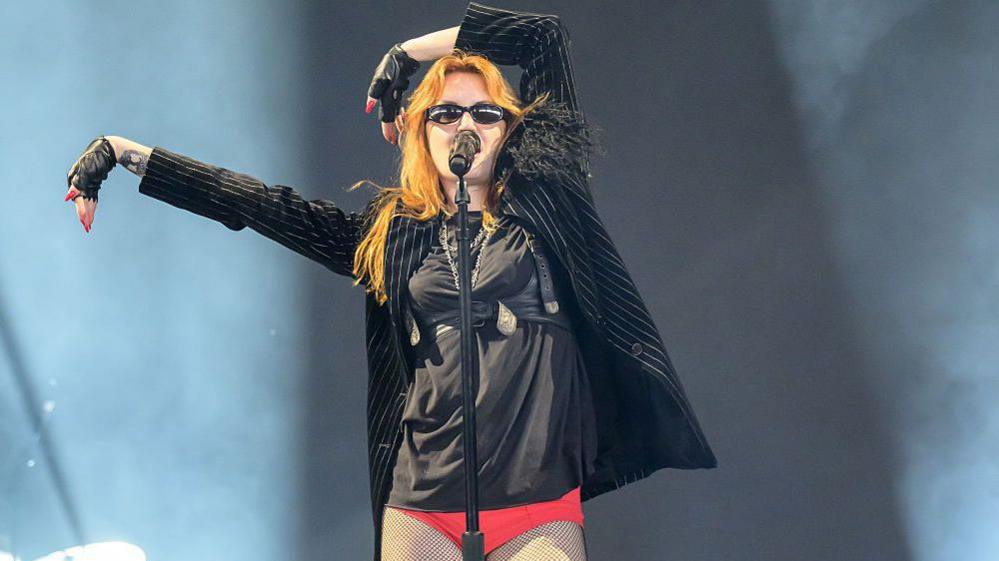
From Canine Chaos to Arena Stardom: Muna’s Remarkable Journey
Ninoda.com – Today’s arena-filling pop sensation once faced a very different kind of audience. Before Muna became one of the most captivating live acts of their generation, the Los Angeles trio performed for an entirely canine crowd. Their debut performance at Pet-A-Palooza, a Las Vegas dog adoption festival, became legendary for all the wrong reasons.
A Doomed Beginning
The band had just completed an overnight flight from London when their record label called with urgent news. They needed to head to Vegas immediately for a festival sponsored by a local radio station. The promise was simple: if they showed up, the station would champion their upcoming single. Unfortunately, everything went sideways from the moment they arrived.
“We were all sick, so it was doomed from the start,” recalls guitarist Josette Maskin. “It was an acoustic set, but we didn’t have a sound guy, and the guitar started feeding back.”
The resulting noise created what singer Katie Gavin described as an “unholy screech.” The dogs, understandably distressed by the cacophony, howled continuously throughout the performance. Despite the mortification, Maskin now views those early struggles fondly.
“The dogs were getting upset,” says Maskin, wincing at the memory. “They just howled the whole time. ‘We were mortified, but looking back, it is so funny. And I’ve gotten to share those experiences with some of my best friends, and that’s what life is really about.'”
Rising Through the Ranks
That canine catastrophe now sits far behind the band. Over ten years, Muna has evolved into something special—a blend of punk energy, electronic textures, and eighties sensibilities that keeps audiences captivated. Their growing reputation attracted major attention, including support slots from both Harry Styles and Taylor Swift, who personally selected the trio for her tour.
Their catalog features songs that resonate deeply with listeners. “I Know A Place” emerged as an anthemic celebration of LGBTQ community spaces, written as a response to the 2016 Pulse nightclub shooting. Meanwhile, “Stayaway” offers a more introspective look at isolation, with Gavin describing her decision to lock herself away from friends, music, and alcohol to avoid returning to a past relationship.
Navigating Industry Challenges
Just as their momentum was building, obstacles appeared. In 2020, RCA Records dropped the group amid pandemic-related cost reductions. Rather than dissolving, the members regrouped with determination.
“That’s obviously one where we had to put our heads together and be like, ‘OK, we want to continue doing this. Let’s just make an album and we’ll figure it out’,” says McPherson.
Phoebe Bridgers, the indie star and founder of Saddest Factory label, stepped in to sign Muna in 2021. The self-titled album that followed marked a turning point, featuring Bridgers herself on guest vocals for “Silk Chiffon,” a carefree sapphic love song that became their breakthrough hit.
“Phoebe’s manager had made it very clear that if we were ever single, she’d be interested in working with us,” Gavin told the BBC at the time.
Dancing On The Wall
Their fourth album, “Dancing On The Wall,” represents their most ambitious work yet. The music carries a darker tone while the lyrics strike with greater force. Though rooted in dance rhythms, the record challenges listeners to break free from complacency.
“I think it was a response to a feeling of helplessness in this moment in time that can lead to paralysis,” says Gavin. “Movement is what we need right now, and we also need to feel powerful and to connect to our sources of energy. The tempo of this album helps with that.”
The standout track “Big Stick” delivers a pointed critique of American imperialism. Written from Big Brother’s perspective, the song addresses everything from war in Gaza to the militarization of police forces. Gavin’s delivery captures both anger and urgency as militaristic synthesizers drive the rhythm.
“And If you’ve got a problem with it, you could end up in jail,” Gavin seethes as militaristic synths patrol the beat.
For Gavin, concerts have become more than entertainment—they’re spaces for collective emotional release.
“I think sometimes people want to go to concerts to feel a brief reprieve from the horrors of the world around them, but right now the horrors are so pervasive that what I found myself wanting was a container to express my anger together with other people,” says the singer.
From that chaotic dog festival to filling arenas worldwide, Muna’s story proves that even the most embarrassing beginnings can lead to extraordinary destinations.