US strikes hit Iran for seventh consecutive night

US Strikes Continue Against Iran for Seventh Night in a Row
Ninoda.com – For the seventh consecutive night, US military strikes have targeted Iranian infrastructure, marking a significant escalation in the ongoing conflict between the two nations. The attacks, which began after President Donald Trump terminated a temporary ceasefire, focused on critical facilities such as surveillance outposts, logistics hubs, and underground weapon depots. US Central Command (Centcom) confirmed that the strikes also aimed at maritime assets in the region, underscoring the strategic intent behind the operation. The damage reported across multiple locations highlights the intensifying efforts to disrupt Iran’s military capabilities and control over key supply routes.
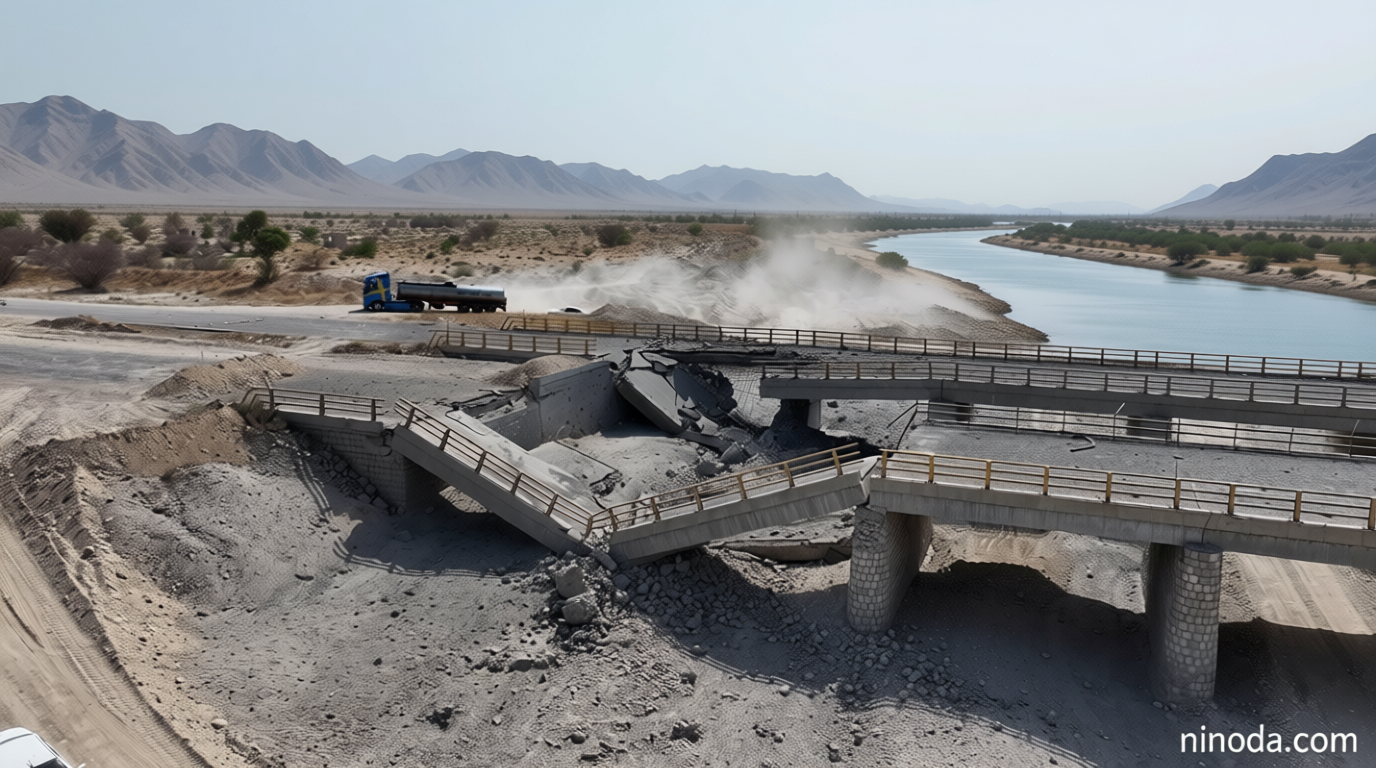
The seventh night of strikes has intensified the already volatile situation, with the US deploying a combination of fighter jets, drones, and naval vessels to maximize the impact of its operations. These coordinated efforts have led to reports of significant destruction in Hormozgan province, including a major bridge that serves as a vital link for regional transportation. While the US has emphasized that its targets are exclusively military, Iranian officials have accused Washington of attacking civilian infrastructure, including an airport and other non-combatant facilities. The continued assault has raised concerns about the broader implications for regional stability and international trade.
Iran Targets US Allies in Response
Iran’s retaliation against the US strikes has extended to its allies in the Gulf region, with attacks targeting US-backed facilities in Kuwait, Jordan, and Bahrain. In Kuwait, a power and water plant was damaged by a hostile attack, resulting in a fire that temporarily disabled some power generation units. Jordan’s military confirmed intercepting ten Iranian missiles fired into its airspace, though no casualties were reported. Bahrain’s air defenses successfully neutralized the incoming strikes, demonstrating the country’s preparedness for such threats. These actions reflect Iran’s determination to respond to US aggression and assert its influence in the region.
“The seventh consecutive night of US strikes has forced us to take decisive action to protect our allies and deter further aggression,” stated a Jordanian military spokesperson. “Our defenses are ready to counter any Iranian efforts to escalate tensions.”
Centcom noted that the US had halted its attacks at 21:30 ET (02:30 BST), signaling a temporary pause in the aerial bombardment. However, the decision to continue the seventh night of strikes suggests that the US remains committed to its strategy of disrupting Iranian military operations. The combination of air, sea, and land forces has created a multifaceted approach, with each element playing a crucial role in the campaign’s effectiveness. This coordinated effort has put Iran on high alert, prompting the Iranian Revolutionary Guard Corps (IRGC) to mobilize its assets for a counterattack.
Explosions Reported in Key Iranian Locations
Iranian state media reported explosions in Yazd, Qeshm Island, and Bandar Abbas, a critical port city near the Strait of Hormuz. These locations are strategic points in Iran’s military and economic infrastructure, making them prime targets for the US. However, the US has denied claims by Iran’s Fars news agency that two oil tankers exploded while navigating a mined route south of the strait. Centcom reiterated that such accusations are often part of Iran’s broader narrative to justify its retaliatory actions.
“The seventh consecutive night of strikes has left Iran’s military installations in disarray, but we will not be deterred,” said an Iranian defense official. “Our forces are regrouping, and we are prepared to escalate further if necessary.”
Commercial ships have increasingly avoided the Strait of Hormuz since Iran closed the waterway, raising fears of a potential disruption in global energy supplies. The US has reestablished a naval blockade of Iranian ports, aiming to cut off the flow of resources and materials. This move has drawn criticism from Iran, which accuses the US of targeting civilian infrastructure and undermining regional cooperation. The ongoing conflict has also sparked discussions about the role of international allies in mediating the crisis and ensuring the safety of maritime trade routes.
Context of the Ceasefire and Escalation
The sixth month of the ceasefire agreement, which aimed to reduce hostilities between the US and Iran, was short-lived. While the initial terms were seen as a step toward peace, Iran’s attacks on oil tankers in the Strait of Hormuz quickly reignited tensions. These strikes were intended to pressure the US into granting shipping authorizations through the waterway, a demand Iran had been vocal about for months. The US responded with targeted strikes, leading to the collapse of the ceasefire and the resumption of military operations.
Since the seventh consecutive night of attacks, the US has intensified its efforts to dismantle Iranian military infrastructure, including the control tower at Chabahar Port. This facility, destroyed in a recent strike, was identified as part of the IRGC’s surveillance network. Provincial officials in Hormozgan province confirmed seven casualties from the attacks, while CBS News reported injuries to US personnel during Iranian strikes on Jordanian bases. These developments have further complicated the geopolitical landscape, with both nations vying for strategic advantage.
Global energy markets have been on edge as a fifth of the world’s oil and liquefied natural gas transits through the Strait of Hormuz. The potential for disruptions has drawn attention from international energy agencies, including the International Energy Agency (IEA), which has expressed concerns about the impact of the conflict on oil supplies. Fatih Birol, the IEA’s executive director, warned that sustained attacks on the region could lead to long-term economic consequences, emphasizing the need for a resolution to the ongoing hostilities.