
‘Warning fire went up’: Couple on board yacht describe encounter with Russian warship

Warning Fire Went Up: Yacht Couple Recounts Close Call with Russian Warship
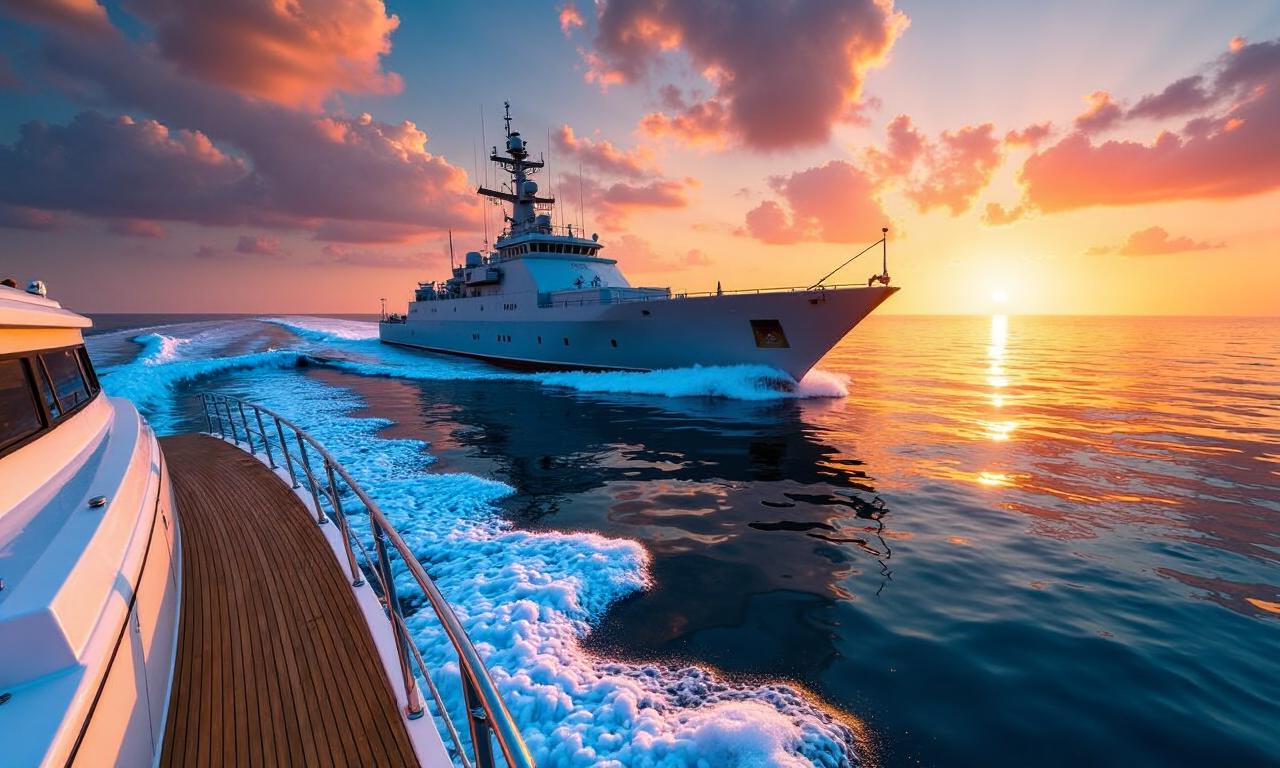
Ninoda.com – The term “warning fire went up” took on a dramatic new meaning as Jane and Alan Kelvey, a British couple on a yacht, recounted their harrowing encounter with a Russian warship. The incident, which occurred recently, involved the Russian frigate Admiral Grigorovich and the couple’s vessel, raising questions about maritime safety and international tensions. According to their account, the ship signaled its presence with five horn blasts, a standard naval procedure indicating a potential threat. The Kelveys, who were sailing in international waters, responded by adjusting their course to demonstrate awareness, saying they turned two degrees to port to signal their intention to avoid a collision. Their description of the event highlights the critical moment when the warning fire went up, marking a pivotal point in their journey and drawing attention to the proximity of military vessels to civilian traffic.
Russian Naval Encounter and Context
During their encounter, the Russian Defence Ministry claimed the yacht was approaching “dangerously” and that its crew had to take defensive measures. The ministry stated that after repeated radio attempts to communicate, the warship deployed warning flares and horn blasts to alert the couple. This sequence of actions, described as a routine maneuver, was said to be unrelated to the recent seizure of a Russian tanker in the Channel. However, the use of “warning fire went up” in this context underscores the potential for escalation. The couple, who were on a routine sailing trip, emphasized that they were unaware of the ship’s intentions until the horn blasts indicated a looming threat. Their accounts, shared with BBC Newsnight, add a human perspective to the incident, which has sparked debate over naval protocols and the safety of maritime routes.
“They gave out five blasts on their horn, which means, have you seen us?” Jane explained. “We immediately turned two degrees to port so that they could see we’d made a deliberate change, of course, which meant we had seen them,” she added. Alan noted the tense atmosphere, saying the couple felt “a bit nervous” but remained calm during the encounter. Their actions, though small, reflect the importance of quick decision-making in maritime emergencies. The “warning fire went up” moment was described as both surprising and vivid, with the couple recalling the sound of the horn and the sight of the flares as a stark reminder of the ship’s presence.
Global News and Regional Developments
While the Kelveys’ story remains central, other global events have captured attention in recent days. In Switzerland, authorities employed water cannons and tear gas to quell anti-G7 protests, demonstrating the varied methods used to manage public unrest. Meanwhile, in Spain, Pope Leo XIV praised the Sagrada Família in Barcelona as a “masterpiece of stones, colours and light,” highlighting cultural significance amid political discourse. In Dublin, an explosion left two people with minor injuries, and nearly 800 arrests followed intense protests after the Champions League final. These stories, though diverse, share a common thread of public reaction and international engagement, much like the Kelveys’ experience with the Russian warship.
Additionally, Jordan Adams, who completed his 33rd marathon in Dublin, was interviewed by BBC News NI, showcasing the personal triumphs intertwined with global events. In Paris, a heat dome caused record temperatures in Western Europe, prompting Hugh Schofield to analyze the weather’s impact on daily life. Elsewhere, firefighters tackled a blaze at Cherrymore Kitchens & Bedrooms, a family-run business in Donegal Town, involving almost 60 personnel. These developments, from sports to weather to fires, illustrate the multifaceted nature of news coverage, with the “warning fire went up” incident standing out for its suddenness and proximity to military activity.
International Reactions and Broader Implications
The MV Hondius, a vessel that recently arrived in the Canary Islands, has also been a topic of discussion. Residents expressed concerns about its potential health risks, linking it to broader anxieties about maritime safety and environmental impact. In Ukraine, forces used a drone to locate a woman fleeing her war-torn village and successfully rescued her, emphasizing the role of technology in conflict zones. BBC’s Jessica Parker visited Pripyat, the town abandoned after the Chernobyl disaster, to document its enduring legacy. These stories, from the Canary Islands to Ukraine, provide a global backdrop to the Kelveys’ encounter, illustrating how “warning fire went up” can be a recurring theme in international news, whether in the context of war, environmental concerns, or daily life.
Political and Cultural Highlights
As the “warning fire went up” incident gains traction, political and cultural updates continue to shape the news landscape. A proposed three-year agreement with Paris aims to address the migrant crisis by curbing small-boat crossings. Meanwhile, a charity draw organizer discussed the process of contacting the painting’s new owner on BBC Radio 4’s Front Row, highlighting the intersection of art and public engagement. In Hungary, the pro-EU Tisza party’s victory signals a shift in political power, ending Viktor Orbán’s 16-year rule. Rajini Vaidyanathan reported outside parliament as crowds celebrated the prime minister’s concessions, underscoring the dynamic nature of political transitions. These developments, while separate, reflect the interconnectedness of global events, with the Kelveys’ experience serving as a reminder of the unpredictable moments that can arise in international waters.
Conclusion and Broader Significance
The “warning fire went up” moment between the Kelveys and the Russian frigate Admiral Grigorovich has become a symbol of the delicate balance between military presence and civilian activity on the seas. While the exact cause of the encounter remains under scrutiny, the couple’s account emphasizes the immediacy of the situation and the effectiveness of their response. The incident has sparked conversations about maritime safety protocols, the role of warning signals in naval communication, and the potential for unintended confrontations. As the BBC continues to report on such events, the story of Jane and Alan Kelvey serves as a poignant example of how even routine activities can lead to dramatic moments, highlighting the importance of vigilance and adaptability in an ever-changing geopolitical environment.