Watch: Moment rare tornado lashes central Chinese cities

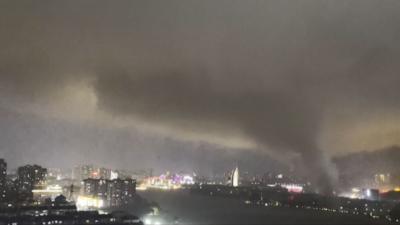
Watch: Moment rare tornado lashes central Chinese cities
Ninoda.com – In a startling display of nature’s fury, a rare tornado struck central Chinese cities, leaving a trail of destruction and capturing the attention of millions. The event, which occurred in Hubei province, marked a significant deviation from the region’s usual weather patterns. State-run media confirmed at least 11 fatalities, with hundreds more injured as the tornado unleashed its power on the urban landscape. Videos shared from Ezhou and Huanggang, two nearby cities, vividly documented the chaos, sparking widespread concern about the unpredictability of extreme weather in the area. This rare occurrence has not only disrupted daily life but also raised questions about preparedness for such disasters.
The Meteorological Context: A Storm Unlike Any Other
The tornado emerged from an unusual convergence of atmospheric conditions, including unusually warm temperatures and strong wind shear, which are rare in Hubei during this time of year. Weather experts noted that the storm’s formation was linked to a rare weather system that brought instability to the region, creating a perfect environment for tornado development. While tornadoes are more common in the United States and other parts of the world, their occurrence in central China is exceptionally rare, making this event noteworthy for its rarity and intensity. The last tornado recorded in Hubei was in 2021, underscoring the significance of this latest incident.
Residents in Huanggang described the tornado’s sudden arrival as almost surreal. “Things started flying through the air outside,” said a student, who recalled the transition from a typical storm to a destructive force. “I thought it was just an ordinary thunderstorm until I saw things flying through the air outside our dormitory window,” he added, emphasizing the shock of the moment. His account highlights the unexpected nature of the event, which caught many off guard despite prior warnings about severe weather.
Local officials confirmed that the tornado caused widespread damage, affecting thousands of buildings and leaving debris scattered across the streets. The storm’s path was particularly devastating in densely populated areas, where the combination of strong winds and heavy rain led to power outages, blocked roads, and damaged infrastructure. Emergency services worked tirelessly to assess the situation, with rescue teams deployed to evacuate stranded residents and provide medical aid to the injured.
Community Response: Resilience in the Face of Disaster
As the tornado subsided, communities in the affected areas began to rally for recovery. Neighbors helped each other clear debris, while volunteers distributed supplies to those in need. “It wasn’t until everything had finally stopped that I realized I had just lived through a disaster,” said the Huanggang student, who described the aftermath as a mix of fear and determination. His words reflect the resilience of the people who witnessed the event, even as they grappled with the aftermath of the storm.
Authorities have launched extensive rescue and relief efforts to address the damage. Teams are working to restore power, repair damaged buildings, and ensure the safety of displaced residents. The event has also prompted a review of the region’s weather forecasting systems, with officials acknowledging the need for improved early warning mechanisms to better prepare for such extreme events. “This tornado serves as a reminder of the unpredictability of weather patterns,” said a local meteorologist, adding that climate change may be increasing the frequency of such anomalies in the area.
Residents in the region have expressed a mix of relief and concern, with many praising the swift response of emergency services while calling for long-term strategies to mitigate future risks. “We were lucky that the damage wasn’t worse,” said a local shopkeeper, whose business was partially destroyed. “But we need to be ready for the next one.” The incident has sparked discussions about the importance of building codes and disaster preparedness in urban planning, particularly in areas prone to sudden weather shifts.