Watch: What we know about newly discovered monkey species

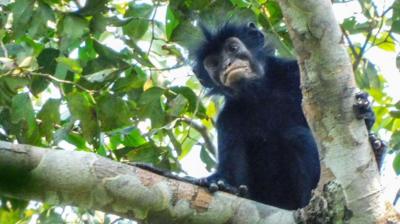
Table of Contents
Watch: What We Know About the Newly Discovered Monkey Species
Ninoda.com – The recent confirmation of a previously unknown monkey species in the Democratic Republic of Congo marks a significant milestone in primate research. This breakthrough, achieved after years of meticulous observation and analysis, has sparked excitement among scientists and conservationists alike. The newly identified primate, which has been dubbed the “Lomami Lemur” by researchers, is believed to inhabit the dense, uncharted rainforests of Lomami National Park, a region that has remained largely untouched by modern exploration. The discovery not only expands our understanding of biodiversity in Central Africa but also underscores the critical role of protected areas in preserving hidden ecosystems. As the global community continues to seek new species, this find serves as a reminder of the vast, undiscovered life that thrives in remote corners of the world.
The Unique Traits of the Lomami Monkey
What sets this newly discovered species apart is its distinctive physical and behavioral characteristics. Preliminary observations suggest the monkey has a striking combination of features, including a unique pinkish-orange lip color that contrasts sharply with its dark, almost fur-lined facial markings. Its body structure appears to blend traits of both guenons and mandrills, though further studies are needed to confirm this. Scientists note that the animal exhibits a range of behaviors unlike those seen in known species, such as a preference for climbing through dense vegetation and a peculiar vocalization pattern that has not been documented in other primates. These traits, along with genetic and morphological analyses, have led researchers to conclude that the Lomami monkey represents a new species, highlighting the complexity of primate evolution in the region.
A Decade of Observation and Scientific Verification
While conservationists had reported sightings of the monkey as early as 2008, it wasn’t until a second documented encounter in 2018 that an international team of researchers decided to investigate further. Using advanced tracking technology and camera traps, the team collected detailed footage and biological samples to compare with existing primate records. The process of verification involved analyzing DNA sequences, studying physical differences, and observing social behaviors to distinguish the Lomami monkey from its closest relatives. Dr. Karen Laurenson, Africa director at the Frankfurt Zoological Society, emphasized the painstaking effort required to confirm the species:
“The journey to recognize this primate as a new species has been both challenging and rewarding. Every piece of evidence, from its vocalizations to its habitat preferences, adds to the narrative of its uniqueness.”
This meticulous work has not only validated the discovery but also provided valuable insights into the ecological dynamics of the region.
The Importance of Conservation in the Lomami Region
Lomami National Park, where the monkey was first spotted, is a vital ecosystem for countless species, many of which remain undocumented. The park’s isolation and dense vegetation have shielded it from the pressures of deforestation and human encroachment, making it a sanctuary for biodiversity. However, the discovery of the Lomami monkey has intensified discussions about the need for expanded conservation efforts. Researchers warn that even with its protected status, the area faces threats from illegal logging, mining activities, and climate change. By identifying this species, conservationists can now advocate for targeted preservation strategies that address the specific needs of its habitat. The monkey’s existence also serves as a powerful motivator for funding and international collaboration to safeguard such ecosystems.
Implications for Global Biodiversity Research
This new species adds to the growing list of biological surprises found in Africa’s rainforests, challenging the assumption that these regions are fully understood. Scientists speculate that the Lomami monkey may play a crucial role in the local food chain, acting as both predator and prey within its forested environment. Its discovery also raises questions about the genetic diversity of primate populations and how human activities might impact them. Furthermore, the monkey’s unique adaptations could provide clues about evolutionary processes in isolated habitats. As researchers continue to study its behavior and genetics, the findings may reshape our understanding of primate evolution and inform broader conservation strategies across the continent.
The identification of the Lomami monkey is a testament to the power of persistence in scientific exploration. It highlights the importance of long-term fieldwork and the value of documenting even the most elusive species. For conservationists, this discovery reinforces the urgency of protecting habitats before they are lost to development and climate change. For the scientific community, it opens new avenues of research, particularly in studying the genetic and ecological links between primate species in the region. As the world watches the unfolding story of this newly discovered monkey, it becomes clear that every new species found brings us closer to understanding the intricate web of life that sustains our planet. The journey to confirm its existence has been a remarkable example of how curiosity and dedication can unlock the secrets of nature, offering hope for future discoveries in the wild.