A bruising 24 hours – what next for Fifa and under-pressure Infantino?

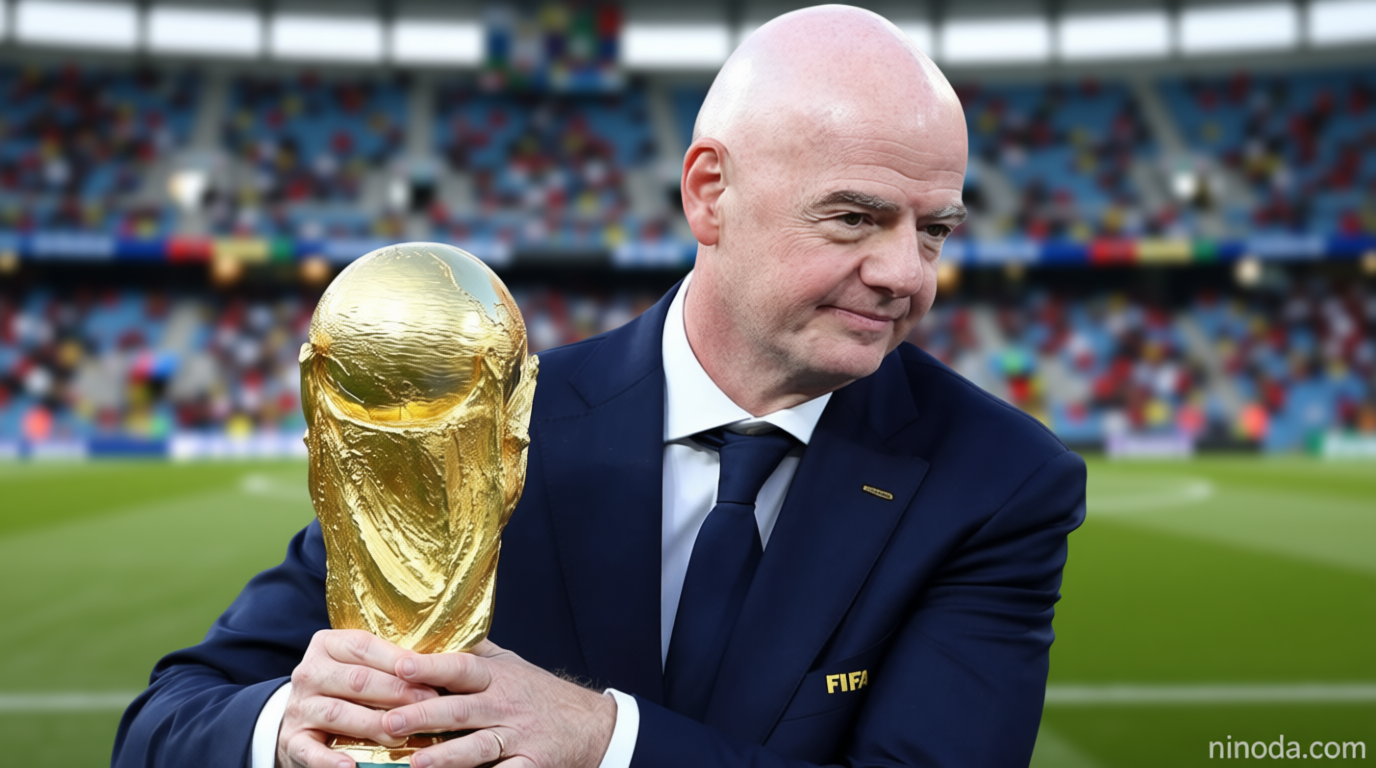
FIFA President Faces Mounting Pressure After Investment Deal Controversy
Ninoda.com – Just seven days ago, Gianni Infantino seemed untouchable as the head of world football’s governing body. The Swiss official, who first won the presidency in 2016, held what appeared to be an unassailable position. However, a bold move to secure private investment for FIFA tournaments has thrown his leadership into jeopardy.
Reports indicate that Infantino attempted to sell shares in FIFA competitions to investment companies without consulting other stakeholders. This unilateral approach has sparked widespread discontent across the football world.
UEFA Seizes the Moment
UEFA, which has emerged as Infantino’s most vocal opponent, played its strongest card on Thursday. The European confederation threatened to withdraw from every FIFA competition, including the prestigious World Cup tournament. European football’s administrators now believe they have the perfect opportunity to oust the Swiss president.
Following Infantino’s reversal in the early hours of Saturday, UEFA strengthened its position with a firm declaration. The organization made clear that it had lost faith in his ability to lead.
Widespread Discontent Emerges
While UEFA leads the charge, dissatisfaction extends far beyond Europe. CONCACAF, the confederation that Infantino collaborated closely with to plan the 2026 World Cup, demanded a comprehensive examination of FIFA’s leadership structure.
Perhaps most surprisingly, several traditionally loyal Asian Football Confederation nations distanced themselves from the president. The situation worsened when two of Infantino’s most trusted allies departed—first senior adviser Carlos Cordeiro, followed by chief operating officer Kevin Lamour.
Pathways to Change
The fastest way for Infantino to step aside would mirror his predecessor Sepp Blatter’s approach in 2015, when he voluntarily resigned. Alternatively, Infantino might attempt to remain until March, when he faces re-election for what would be his fourth and final term as president.
Another option involves the FIFA Council, which comprises 37 members. An emergency session could be convened if 19 members request one. The council’s makeup includes UEFA with nine representatives, AFC with seven, CONCACAF with five, Africa with six, CONMEBOL with five, and Oceania with three. Infantino and secretary general Mattias Grafstrom complete the body.
According to BBC Sport, there remains uncertainty about whether the necessary 19 votes can be secured. Should the threshold be reached, the council must convene within fourteen days and could request Infantino’s resignation. The president retains the right to decline such a request, though doing so would intensify pressure on his position.
Extraordinary Congress Option
A more lengthy process would involve calling an extraordinary congress of all 211 FIFA member associations. This requires forty-three associations to submit a written request. UEFA alone possesses fifty-five nations, meaning it can initiate this process at any time.
The timeline typically spans two to three months from initiation. Success is not guaranteed, as the congress would function essentially as an election without an opposing candidate. One hundred and six votes would be required to pass a vote of no confidence.
Regional voting power breaks down as follows: UEFA holds 55 votes, Africa 54, Asia 46, CONCACAF 35, Oceania 11, and CONMEBOL 10. Notably, Africa, CONMEBOL, and Oceania have not publicly criticized Infantino’s investment strategy.
While 136 countries formally rejected the investment proposal, rejecting a plan differs from removing a president. Among those 136, Qatar has openly supported Infantino, while Mexico has separated itself from CONCACAF’s joint statement.
Searching for a Successor
If UEFA and other critics pursue the electoral route, they must identify a unifying figure. Given UEFA’s aggressive stance against Infantino, a European candidate might face challenges gaining worldwide backing. Such a scenario could appear as though UEFA seeks to control FIFA itself.
The ideal candidate would need to attract support from CONCACAF, African, and Asian nations that might have remained loyal to Infantino but could potentially shift their allegiance.
CONCACAF president Victor Montagliani emerges as the frontrunner. Like Infantino, Montagliani won election in 2016 on a platform of governance reform. A former president of Canada Soccer, he brings both regional credibility and international experience to the potential contest.
Infantino previously ran unopposed during his re-elections in 2019 and 2023. Any challenger must announce their candidacy by 18 November to compete in March’s election.
The battles lines have been drawn. What could happen next?