Does referee case show Fifa has lost control of its own World Cup?

Does Referee Case Show FIFA Has Lost Control of Its Own World Cup?
Ninoda.com – As the 2026 World Cup draws closer, a controversial incident involving Omar Artan, a Somali referee and one of Africa’s most prominent officials, has raised serious questions about FIFA’s ability to ensure seamless operations during the tournament. Artan was denied entry into the United States just days before the event, despite having all necessary documentation, including a valid visa. The 11-hour interrogation by U.S. immigration authorities not only disrupted his schedule but also underscored concerns that FIFA may no longer have the authority to shield its representatives from political scrutiny. This situation has sparked debates about whether FIFA’s global governance is being overshadowed by national interests, particularly in the host nation.
The Referee’s Journey and a Symbolic Setback
Omar Artan’s career has been defined by notable achievements, including becoming the first Somali referee to officiate a continental final in 2025. He oversaw the second leg of Pyramids FC’s African Champions League triumph, a milestone that highlighted his growing prominence in international football. Earlier that year, he was also entrusted with three matches at the U-20 World Cup in Chile, where he demonstrated composure and expertise. His recent participation in the Africa Cup of Nations further cemented his reputation as a reliable and respected official. Yet, this incident has cast a shadow over his accomplishments, with some viewing his expulsion as a symbolic blow to FIFA’s credibility.
“I had the right papers and everything. I had the right visa,” Artan said in an interview with the New York Times. “But they still questioned me for hours.”
His words reflect the frustration of a man who believed his work would be the priority, only to be caught in a bureaucratic crossfire. While the U.S. government maintains that the decision was based on standard procedures, critics argue that the scrutiny was disproportionate and politically motivated. This has led to calls for greater transparency in visa policies and a reassessment of how FIFA collaborates with host nations during major tournaments.
Political Tensions and FIFA’s Global Influence
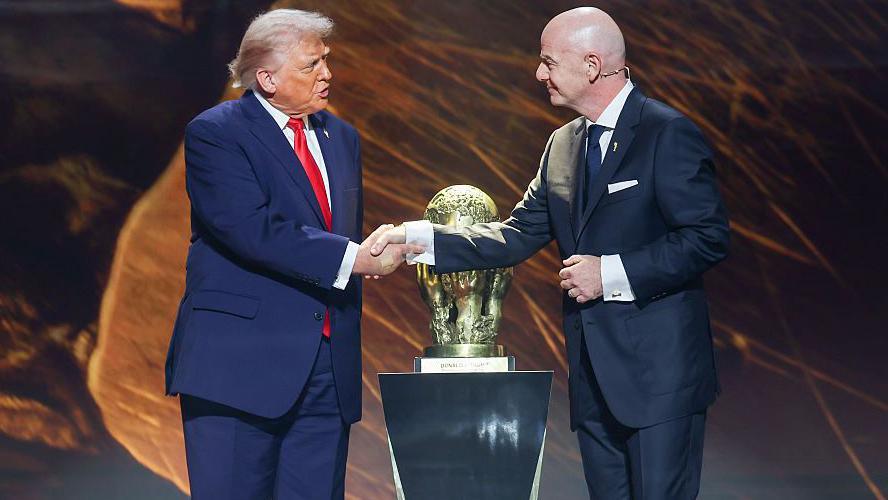
The timing of Artan’s denial has drawn comparisons to broader geopolitical tensions. With the U.S. hosting the World Cup amid ongoing conflicts, such as its stance on Iran and Venezuela, there are fears that ideological considerations could influence the treatment of FIFA officials. U.S. President Donald Trump’s receipt of the first-ever FIFA Peace Prize during the World Cup draw in December 2023 has added to these concerns, with some suggesting the gesture was a strategic move to align with American interests. However, the fallout from Artan’s case has shown that even symbolic gestures may not prevent real-world consequences.
Analysts point to the potential for political alignment to affect FIFA’s operations. While the organization has traditionally emphasized unity and neutrality, its representatives now face the risk of being scrutinized through the lens of national politics. This incident has not only highlighted the vulnerability of FIFA’s logistical control but also raised questions about the organization’s ability to maintain impartiality in a politically charged environment. The contrast between Artan’s experience and the expectations for a “fresh start” in 2026 underscores the growing complexity of hosting the world’s most prestigious football event.
As the 2026 World Cup prepares to unite the United States, Canada, and Mexico, the case of Omar Artan serves as a reminder of the challenges FIFA faces in managing events on a global scale. The decision to deny his entry has sparked a broader conversation about the balance between national sovereignty and international cooperation. While FIFA has sought to maintain its influence through strategic partnerships, this incident has exposed cracks in its control, particularly when host nations prioritize their own political agendas over the smooth execution of the tournament.
The ripple effects of the situation extend beyond Artan’s personal experience. Fans, players, and journalists have all faced similar hurdles in previous World Cups, with reports of visa denials and border checks creating friction. This has led to speculation about whether the U.S. administration is testing FIFA’s ability to navigate political challenges. As the tournament approaches, the incident may serve as a cautionary tale, emphasizing the need for FIFA to address potential gaps in its international coordination and to reinforce its commitment to fair treatment of all officials, regardless of their nationalities.