‘No guarantees’ – joyful Glasgow cannot banish all Commonwealth doubts

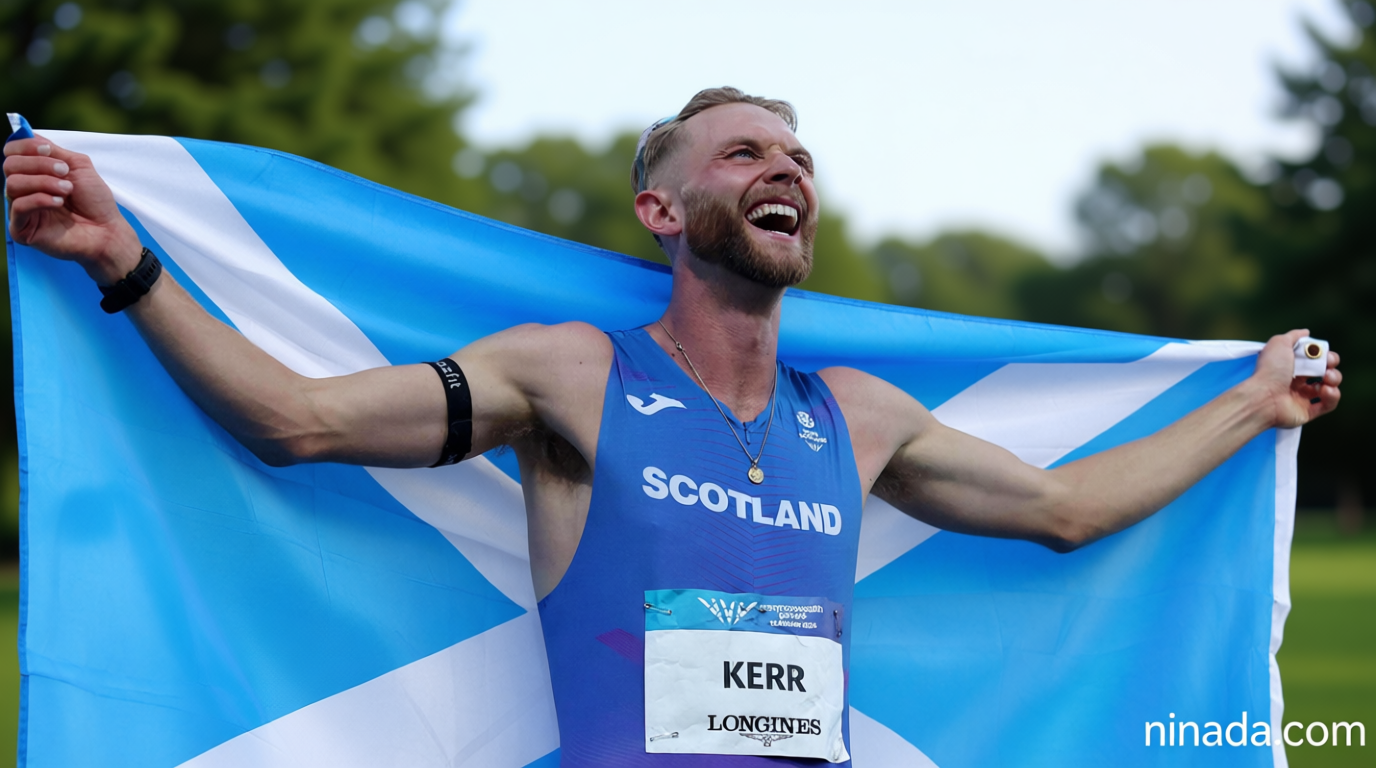
Table of Contents
Glasgow’s Commonwealth Triumph Offers Hope, But Uncertainty Remains
Ninoda.com – Scotland’s Josh Kerr delivered one of the defining moments of the 2026 Commonwealth Games with his mile victory at Scotstoun Stadium. Glasgow has essentially performed emergency surgery on an institution that needed saving. The Commonwealth Games have been kept alive through eleven days of competition, 674 medals awarded, and thousands of delighted spectators filling the Scottish city.
Yet this celebration marks merely the beginning of recovery efforts. Ahmedabad now occupies the position that Victoria held four years prior—as the upcoming host of an event celebrating its centenary in 2030. When Victoria withdrew from hosting duties, the question emerged: can another city provide the stability that was lacking?
“I don’t think one can give any guarantees,” Raghu Iyer, chief executive of the Indian Olympic Association, told BBC Sport.
This measured response underscored that concerns regarding the Games’ longevity persist even as the 2026 edition concluded on Sunday evening.
A Scaled-Down Edition Exceeds Expectations
Following Victoria’s 2023 withdrawal, Glasgow responded to what organizers described as an SOS call. The past eleven days in Scotland have surpassed all anticipated outcomes, according to local organizers. Minor complaints have surfaced—including residents whose parking spaces were claimed and local businesses that saw limited benefit—but the atmosphere on the ground proved genuinely meaningful.
With 434,000 tickets sold, attendance figures fell considerably from Birmingham’s 2022 total of 1.5 million. However, this reduction was anticipated given the smaller venue configuration for this condensed version of the Games. Rarely did visitors enter a facility without encountering an enthusiastic, engaged audience.
Fans experienced considerable excitement throughout the competition. Kerr’s triumphant homecoming at Scotstoun, Angharad Evans causing the swimming pool floors to vibrate with her performances, and Neil Fachie’s touching victory upon returning to the Sir Chris Hoy Velodrome all contributed to memorable moments. Jamaica’s dramatic netball triumph over Australia also generated celebration.
Global Reach and Growing Concerns
Live sport typically delivers compelling content, yet one persistent question has lingered: is the world paying attention? While prominent figures like Kerr and Adam Ramsay-Peaty—whose emotional bronze medal reaction in the pool captured hearts—transcended the Glaswegian bubble, broader recognition remains uncertain.
Organizers reported that social media engagement surpassed Birmingham’s levels within the first few days. Record-breaking television audiences emerged in Australia and New Zealand, where broadcasts remained free-to-air. Nevertheless, without equivalent UK coverage, the Games occasionally faded from public consciousness.
Glasgow 2026 also suffered from the absence or delayed withdrawal of high-profile competitors, particularly in athletics. The sport missed Keely Hodgkinson, Katarina Johnson-Thompson, and Dina Asher-Smith. The varying significance across different sports became evident—netball continues to treat the Commonwealth Games as its pinnacle, while other disciplines view it as a developmental platform.
The Next Generation Emerges
Many storylines centered on emerging talent. Eighteen-year-old Jersey swimmer Filip Nowacki stood out as perhaps the most thrilling new name, alongside gymnasts Ruby Evans representing Wales and Reuben Ward for Scotland, plus England track cyclist Henry Hobbs, who secured two gold medals and a bronze.
Swimmer Faye Rogers successfully transferred her Paralympic triumph to Glasgow, claiming gold in the pool before also competing in the non-para event. Cyclist Emma Finucane transformed her three Paris Olympic medals into four Commonwealth golds in Glasgow. All competitors now direct their focus toward Los Angeles in 2028.
Looking Toward Ahmedabad 2030
What implications does this hold for the Commonwealth Games’ trajectory? Shifting Ahmedabad’s schedule to October will resolve athletics’ conflict with the European Championships. This adjustment will, however, lengthen an already demanding season and present athletes with new considerations.
The perception that these Games represent a stepping stone toward India potentially hosting both the Olympics and Paralympics—possibly also in Ahmedabad—should bolster their prospects. The primary venue will be the Narendra Modi cricket stadium, accommodating 120,000 spectators. Given Delhi’s challenges in 2010, observers will watch closely.
As the number of sports expands—from ten in Glasgow to seventeen, though not the twenty originally planned for Victoria—expenses will inevitably rise. Glasgow’s budget was reduced to £160 million, while Ahmedabad’s projected costs approach double that figure. This creates an inherent tension.
This iteration has been positioned as a model for future editions, yet modifications are already underway. A financial and logistical equation must be resolved. The specific sports returning for Ahmedabad will prove particularly noteworthy as organizers navigate these evolving circumstances.
Related Reading
Frequently Asked Questions
What is No guarantees?
No guarantees is the main topic of this guide. The article explains the context, practical details, and next steps readers should understand.
Why does No guarantees matter?
No guarantees matters because readers are looking for a useful answer, not just a short summary. Good content should match search intent and help them decide what to do next.