Record draws and Europe’s slow start – is the World Cup lacking jeopardy?

Record Draws and Europe’s Slow Start: Is the World Cup Lacking Jeopardy?
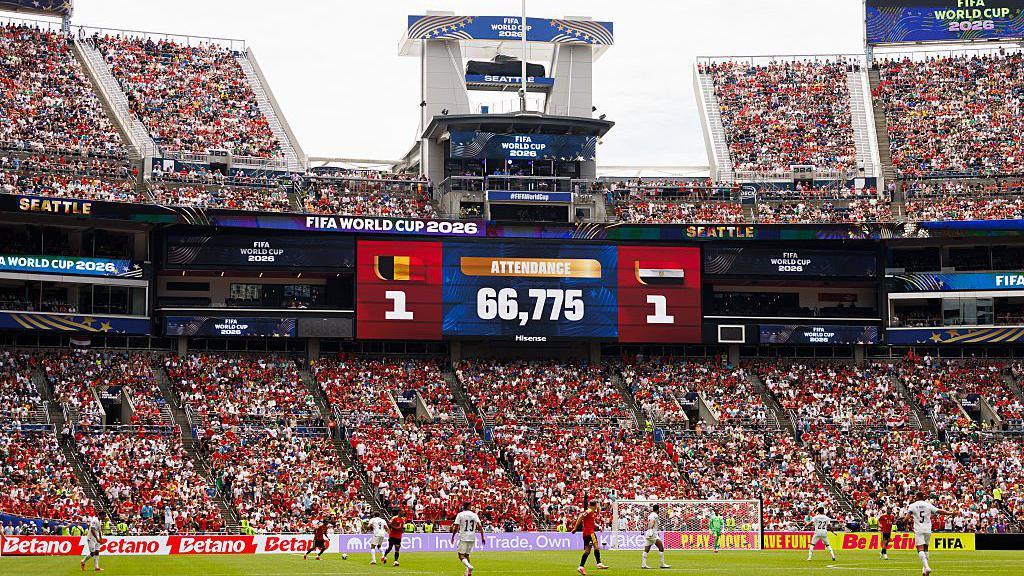
Ninoda.com – The 2026 World Cup has seen an unprecedented number of draws, with eight of its first 16 matches ending in ties. This trend has raised questions about the tournament’s intensity, as the opening week has been defined by stalemates rather than decisive victories. Four games on Monday alone concluded without a winner, including Spain’s 0-0 draw against Cape Verde, Belgium’s 1-1 clash with Egypt, Saudi Arabia’s 1-1 tie with Uruguay, and Iran’s 2-2 result against New Zealand. Notably, this marks the first time since 15 June 1958 that four matches on a single day have all ended in draws, signaling a shift in the traditional dynamics of the competition.
Tournament Analysis
The record-breaking eight draws after just 16 matches have set a new benchmark for the World Cup. Historically, the highest number of draws in the same stage was seven, achieved in 1974, 1982, and 1986. This year’s pace suggests the expanded 48-team format may be influencing outcomes, as only 16 teams are eliminated in the group stage. With three points sufficient for progression, even a draw can secure a spot in the knockout rounds, reducing the pressure on early results compared to past tournaments.
European Performance
Europe’s traditional dominance has been challenged in the opening games, with seven of 10 teams failing to win. Germany, Scotland, and Sweden are the sole European sides to secure victories, beating Curacao, Haiti, and Tunisia respectively. Meanwhile, England, Croatia, France, Norway, Austria, and Portugal await their first matches. Despite facing higher-ranked opponents in eight of the 10 games, European teams have struggled, leading to speculation about whether the heat in North America is affecting their play.
“Whether it is 10 degrees or 30 degrees, we should have done better,” said Belgium manager Rudi Garcia after his side drew 1-1 with Egypt in Seattle. He acknowledged the impact of the dry, hot conditions on the pitch, noting the grass lacked moisture and slowed the ball down.
Belgium’s match in Seattle, played at temperatures exceeding 30°C, highlighted the challenges of extreme weather. Switzerland’s 1-1 draw with Qatar, despite generating 26 shots and an expected goals figure of 3.24, also pointed to defensive efficiency over attacking flair. The 2026 tournament has proven difficult for traditional powerhouses, as South American teams remain winless, with Brazil held by Morocco and Uruguay drawing with Saudi Arabia. Paraguay’s 4-1 loss to the USA added to the uncertainty for the continent.
Regional Insights
Asia’s teams have maintained a perfect record, while African sides have claimed points from higher-ranked opponents. Brazil’s disappointing performance, described by former Uruguay international Gus Poyet as “technically poor,” has sparked debate about the role of pitch conditions. “I was surprised how bad technically they were,” Poyet remarked on BBC One. “Maybe the pitch didn’t help, but they were missing simple passes expected of Brazilian players.”
With two more group games to come, teams that have started slowly still have opportunities to bounce back. The early draw-heavy phase has underscored the tournament’s evolving nature, as the expanded format and high temperatures combine to reshape expectations. For now, the World Cup remains a stage where resilience and adaptability are as crucial as skill and strategy.