Why Beckham was face of World Cup in the US

David Beckham’s Global Influence on the U.S. World Cup
Ninoda.com – As the World Cup progressed in the United States, David Beckham emerged as a defining figure, overshadowing even the star-studded matches. His presence extended far beyond the field, becoming a symbol of the tournament’s cultural reach. While stars like Kylian Mbappe, Jude Bellingham, Lamine Yamal, and Lionel Messi captivated audiences with their performances, Beckham’s off-field activities drew equal attention.
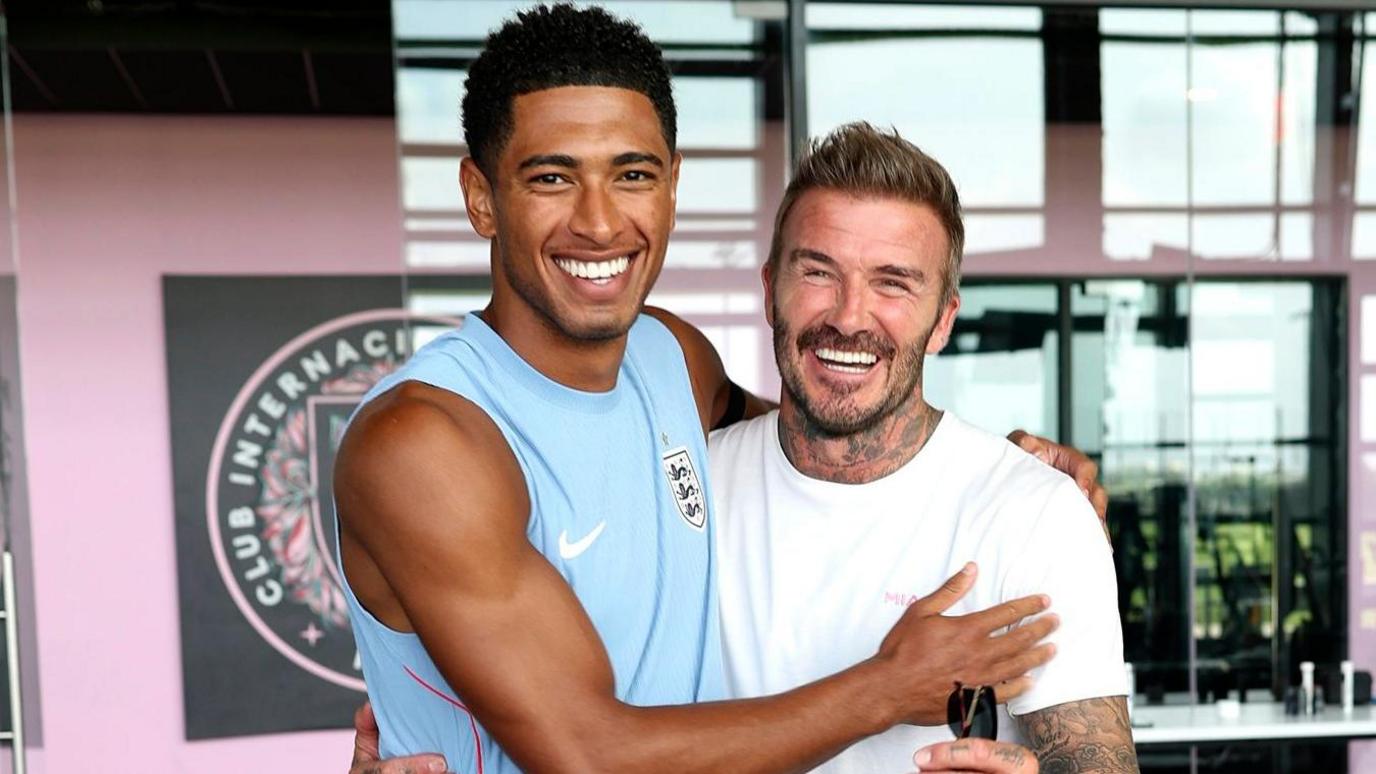
During the quarter-final against England, Beckham was presented with his legacy cap in Miami, a gesture that highlighted his lasting impact on American football. His ability to merge sports and celebrity culture has made him a household name, appearing in campaigns for 11 brands such as McDonald’s, Major League Soccer (MLS), Stella Artois, and Bank of America. Even when not in the spotlight, his visibility was impossible to ignore—whether at the opening match in Los Angeles or during halftime breaks, where his face was a constant reminder of his global appeal.
A Star on the Field and Off
“David speaks to so many different people. I think that’s what’s unique about him,” said Stacy Jones, founder and CEO of Hollywood Branded. “He brings in the female demographic because he is so sexy—but he appeals to men. He’s an honest, good, authentic, down-to-earth type of individual. So you don’t really get affronted by him.”
Beckham’s versatility has allowed him to transcend traditional boundaries, bridging football, fashion, entertainment, and business. His influence was recently showcased in Hermosa Beach, where fans gathered to celebrate Spain’s World Cup run at an event organized by LA Galaxy—the club he joined in 2007 from Real Madrid. The scene was a testament to his enduring connection with the U.S. fanbase.
For some, the name David Beckham evokes images of his iconic free-kicks or the Spice Girls era. Others recall his partnership with Victoria Beckham or the McDonald’s ads that became cultural touchstones. Yet, not everyone shares the same sentiment. “David Beckham was a really good player for England, but he’s doing too many commercials now,” remarked one football fan, highlighting the mixed perceptions of his brand-focused approach.
The Legacy of Influence
Beckham’s career in America was pivotal in reshaping the landscape of soccer. When he joined LA Galaxy 19 years ago, MLS saw a surge in popularity, with stadiums packed before his debut. His arrival provided the league with mainstream celebrity status, a factor that continues to drive its growth. Courtemanche, MLS’s executive vice-president, acknowledged this shift: “He changed the fate of American soccer. Not once, but twice.”
“Lionel Messi decided to make Major League Soccer his league of choice and Inter Miami his club of choice,” Courtemanche added, emphasizing Beckham’s role in attracting global talent to the U.S. scene.
Beckham’s legacy also includes his 1999 stint with Manchester United, where he was part of the team that secured a Treble. His reputation as a Galáctico at Real Madrid further solidified his status as a football icon. However, his influence now stretches beyond sports—LA Galaxy’s president, Tom Braun, noted, “David’s an iconic figure in our sport and our culture. He’s built a business around his brand and continues to resonate with people.”
At the Hollywood Walk of Fame ceremony, Beckham reflected on his journey, noting he never thought a “working-class English footballer” would earn such recognition. This moment symbolized not just his athletic achievements, but his role as a cultural ambassador. As Jones observed, “David Beckham, to America, is the World Cup.” His presence remains a powerful force, intertwining football with the broader fabric of global entertainment.