Summer 2026 expected to be declared UK’s hottest on record


Table of Contents
UK on Track for Hottest Summer Since 1884 as Met Office Awaits Final Confirmation
Ninoda.com – Provisional temperature data covering June, July, and August are set to be published on Tuesday afternoon, and the figures are poised to confirm what meteorologists have increasingly anticipated: the United Kingdom has just experienced its warmest summer since systematic record-keeping began in 1884. The Met Office, which has tracked national weather data for nearly 140 years, is expected to formalize the designation once the final calculations are complete.
The seasonal mean temperature — a figure that blends daytime highs with overnight lows across the entire three-month period — is projected to exceed the benchmark established only twelve months ago. That narrow gap between consecutive annual records underscores a broader pattern: the threshold for a new UK summer maximum is now being surpassed with increasing regularity and by widening margins.
What the Numbers Reveal
The scale of this year’s thermal anomaly extends well beyond a single peak reading. Across the meteorological summer, temperatures at or above 30 °C (86 °F) were logged on 40 separate days, eclipsing the prior benchmark of 34 days set back in 1995. Readings of 35 °C or higher appeared on ten distinct occasions, doubling the previous record of five days first reached in 1976 and matched in 2020. Perhaps most strikingly, temperatures of 37 °C or above were recorded on three separate days — a figure that constitutes an outright new national record. In the entire history of UK meteorological observation, 37 °C+ readings have occurred only nine times, three of which fell within this single year.
The persistence of extreme heat also stretched across calendar months in a way never previously documented. Temperatures of 35 °C or above were registered in four consecutive months — May, June, July, and August — whereas the prior record stood at two calendar months.
Five Heatwaves in One Season
Five widespread heatwave events were identified during the spring-to-summer period. The first struck at the tail end of meteorological spring and shattered the UK’s May temperature record by more than two degrees. A second event in June broke that month’s own record, with Lingwood in Norfolk registering 38.0 °C on 26 June against a previous June high of 35.6 °C set during the historic summer of 1976.
July and August delivered further episodes of sustained extreme warmth. One heatwave persisted for approximately three weeks in certain locations, while another produced the single highest temperature of the year: 38.1 °C (100.6 °F) at Kew Gardens in London on 13 August. That reading placed the day, provisionally, among the five hottest maximum-temperature days ever recorded in the UK, though it fell short of the all-time peak of 40.3 °C (104.5 °F) measured at Coningsby in Lincolnshire in July 2022.
Dryness, Drought, and Wildfire
The intensity of the heat was amplified by an extraordinary lack of rainfall. For much of the summer, high-pressure systems dominated the British Isles, funneling dry continental air across the country. Some regions went more than two months without measurable precipitation. Drought status was declared across all of Wales and over two-thirds of England. In Stourbridge, West Midlands, wildfires destroyed 19 homes on what became the UK’s hottest single day of the year.
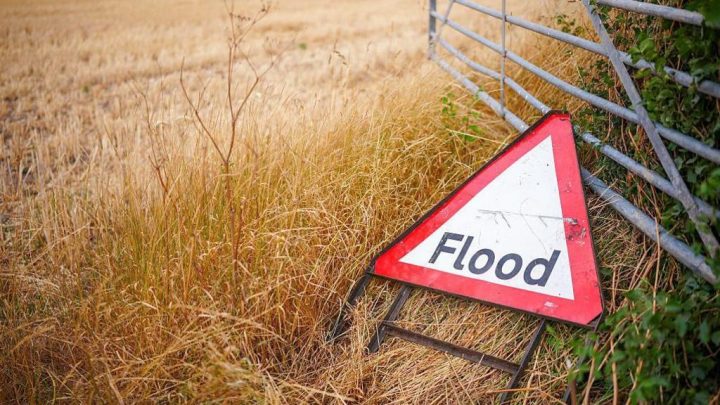
Wet weather did eventually return. Early June brought a brief spell of rain, and the second half of August saw cooler, wetter conditions for many areas. Sheffield received more than a month’s worth of rainfall during the week of 24–30 August alone — exceeding the total the city had accumulated across the rest of the season combined. Flash flooding accompanied these late-summer downpours in several locations.
Despite the localized extremes, the summer as a whole is not expected to set any national records for dryness when viewed across the entire UK.
Regional Variations
The final figures will show meaningful differences among the four nations. England and Wales are both anticipated to establish new all-time summer temperature records. Northern Ireland is likely to come close to its own benchmark. Scotland, however, is expected to fall short of breaking its previous mark.
A Pattern That Should Not Be Ignored
The manner in which the UK’s summer temperature record is being dismantled carries particular significance for climate science. In a stable climate, successive record-breaking events should grow progressively rarer, because each new maximum raises the bar for the next. Instead, all five of the warmest summers in the UK’s observational record have occurred since the year 2000. Until last year, the separations between those five records were vanishingly small — the four hottest were divided by mere five hundredths of a degree. Then 2025 arrived and widened the gap sharply.
These observations align with the wider body of evidence showing that human-induced climate change is driving summers toward higher mean temperatures, more frequent heatwaves, and greater intensity within each event. The Met Office noted on 11 August that confirmation of a record summer had become “increasingly likely,” at which point the seasonal mean stood at 16.48 °C (61.66 °F) with only average conditions required for the remainder of the month to seal the designation. Overall temperatures through late August remained at or above the seasonal norm despite the wetter weather that arrived.
For residents across the UK, the practical implications are already visible: infrastructure designed for historical climate norms is being stressed, agricultural yields face compounding risk, public-health planning must account for longer and more frequent heat episodes, and insurance markets are adjusting to wildfire and flood events that once fell outside the expected range. The Tuesday announcement will formalize what the season’s data has already made clear — the UK’s climate baseline is shifting, and the pace of that shift is accelerating.
Related Reading
Frequently Asked Questions
What is Summer 2026 expected to be declared?
Summer 2026 expected to be declared is the main topic of this guide. The article explains the context, practical details, and next steps readers should understand.
Why does Summer 2026 expected to be declared matter?
Summer 2026 expected to be declared matters because readers are looking for a useful answer, not just a short summary. Good content should match search intent and help them decide what to do next.