Canadian wildfires rage as Trump warns Carney again over ‘poisoning’ US air

Canadian Wildfires Rage as Trump Warns Carney Over ‘Poisoning’ US Air
Ninoda.com – Canadian wildfires rage as Trump warns Carney again, highlighting the growing environmental tensions between the two nations. During a recent call with Canadian Prime Minister Mark Carney, U.S. President Donald Trump reiterated his concerns about the smoke from wildfires “poisoning our air” in American cities. The conversation came as thick haze blanketed major urban centers like Washington, D.C., and New York, raising alarms about air quality and public health. Trump emphasized that the situation was not just a natural disaster but a geopolitical issue, stating that “we should compensate them” for the damage caused by the smog.
The Scale of the Canadian Wildfires
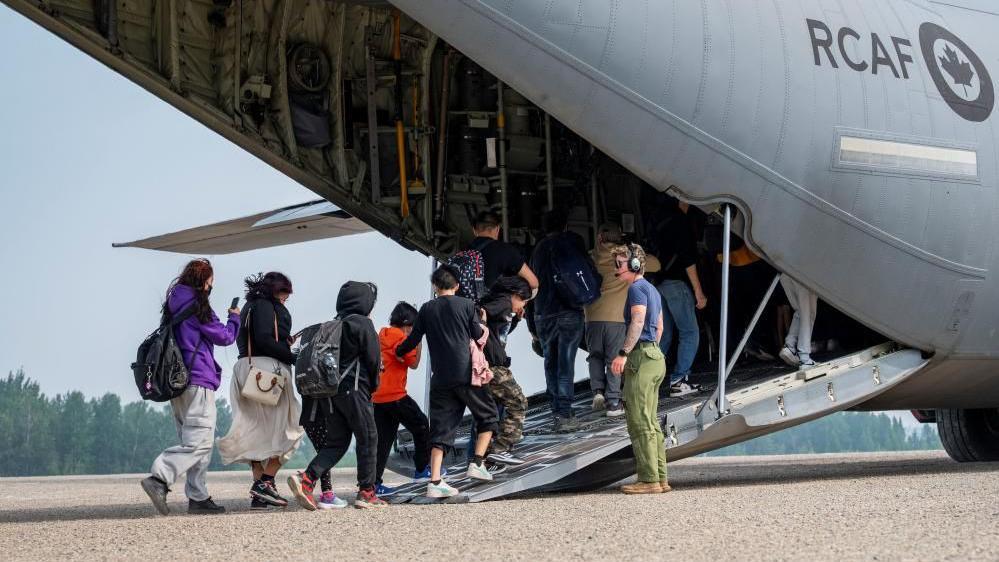
The current wildfire outbreak in Canada has reached unprecedented levels, with over 900 active fires reported across the country. These blazes have displaced thousands of residents and devastated communities, particularly in the provinces of Ontario and British Columbia. In Ontario alone, more than 1,800 people were evacuated, while the Whitewater Lake First Nation faced the tragic loss of seasonal camps and natural habitats. Chief Pauline Drake expressed deep concern over the ecological impact, stating that the destruction of beaches and wildlife areas has created a “very concerning” situation for the region’s residents and environment.
British Columbia has also been heavily affected, with the city of Kimberley under an evacuation alert due to the rapid spread of flames. Firefighters and aerial units have been deployed in large numbers, with over 5,000 personnel and nearly 300 aircraft working to contain the fires. Despite these efforts, the situation remains dire, with the National Fire Service reporting that the blazes are fueled by high temperatures, strong winds, and prolonged drought conditions. The smoke from these fires has not only affected Canadian cities but has also traveled across the border, impacting air quality in parts of the United States.
Trump’s Accusations and Diplomatic Tensions
Trump’s recent warnings to Carney have intensified diplomatic friction between the U.S. and Canada, with the president linking the environmental crisis to his tariff threats. “If we can assist them, we will. But perhaps they should compensate us for the damage,” he said during the call, according to statements from White House officials. The remarks have been interpreted as a veiled critique of Canada’s forest management practices, though experts note that the fires are largely a result of natural factors and human activity in the region.
Ontario Premier Doug Ford has defended Canada’s efforts, criticizing Trump’s approach as overly aggressive. “I get frustrated just listening to a bunch of rubbish,” Ford said, reflecting on the growing disputes. He argued that the U.S. has benefited from Canada’s support during past environmental crises, such as the response to Hurricane Helene and the California wildfires. Ford’s visit to Thunder Bay earlier this week underscored his commitment to addressing the issue, with the premier vowing to “do and spend whatever it takes” to protect citizens from the blazes and their effects.
Meanwhile, the impact of the smoke on U.S. cities has led to public health advisories, with residents being urged to limit outdoor activities due to poor air quality. The Environmental Protection Agency (EPA) has confirmed that pollutants from the Canadian wildfires have contributed to increased levels of particulate matter and carbon monoxide in the eastern U.S. This has sparked debate over whether the U.S. should take economic measures against Canada, as Trump suggested, to address the environmental damage.
Collaboration and Challenges in Crisis Management
Despite the diplomatic rift, both nations have acknowledged the need for collaboration in tackling the wildfires. Carney, in a recent statement, praised the “dedicated and brave individuals” working on the front lines, while emphasizing the importance of international cooperation in such crises. However, Trump’s comments have added a layer of complexity, with his focus on economic retaliation rather than immediate environmental action.
The ongoing dialogue between the two leaders has highlighted the broader challenges of managing cross-border environmental issues. While Canada has been addressing the wildfires through ground and aerial suppression efforts, the U.S. is now facing the dual challenge of dealing with the smoke and maintaining political pressure on its northern neighbor. Analysts suggest that Trump’s public criticism of Carney may be a strategic move to shift blame for the environmental impact, even as the situation continues to worsen.
As the fires persist, the focus keyword “Canadian wildfires rage as Trump” remains central to the narrative, underscoring the interconnected nature of the crisis. The smog from the Canadian blazes has not only affected air quality but has also reignited discussions about climate change, trade policies, and the role of government in mitigating environmental damage. With the World Cup Final having just concluded, the timing of Trump’s remarks has added a layer of global attention to the issue, drawing comparisons to other international environmental challenges.