From mouthwash to hair dye: How weight-loss jabs are changing shopping habits

From Mouthwash to Hair Dye: Weight-Loss Jabs Reshape Consumer Spending
Ninoda.com – From mouthwash to hair dye, weight-loss injections are transforming how people approach everyday purchases. As injectable medications like Wegovy and Mounjaro gain popularity in the UK, their impact on consumer habits is becoming increasingly evident. Over two million individuals are now using these drugs, and their influence extends beyond weight management—altering grocery shopping, product preferences, and even dining-out routines. The BBC investigates how these medications are reshaping spending patterns, backed by data from market research and academic studies.
Shifting Grocery Habits
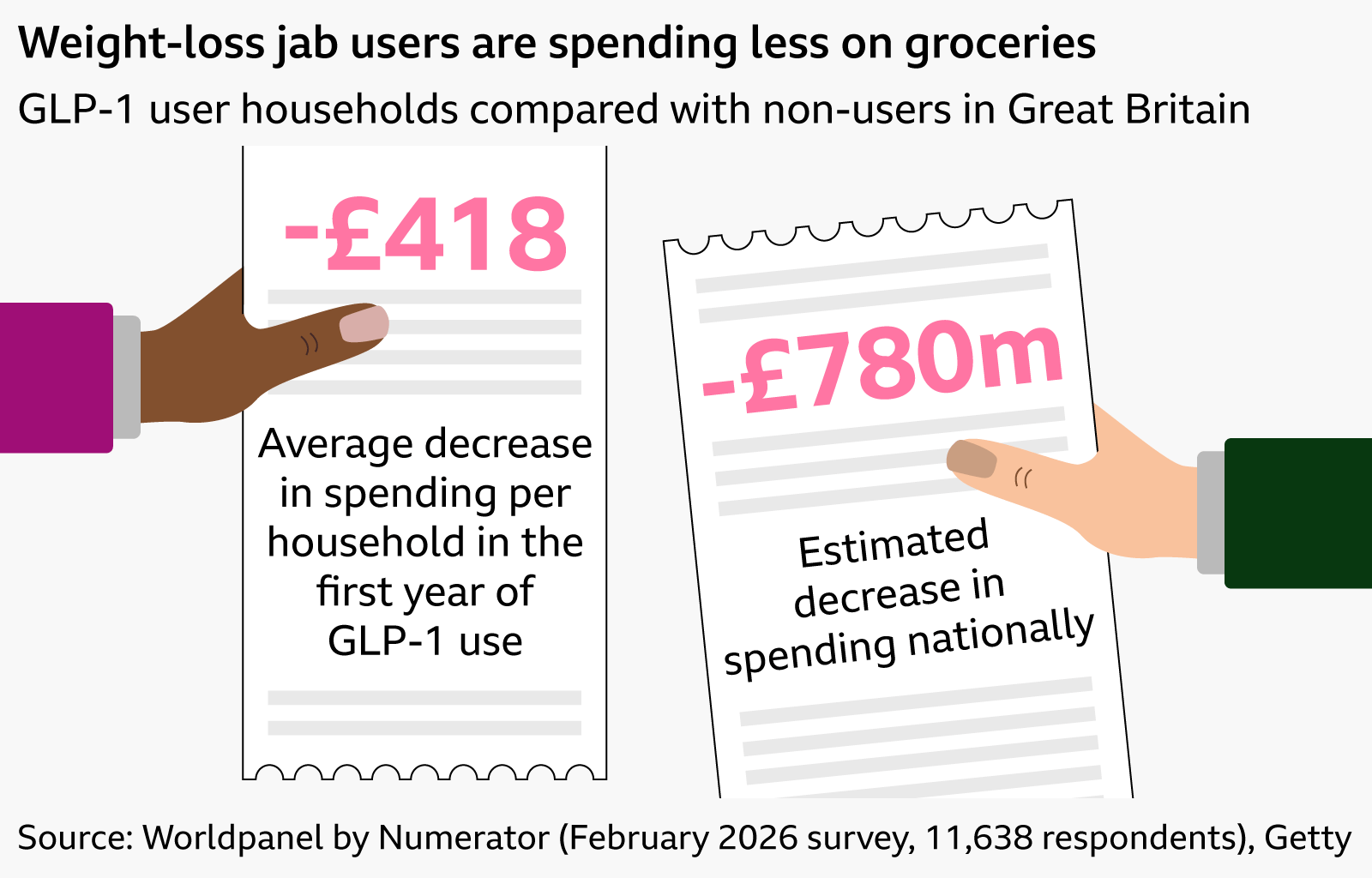
Worldpanel’s recent report highlights a notable decline in food spending for households using GLP-1 drugs. On average, these families spend £418 less annually on groceries compared to non-users, leading to a £780 million national reduction in food expenditure. This trend suggests a deeper shift in priorities, with users opting for healthier, nutrient-dense foods like fruits and protein-rich items such as prawns. The change is not merely about saving money but about redefining what consumers prioritize in their daily routines.
Changing Product Preferences
Consumers on weight-loss jabs are increasingly steering away from calorie-laden items, including chocolate, pastries, and processed snacks. Simultaneously, they are purchasing more products linked to common side effects of GLP-1 therapies, such as bad breath and hair thinning. This includes items like mouthwash, chewing gum, and hair dye—products that have seen a surge in demand among users. The Worldpanel study, analyzing data from 11,000 households, found that these shifts are becoming more pronounced, with 10% fewer purchases of cheese, butter, and eggs.
“This isn’t just about reduced spending—it’s a shift in what people value when shopping,” remarked Nishita Pattni, a senior consultant at Worldpanel. “The medications are encouraging a more mindful approach to purchasing, aligning with health goals and altering long-term habits.”
Broader Financial Implications
Cornell University’s research further supports these observations, showing that US households with members using weight-loss drugs spent 5% less on groceries within six months. This figure rose to 8% among higher-income families, indicating a widening gap in spending behavior. The shift is most visible in calorie-dense foods, with users significantly cutting back on savoury snacks and fast food. Meanwhile, the Health Foundation notes that wealthier regions in the UK exhibit higher prescription rates, even as obesity rates are lower there. This raises questions about the accessibility of these treatments and their long-term financial sustainability.
Cost Concerns and Accessibility
Despite the benefits, the high cost of weight-loss jabs remains a barrier for many. In the UK, most patients pay out-of-pocket, with monthly prescriptions exceeding £300. A Zava survey revealed that cost was the primary reason users discontinued treatment, underscoring the financial strain. However, the trend shows that those who can afford the drugs are more likely to maintain their routines, leading to more pronounced changes in shopping habits. This disparity highlights the need for broader healthcare access to ensure equitable impact across all income levels.
Long-Term Habits and Dining Out
Almost two-thirds of individuals on GLP-1 treatments reported reducing or eliminating meals outside the home, according to Worldpanel. Many described their eating habits as “more intentional,” driven by hunger cues rather than convenience. This aligns with Cornell’s findings, which noted an 8% drop in spending at fast-food chains and coffee shops. As these injections become more integrated into daily life, their influence on consumer behavior is expected to grow, potentially reshaping not only grocery shopping but also broader lifestyle choices.
With millions relying on weight-loss jabs, the ripple effects on shopping habits are undeniable. From prioritizing healthy foods to boosting demand for oral hygiene and hair care products, these medications are redefining what consumers buy and how they spend. As the market evolves, retailers and healthcare providers must adapt to this new landscape, ensuring that the needs of users are met in both physical and digital shopping environments.