
Hundreds of migrants swim from Morocco to Spanish enclave of Ceuta

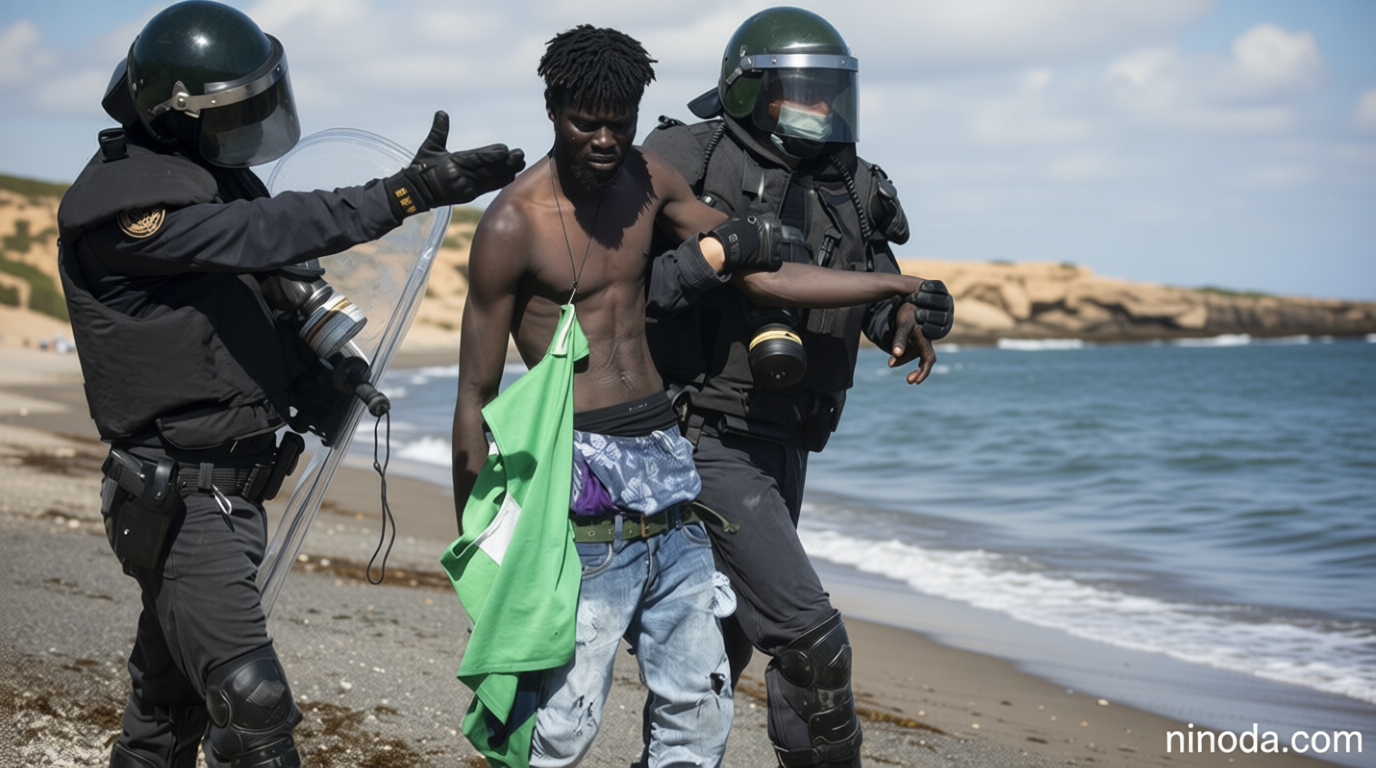
Hundreds of Migrants Swim Across Mediterranean to Reach Spanish Enclave of Ceuta in Major Migration Wave
Ninoda.com – Hundreds of migrants swim from Morocco to the Spanish enclave of Ceuta in what has become one of the most significant migration events in recent years. The dramatic crossing saw thousands of people navigating the waters of the Strait of Gibraltar, with many using inflatable rings and other floating devices to make the journey. Local authorities have described the situation as placing considerable strain on available resources, while calling for immediate action from Madrid to address the growing crisis.
Mass Migration Wave Reaches Spanish Territory
A significant number of individuals have made their way across the Mediterranean to Ceuta, Spain’s North African possession, according to local authorities. The territorial governor, Juan Jesús Vivas, described the situation as placing considerable strain on available resources and called for Madrid to take action. This latest wave of migration has reignited discussions about border control and humanitarian responsibilities in the region.
News agency Reuters indicates that Spain’s Interior Minister, Fernando Grande-Marlaska, will arrive in the region on Friday to assess conditions firsthand. His visit comes as officials work to manage the influx of newcomers and coordinate response efforts across multiple agencies. The minister’s presence underscores the importance that the Spanish government places on this developing situation.
Visual Evidence of the Crossing
Video recordings captured on Thursday revealed numerous people navigating the waters using inflatable rings alongside other floating equipment. Simultaneously, additional travelers were observed sprinting through openings in the boundary barrier. These images have provided compelling visual documentation of the scale and urgency of the migration event.
Located along Morocco’s northern shoreline, Ceuta maintains its position as a critical destination for those seeking entry into Europe. The territory sits across the Strait of Gibraltar from mainland Spain, making it one of the most accessible points for African migrants attempting to reach European soil. Its strategic location has made it a focal point for migration flows for many years.
Conflicting Numbers Emerge
Estimates regarding the magnitude of this movement vary considerably. Reports span from hundreds to thousands of individuals involved, reflecting the challenges of counting people in real-time during a dynamic situation.
According to Reuters, Spanish journalists calculated that approximately 2,000 to 3,000 people arrived on Thursday, though the Guardia Civil had yet to officially verify these numbers. Spain’s national broadcaster RTVE stated that hundreds made the journey during daylight hours. The same network noted that over 1,500 people—predominantly young Moroccans—had reached the enclave within a fourteen-day period, highlighting the sustained nature of the migration flow.
Humanitarian Concerns Mount
RTVE cited Vivas as reporting that sixty bodies have been retrieved from the sea over recent months. The governor further emphasized that both humanitarian and security challenges are intensifying. Reception facilities designed for children without guardians are functioning at multiple times their normal capacity, Reuters noted, creating additional pressure on local services.
The situation in Ceuta has drawn parallels to May 2021, when roughly 8,000 individuals entered the enclave within just a few days, creating additional diplomatic friction between the two nations.
Current events have drawn parallels to May 2021, when roughly 8,000 individuals entered Ceuta within just a few days, creating additional diplomatic friction between the two nations. That earlier crisis demonstrated how quickly the situation can escalate and the challenges faced by both Spanish and Moroccan authorities in managing large-scale movements of people.
Historical Context
The enclaves of Ceuta and Melilla, positioned in North Africa, constitute the sole terrestrial boundary between the European Union and the African continent. Spanish officials have strengthened protections around these territories through enhanced monitoring systems, fortified barriers, and strengthened cooperation with Morocco. Despite these efforts, people persist in attempting to cross into Spanish territory, driven by economic opportunities and the desire for a better life.
The ongoing migration crisis highlights the complex relationship between Europe and Africa, with Ceuta serving as both a gateway and a testing ground for European migration policies. As hundreds of migrants swim toward the Spanish enclave each day, the international community watches closely to see how this situation will develop and what long-term solutions might emerge from the current challenges.