‘Let the people judge’ and ‘Farage gamble turns to farce’

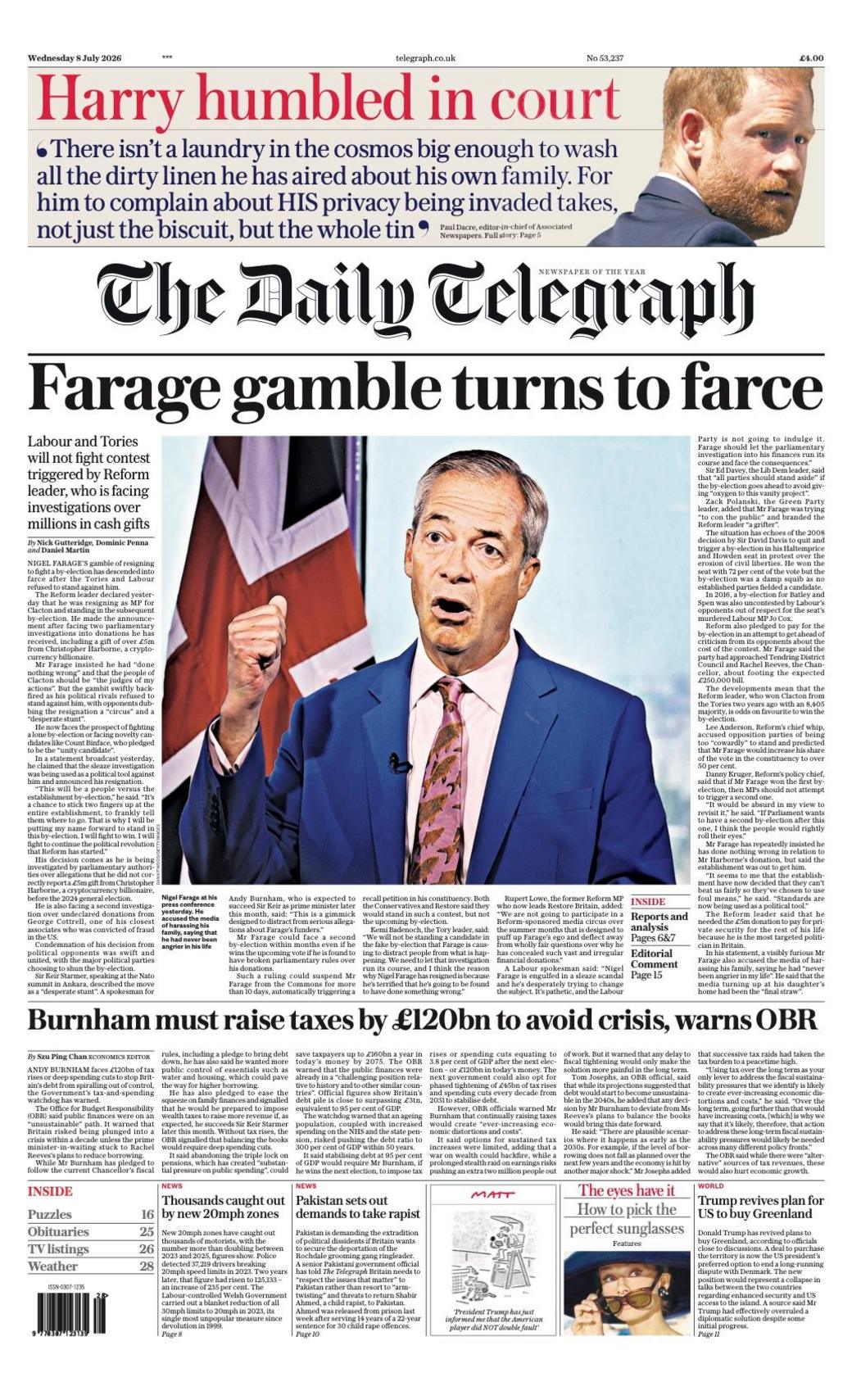
Let the people judge and Farage’s gamble turns to farce
By-election gamble faces scrutiny
Ninoda.com – Nigel Farage, the leader of Reform UK, has taken a bold step by resigning as MP for Clacton, igniting a by-election that has been dubbed a “Farage gamble.” The decision, which aligns with his long-standing slogan “Let the people judge,” is a strategic move to reinvigorate his political brand. However, the move has drawn mixed reactions, with some calling it a “desperate stunt” and others a “symbolic act of defiance.” The Daily Telegraph characterized the situation as “descended into a farce,” highlighting the lack of opposition from political rivals, who have chosen to sit out the contest. Farage, in a statement carried by the Daily Express, reiterated his belief that “the people of Clacton should be the judges of my actions,” emphasizing his commitment to public accountability.
The by-election has become a focal point for debates about transparency in politics. Critics, including The Times, argue that Farage’s resignation creates a “fake contest” designed to divert attention from broader issues, such as his financial dealings. The i Paper likened his strategy to a “Donald Trump playbook” maneuver, suggesting it is a calculated attempt to reshape public perception. Meanwhile, the Guardian revealed that a £5m gift from cryptocurrency billionaire Christopher Harborne was flagged to the National Crime Agency due to concerns over potential money laundering. Farage, however, defended the donation, claiming he had “no reason to doubt the source” and that his actions are in line with his “Let the people judge” ethos.
Farage’s campaign has been marked by a mix of bold rhetoric and tactical shifts. In a video address, he framed the by-election as a “symbolic gesture against the establishment,” a narrative that resonates with his base but has left some opponents questioning its sincerity. The Financial Times noted that his “gambit falls flat” as rival parties withdraw from the race, leaving him “poised to stand almost uncontested.” This situation has raised questions about the fairness of the contest, with the Daily Mirror calling it a “fiasco” and the cost of the campaign potentially exceeding £200,000. Despite the challenges, Farage remains confident that the public will “let the people judge” the merits of his bid.
Privacy battle concludes with a “huge victory”
While Farage’s by-election dominates headlines, another significant legal case has also captured public attention. The Duke of Sussex, Prince Harry, and six others successfully challenged Associated Newspapers in a privacy dispute, which the Daily Mail described as a “massive privacy case.” The court ruling, which rejected all allegations of wrongdoing, was hailed as a “huge victory” by the Sun, celebrating it as a triumph for press freedom. Prince Harry, however, called the outcome a “whitewash,” suggesting that the media’s influence over public figures remains unchecked. This case has added a layer of complexity to the ongoing debate about privacy, transparency, and the role of the press in British politics.
The privacy battle involved high-profile individuals such as Sir Elton John and Baroness Doreen Lawrence, whose support for the case underscored its importance. The Sun reported that the decision “makes the front page,” reflecting its perceived significance in shaping public discourse. In contrast, the Daily Mirror’s headline “Desperate” contrasts with the Daily Express’s emphasis on Farage’s “let the people be the judges” rhetoric, illustrating the diverse media narratives surrounding the issue. This divergence highlights the broader implications of the case, as it challenges the boundaries of investigative journalism and the rights of public figures to privacy.
“The people of Clacton should be the judges of my actions.”
Farage’s by-election has not only sparked internal debates within his party but also raised concerns about the potential impact on voter engagement. With his resignation, Reform UK faces the challenge of maintaining momentum and ensuring the public remains interested in a contest that has been perceived as lacking genuine competition. The slogan “Let the people judge” has become a central theme, with Farage using it to assert that the electorate will determine the outcome rather than political elites. However, the absence of strong opposition has led to speculation about whether the campaign will be a “farce” or a “huge victory” for Farage’s vision of a more decentralized political landscape.
As the by-election approaches, the focus on “Let the people judge” has intensified, with media outlets scrutinizing every aspect of Farage’s strategy. The phrase has been used repeatedly in headlines and editorials, reinforcing its significance in the campaign. Yet, the phrase’s repetition has sparked debates about whether it is being overused or if it genuinely reflects the public’s role in evaluating his leadership. With the nation watching closely, the outcome of the by-election could set a precedent for future political moves, especially for those seeking to challenge the status quo through unconventional means.