
Russian warship carried out firing exercise off Plymouth coast

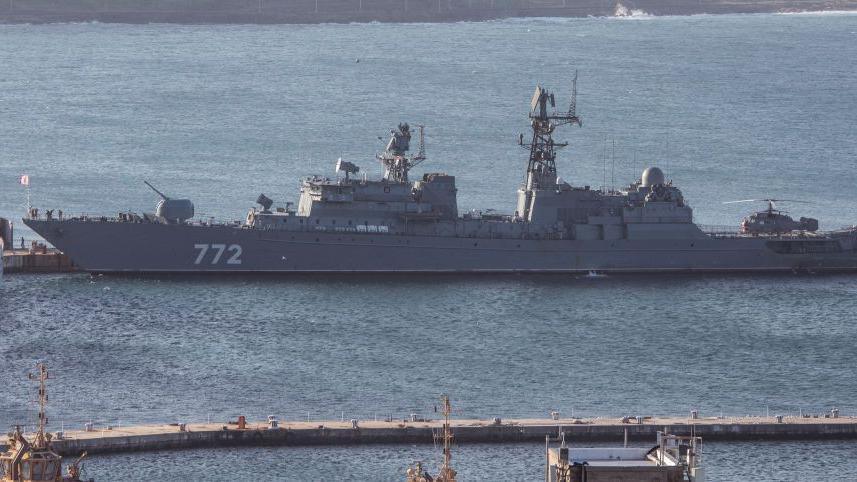
Russian warship carried out firing exercise off Plymouth coast
Ninoda.com – A Russian warship executed a live-fire artillery exercise approximately 40 nautical miles south of Plymouth, England, on Monday, drawing attention from UK and French military forces. The exercise, which lasted 30 minutes, involved the frigate Neustrashimy, part of the Russian Navy’s ongoing presence in the English Channel. Royal Navy vessels tracked the activity, with a Ministry of Defence spokesperson confirming that the operation was conducted in international waters, beyond the territorial limits of both the UK and France. The event highlights the growing strategic interest of Russia in monitoring and engaging in military drills near Western European coastlines. Such exercises are often used to test weaponry, refine tactics, and assert maritime dominance in key regions.
Russian Naval Presence in the English Channel
The English Channel has become a focal point for Russian naval activity in recent years, with warships frequently transiting through its waters. This latest firing exercise by the Neustrashimy is part of a broader pattern of Russian vessels conducting operations in the area. The channel’s strategic location, connecting the Atlantic Ocean to the North Sea, makes it a critical route for both commercial and military traffic. Russian ships often operate in international waters, which allows them to avoid direct confrontation with NATO countries. The Neustrashimy is known for its role in the Black Sea and Mediterranean, but its recent movements in the Atlantic underscore Russia’s expanding reach.
“The exercise was a routine test of the ship’s combat systems and its ability to operate in open waters,” said a senior UK defence official, who requested anonymity.
Coordinated Monitoring by UK and French Forces
UK and French military assets worked in tandem to monitor the Russian frigate’s activities. A French military aircraft was deployed to observe the exercise and established radio contact with the Neustrashimy to confirm its purpose. This collaboration reflects the shared interest of both nations in maintaining surveillance over Russian naval movements in the region. The Royal Navy’s Offshore Patrol Vessel HMS Tyne was also informed of the exercise beforehand and adjusted its position to ensure a safe distance. Such coordination is increasingly important as Russia intensifies its presence in Western waters, raising concerns about potential escalation in military tensions.
The UK’s Ministry of Defence has noted that the Neustrashimy’s firing exercise was consistent with its regular patrols. However, officials emphasized that the event was closely watched to assess any changes in Russian operational behavior. The French military’s involvement in verifying the exercise’s objectives highlights the growing interdependence between European defense agencies in tracking Russian activities. This incident also serves as a reminder of the broader strategic competition in the Atlantic, where Russia seeks to project power while challenging NATO’s dominance.
Context from Previous Incidents
Recent weeks have seen several instances of Russian naval activity near UK waters, including a notable event in June when a Russian warship, Admiral Grigorovich, fired warning shots at a British couple’s yacht 23 miles off the Isle of Wight. The couple, who were sailing independently, described their encounter as a tense moment but clarified that they were not on a collision course. This incident, along with the Neustrashimy’s recent exercise, has raised questions about the intent behind Russian naval operations in the region.
Earlier this month, Royal Marine Commandos conducted a six-hour operation in the English Channel, boarding a Russian “shadow fleet” oil tanker—a first for UK military forces. The shadow fleet, a group of ships suspected of operating under Russian command, has been a subject of international scrutiny. These events suggest that Russian naval activity is not only about demonstrating military capability but also about testing the responses of Western nations. The Neustrashimy’s exercise, while brief, fits into this pattern of strategic signaling.
Strategic Implications and International Response
The firing exercise off Plymouth has sparked discussions about the strategic implications of Russia’s growing naval presence in the Atlantic. Analysts note that such operations could be part of a larger effort to establish a foothold in the region, potentially preparing for future contingencies. The English Channel, a vital route for trade and military logistics, is now a contested area where Russia seeks to project influence. While the exercise itself was low-key, it reinforces the idea that Russian forces are regularly engaging in activities that may have dual purposes: training and deterrence.
International observers have highlighted the importance of these exercises in understanding Russia’s military strategy. The UK and France, as neighboring NATO members, are key players in monitoring such movements. The Ministry of Defence has not yet commented on whether the Neustrashimy’s firing drill was coordinated with the start of Andy Burnham’s premiership, but the timing of the event has raised questions about potential political motivations. As Russian naval operations continue, the focus remains on their ability to operate under the radar while asserting their presence in critical maritime zones.